

Your brain is the most important organ in your body – it controls everything from memory and decision-making to mood and overall cognitive function. But did you know that certain daily habits could be damaging your brain health without you even realising it?
From poor nutrition to lack of sleep, some lifestyle choices can negatively impact brain function in both the short and long term. Over time, this can lead to memory problems, reduced concentration, and even an increased risk of dementia as you age.
By identifying and avoiding these harmful habits, you can protect your brain, enhance cognitive function, and improve overall well-being.
Things That Are Bad For Your Brain (Why They Are and How To Fix)
Perhaps not noticeable now, but the decisions you make now could be causing problems as you age. You may be doing things that are bad for your brain every day without realising it!
The human brain is a very important organ in the body. It is responsible for controlling most of the functions that keep us alive. The brain also controls all of our thoughts, memories, and emotions. We need to take care of our brains because it is not something we can easily replace or fix if it gets hurt.
Your brain needs to be looked after just as your body does, but many of us don’t pay enough attention to our cognitive health and realise the things that affect the brain negatively.
We all know that poor lifestyle choices can impact our physical health. For example, if you eat a lot of unhealthy food and never exercise, you will gain weight and increase your chances of heart disease and strokes.
But did you know bad lifestyle choices can also kill brain cells and stop your brain from functioning as it should?
Over the years, neglecting your brain will increase your chances of developing cognitive conditions like memory loss in later life.
In the short term, it makes it hard to concentrate on things and stay productive, and can also lead to mental health issues.
There are lots of ways to keep your brain sharp and healthy, as well as protect it from damage as you age. From food to environment, you can help to improve brain function and prevent cognitive decline in later life.
Below we’ll explore some of the things that are bad for your brain and the bad lifestyle choices you should avoid.
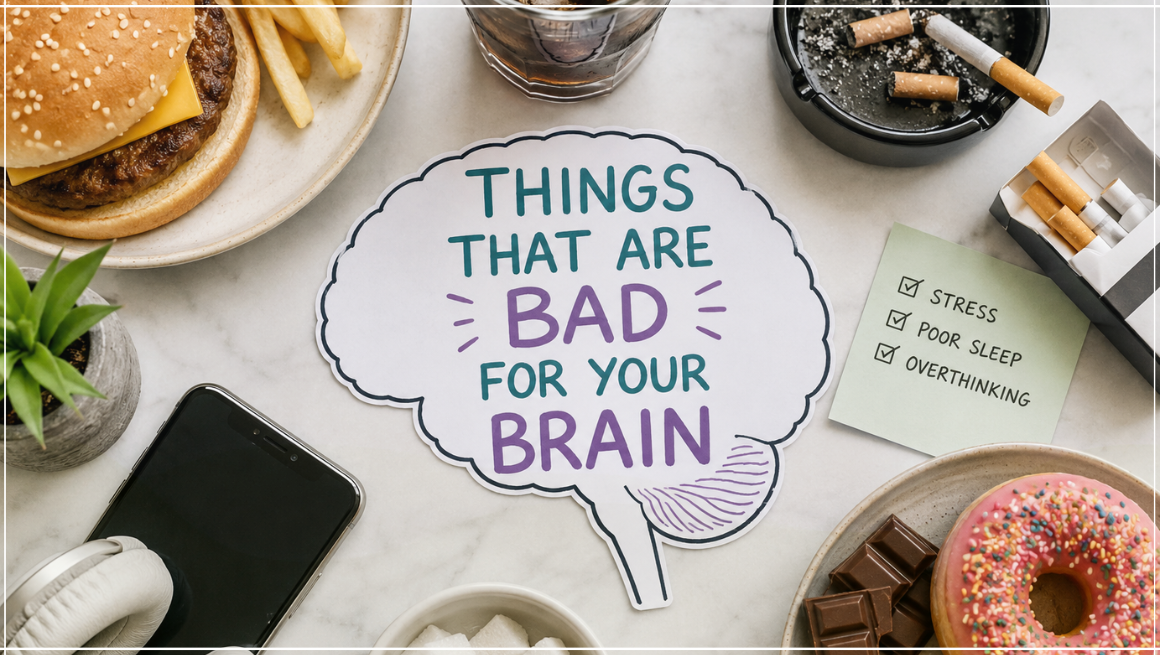
1. Eating junk food is bad for your brain
We all know junk food is bad for our bodies, but what about our brains?
Consuming lots of fat and sugar leads to high blood pressure and cholesterol. This restricts the blood flow to the brain.
This can kill off neurons and reduce your overall brain function leading to reduced brainpower and potential problems in the future.
Sugary foods also cause a big spike in energy followed by a crash. When people are experiencing this sugar crash, it affects concentration in a big way.
Constantly eating the wrong nutrients is one of the main things that are bad for your brain.
However, eating a diet rich in vitamins and nutrients, and cutting back on the sugar and fat will ensure that your brain has everything it needs to stay healthy. A whole food, plant-based diet rich in all the nutrients your brain needs is one of the things that affect the brain positively.
I recommend reading the books The China Study, Wholefood Revolution and A Fat Chance to learn more about how a plant-based diet is good for your cognitive function and also why sugar is so terrible for us.
If you’re wondering what to eat and how to get started with eating healthier, I recommend topping up your fruits and veggies each week with a delicious organic box from Riverford or Abel and Cole. This will ensure you get a variety of fresh foods in your diet.
Then add lots of natural wholegrains and whole foods like beans, peas, lentils, nuts, wholegrain rice, chickpeas, spices and herbs. For texture in meals add tofu, seitan, jackfruit, mushrooms, aubergine, soya mince, soya pieces and as much natural unprocessed food as you can.

💡 How to fix it:
If you’re eating a diet high in processed foods, your brain isn’t getting the essential nutrients it needs to function at its best. To support cognitive health, focus on eating:
- Brain-boosting foods – Leafy greens, berries, nuts, seeds, and whole grains provide vital nutrients.
- Healthy fats – Avocados, walnuts, flaxseeds, and chia seeds are excellent for brain health.
- Plant-based protein – Lentils, beans, tofu, and quinoa help maintain brain cell function.
A poor diet doesn’t just affect brain function – it can also impact mood, focus, and memory. Making small changes to your diet can improve mental clarity and long-term brain health.
2. Not sleeping properly can negatively impact your brain
Lack of sleep is one of the worst things for your brain. It can impact all areas of cognitive functioning, including memory, concentration, decision-making, and creative thinking.
Sleeping helps provide the time for your brain to heal and repair cells that have been damaged during the day.
When you are sleep-deprived, your brain cannot focus on anything for more than a few seconds before wandering off to something else.
So, it’s vital that you get into a good sleep routine and try to sleep at the same time each night. If you have trouble sleeping, try some of these great natural remedies to help.
Here’s one of the best videos on sleep I have ever seen, explaining why it’s so important:
💡 How to fix it:
If you’re struggling with poor sleep, try:
- Creating a bedtime routine – Going to bed at the same time each night helps regulate your body clock.
- Avoiding screens before bed – The blue light from devices can interfere with melatonin production.
- Reducing caffeine and sugar intake – Stimulants can disrupt sleep quality.
- Trying natural sleep aids – Herbal teas, magnesium supplements, or a relaxing bath can help.
Good sleep is essential for memory, focus, and emotional well-being. Prioritising rest will improve both brain function and overall health.
3. Drug and/or alcohol abuse affects your brain
Drug abuse and alcohol abuse has a huge impact on the brain, and not just in the short term. Studies have long proven that drugs can cause long-term damage to mood and cognitive abilities, and also increase the risk of developing depression and other mental issues.
Over time, drug abuse can lead to significant memory loss; it damages neuron pathways and reduces the number of connections between neurons in the brain. This can lead to mental health problems and cause someone to get into a downward spiral that is very difficult to get out of.
If you’re struggling to stop using drugs or alcohol, it’s worth reaching out for professional support sooner rather than later – whether that’s your GP, a counsellor, or a support service that specialises in addiction.
People often make the mistake of thinking that recreational drug use will not cause long-term damage but even if it is only occasionally, using drugs will always damage your brain.
If the people or environment around you make it harder to break free from addiction, it’s worth exploring what support is available, whether that’s a support group, counselling, or speaking to your GP about the options that might suit your situation.

💡 How to fix it:
Long-term drug or alcohol use can cause serious cognitive damage, but your brain can heal if you make positive changes. Some ways to support brain recovery include:
- Eliminating or reducing harmful substances – The sooner you stop, the better for your brain.
- Focusing on brain-boosting nutrition – A diet high in antioxidants, omega-3s, and plant-based nutrients can help repair cognitive function.
- Engaging in mental exercises – Activities like reading, puzzles, and learning new skills can strengthen neural connections.
- Practising mindfulness or meditation – These techniques help improve mental clarity and emotional regulation.
If substance use is a struggle, seeking professional help can provide the support needed for long-term cognitive and emotional health.
4. Not taking care of your ears may impact your brain
You may not realise it but there is a very strong link between hearing loss and cognitive decline.
Studies show that those who had suffered from hearing loss for a long time were more likely to develop dementia or other brain-related diseases later on in life.
This is thought to be because the brain loses plasticity and the ability to adapt when it has been deprived of hearing for such a long time.
Unfortunately, a lot of people don’t take good care of their ears when they are young because they don’t think that hearing loss will be a problem for them yet.
But listening to headphones very loud or exposing yourself to a lot of loud noises without hearing protection will do some serious lasting damage. By protecting your ears, you can reduce the chances of hearing loss and protect your brain too.
It’s also important to take care of your children’s ears in noisy environments such as at festivals with loud music. Our kids have these ear defenders and love them for noisy events. They come in all sorts of designs and many expand to adult size too.
💡 How to fix it:
Hearing loss isn’t just about volume – it can lead to cognitive decline if left unchecked. To protect your hearing and brain health:
- Use noise-cancelling headphones in loud environments to reduce long-term damage.
- Limit headphone volume – the rule of thumb is to keep it at 60% or lower.
- Take regular breaks from loud noise – your ears need time to recover.
- Get regular hearing check-ups – early detection can prevent further loss.
Your hearing health directly affects brain function, so taking care of your ears now can help preserve cognitive ability as you age.

5. Lack of natural light could damage your brain
We know that getting enough sunlight is important for a number of reasons. But did you know it also helps protect your brain?
When exposed to natural light, the pineal gland produces a hormone called melatonin, which has been linked with slowing Alzheimer’s disease and other forms of dementia.
The problem is that most people spend far too much time indoors these days, and rarely get enough exposure to natural light. This is a problem because it can disrupt the body’s internal clock and make it difficult for people to sleep properly.
Try to get outside every day if you possibly can, even if it is just for a few minutes.
💡 How to fix it:
Not getting enough sunlight? Here’s how to boost your exposure naturally:
- Spend at least 20 minutes outdoors daily – even on cloudy days, you’ll get some beneficial light.
- Work near a window – natural light helps regulate sleep and mood.
- Use a light therapy lamp in winter months if you struggle with Seasonal Affective Disorder (SAD).
- Exercise outdoors – a morning walk or yoga in the park provides a double benefit of movement and sunlight.
Exposure to sunlight plays a crucial role in brain function, so prioritising natural light can help boost mood, improve focus, and support cognitive health.
6. Sitting Too Much and Avoiding Exercise is Bad for Your Brain
Modern life means more sitting than ever – but being too sedentary reduces brain function and can increase the risk of memory loss, brain fog, and cognitive decline.
Why lack of movement harms your brain:
- Reduces blood flow to the brain, limiting oxygen and nutrients.
- Increases inflammation, which is linked to neurodegenerative diseases.
- Can cause stress and depression, as physical activity releases mood-boosting endorphins.
💡 How to fix it:
- Move every hour – Stand up, stretch, or walk around to boost circulation and brain function.
- Do brain-boosting workouts – Yoga, brisk walking, or strength training can support cognitive health.
- Try a standing desk – Alternating between sitting and standing keeps your mind active.
- Take walking meetings or calls – A great way to stay active while working.
Exercise isn’t just good for your body – it’s essential for brain health. Moving more each day helps improve memory, mood, and focus.
7. Chronic Stress and Anxiety Can Shrink Your Brain
We all experience stress, but chronic stress can actually shrink brain tissue and affect memory, decision-making, and concentration.
Why stress harms your brain:
- Increases cortisol levels, which damage brain cells over time.
- Disrupts sleep, leading to further cognitive decline.
- Affects mood and memory, making it harder to focus and retain information.
💡 How to fix it:
- Practice relaxation techniques – Meditation, deep breathing, or yoga can help lower stress hormones.
- Get outdoors – Nature exposure reduces stress and improves mental clarity.
- Try adaptogenic herbs – Ashwagandha, rhodiola, and holy basil can help regulate cortisol levels.
- Reduce screen time – Excessive scrolling or news consumption increases anxiety levels.
Managing stress is crucial for maintaining a sharp mind. Small daily habits can protect your brain and improve long-term cognitive function.
8. Believing Your Brain Can’t Change Is Bad for It Too
For a long time, people believed the brain stopped developing once you reached adulthood and that you were simply stuck with whatever cognitive ability you had from that point on. We now know that isn’t true. The brain has something called neuroplasticity – the ability to rewire itself, form new neural connections, and adapt throughout your entire life, not just in childhood.
This matters because believing your brain is fixed and unchangeable can become a bit of a self-fulfilling prophecy. If you assume you “can’t learn new things anymore” or that decline is inevitable, you’re less likely to do the things that actually keep your brain sharp – learning, challenging yourself, trying new skills.
There’s also ongoing research into neurogenesis, which is the brain’s ability to grow new neurons, particularly in an area called the hippocampus that’s heavily involved in memory and learning. For a long time scientists believed this process slowed dramatically or stopped in adulthood, but more recent research suggests the brain retains at least some capacity for this throughout life, especially when it’s given the right conditions to do so – things like exercise, sleep, and mental stimulation.
The grey matter in your brain (the tissue responsible for processing information, as opposed to white matter, which transmits signals between areas) can also change in response to how you use your brain. Studies on activities like learning a new language or an instrument have shown measurable changes in grey matter density over time.
💡 How to fix it:
If you want to actively support your brain’s ability to rewire and adapt:
- Learn something completely new – a language, an instrument, a new skill – novelty is one of the strongest triggers for forming new neural pathways.
- Challenge your brain regularly – puzzles, reading, strategy games, or anything that makes you think differently than usual.
- Stay physically active – exercise is one of the most consistently supported ways to support neurogenesis and overall brain health.
- Get enough sleep – your brain consolidates new learning and forms long-term memories during sleep.
Your brain is far more adaptable than it was once thought to be, at any age. Believing that and acting on it is one of the most empowering things you can do for your long-term cognitive health.
Final thoughts on things that are bad for your brain
The brain is the most important organ in the body. Without it, we cannot function. It controls our thoughts, feelings, and actions. Our brains need proper nutrients to stay healthy and maintain their functions.
Your daily habits play a huge role in brain health. While some things, like genetics, are out of our control, we can make lifestyle changes that protect and strengthen our cognitive function.
By eating the right foods, prioritising sleep, reducing stress, staying active, and protecting your hearing, you can support your brain health and improve mental clarity as you age.
Above are just seven bad habits that damage your brain. There are lots of things that are bad for your brain, but many of them you can make a decision to improve. The choice is in your hands.
By making some simple changes to your lifestyle, you can avoid damaging your brain and maintain your cognitive function for much longer as you age.
Brain Health Roundup – What to Avoid
To protect your brain and improve cognitive function, try to avoid these harmful habits:
✔ Eating too much junk food – Choose whole, plant-based foods instead.
✔ Not getting enough sleep – Prioritise a regular sleep routine.
✔ Using drugs or alcohol excessively – They can shrink and damage brain cells.
✔ Neglecting your hearing health – Protect your ears from loud noises.
✔ Not getting enough sunlight – Natural light helps regulate mood and brain function.
✔ Sitting too much and not exercising – Movement boosts brain health and memory.
✔ Allowing stress to take over – Chronic stress can shrink your brain over time.
By making simple lifestyle changes, you can keep your brain sharp, improve memory, and support long-term cognitive health!
Discover more from Healthy Vix
Subscribe to get the latest posts sent to your email.
It’s amazing the effect sleep has, or lack of…..I am working a lot of overtime at the minute, and I feel (and look) like poo 🙁 xx
This is so interesting, I didn’t know about half of these. I definitely need to get more light!
I am trying to eat more healthy!