

Every year, as the days shorten and the light starts to fade, I feel it. It’s not subtle. The darkness closes in – literally and in my head too.
Dark mornings, dark evenings, that feeling of being trapped and enclosed by the gloom. Less free. Less like myself. The world gets smaller in winter, and my mood goes with it.
I’m convinced I have SAD – Seasonal Affective Disorder – and have done for years. Low mood, low energy, less motivation, more anxiety, craving carbs and comfort food.
I’m not someone who ever wants to do nothing – I’m always working on something or a project, I have to have a busy mind or body – but in winter, my mood makes me want to hibernate socially. Just my husband and kids, nobody else.
The outside world feels like too much effort when the light is gone. If you also struggle in the colder months, my post on tips for a healthier happier winter has some practical ideas for getting through it.
But also, a big part of why winter affects us so badly, I believe, is vitamin D. Or rather, the lack of it.
What is vitamin D and why do we need it?
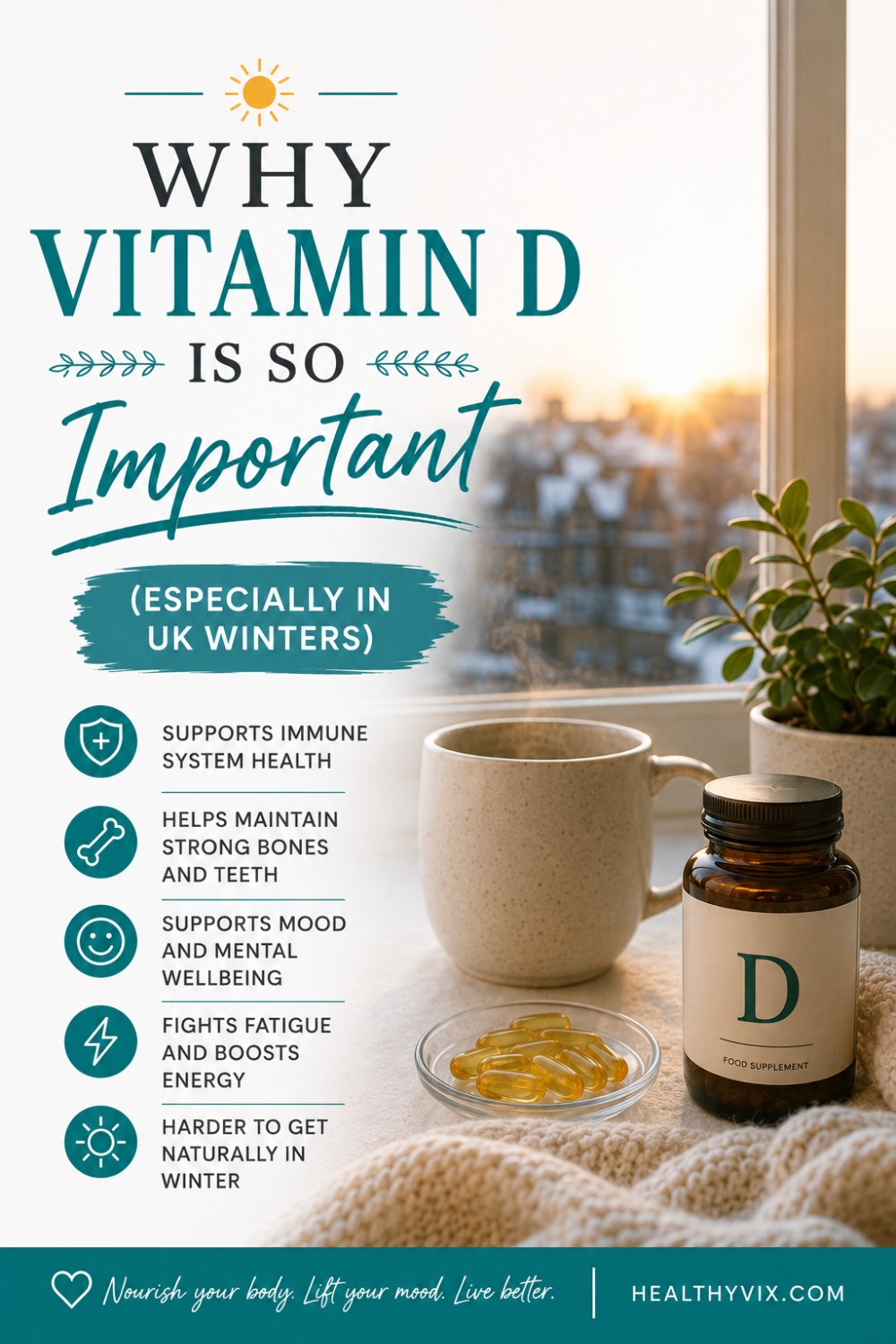
Vitamin D is often called the sunshine vitamin because around 90% of what we need comes from direct UV sunlight on our skin rather than from food. When sunlight hits your skin, your body converts it into a hormone called calcitriol – activated vitamin D – which does a huge range of things.
It manages calcium absorption, which keeps bones and teeth strong. It supports muscle function. It helps cells communicate properly. It plays a role in immune function, which is one reason we get more colds and infections in winter when vitamin D levels drop.
If you want to go deeper on immunity, my post on the most effective ways to supercharge your immune system covers a lot more ground.
Increasingly, research also links low vitamin D to low mood, depression and SAD. I’m not surprised.
The NHS is clear on this: from October to the end of March, the sun simply isn’t strong enough in the UK to allow our bodies to produce vitamin D. For around six months of the year, most of us in this country are running low.
How low vitamin D affects how you feel
A severe deficiency causes serious conditions – rickets in children, osteomalacia (thin and brittle bones) in adults. But even moderate or low levels, which are far more common and often go undetected, can contribute to:
- Fatigue and low energy
- Low mood and depression
- Increased anxiety
- Weakened immune function
- Muscle weakness
- Poor sleep
Looking at that list, it maps almost perfectly onto how I feel in winter. Whether vitamin D is the sole cause or one of several factors – including reduced daylight, less time outside, and lower activity levels – is hard to separate. But the correlation is hard to ignore.
What I take and whether it helps
I take vegan vitamin D supplements all year round – vegan elderberry vitamin D gummies and a vegan vitamin D spray – just to make sure I’m covered even in summer. Through winter, I’m more consistent about it.
Honestly? I find it hard to tell whether they make a direct difference to my mood. I rarely get ill, which suggests my immune system is doing well, and I know vitamin D plays a role in that.
But mood is harder to measure, and there are so many factors at play in winter that isolating any single one is difficult.
What I do believe is that you can’t fully supplement the sun. Real sunshine gives us far more than just vitamin D – light exposure regulates our circadian rhythm, affects serotonin production, and influences our body in ways we probably don’t fully understand yet.
Popping a tablet in the dark in December is better than nothing, but it’s not the same as sitting in actual sunlight. I genuinely think we underestimate how much the sun does for us.
Nothing replaces actual sunshine
This is my honest view: we are not designed for this climate in the UK, at least, and many other countries in the northern hemisphere too.
Human beings evolved in much sunnier parts of the world, and I think living in a country where you can go weeks, or even months, without seeing proper sunlight takes a real toll on mental and physical health that we tend to normalise because everyone around us is experiencing the same thing.
The single most effective thing I do for SAD is get a winter holiday somewhere warm and sunny. Why go abroad in summer when the weather is good here? Winter is exactly when I want to be somewhere with proper sunshine – it genuinely resets something. The light, the warmth, being outside without layers on, the lift it gives to everything. Nothing I’ve found comes close to replicating that effect.
When a holiday isn’t possible, getting outside in whatever daylight there is – even on grey days – makes a difference. A walk in the middle of the day when the light is at its strongest is better than nothing.
Exercise helps too, as does eating well and using CBD through the harder months. But none of it is a substitute for the real thing. Real sunshine. Real vitamin D.
How to get more vitamin D
From sunlight: In the UK, between April and September, around 10-15 minutes of direct sun on uncovered skin (arms and legs, not just hands) around midday is enough for most people to produce adequate vitamin D. The key is direct UV exposure – sitting by a window doesn’t count as the glass blocks the relevant UV rays.
From food: Only a small amount of vitamin D comes from food, and most natural sources aren’t vegan – fatty fish, egg yolks, beef liver. Some foods are fortified with vitamin D, including certain plant milks and cereals, but you can’t rely on food alone for adequate levels.
From supplements: The NHS recommends everyone in the UK considers taking a vitamin D supplement throughout autumn and winter. For vegans, look for vitamin D2 (always vegan) or vitamin D3 derived from lichen rather than lanolin (which comes from sheep’s wool). Gummies and sprays are good options if you find tablets hard to remember – I use both.
Is vitamin D good for mood specifically?
The research is promising but not definitive. Several studies have found links between low vitamin D and depression, and between vitamin D supplementation and improved mood – particularly in people who were deficient to begin with. But it’s not a proven treatment for SAD or depression, and I wouldn’t want to overstate it.
What the evidence does support clearly is that deficiency is common, especially in the UK, and that deficiency has real consequences for how you feel physically and mentally. Taking a supplement through winter is low risk, low cost, and well supported by mainstream health guidance. It’s one of the simplest things you can do.
Whether it will transform your mood the way actual sunshine does – probably not. But it’s worth doing anyway, and is recommended, as you require vitamin D for many other reasons.
Before you go…
For more on how to support your mood and energy through diet and lifestyle, my posts on what to eat to feel better and natural remedies for anxiety cover a lot of the same ground from different angles.
If you suspect perimenopause may be amplifying your winter symptoms, my honest account of PMDD and perimenopause is worth a read too.
Discover more from Healthy Vix
Subscribe to get the latest posts sent to your email.