
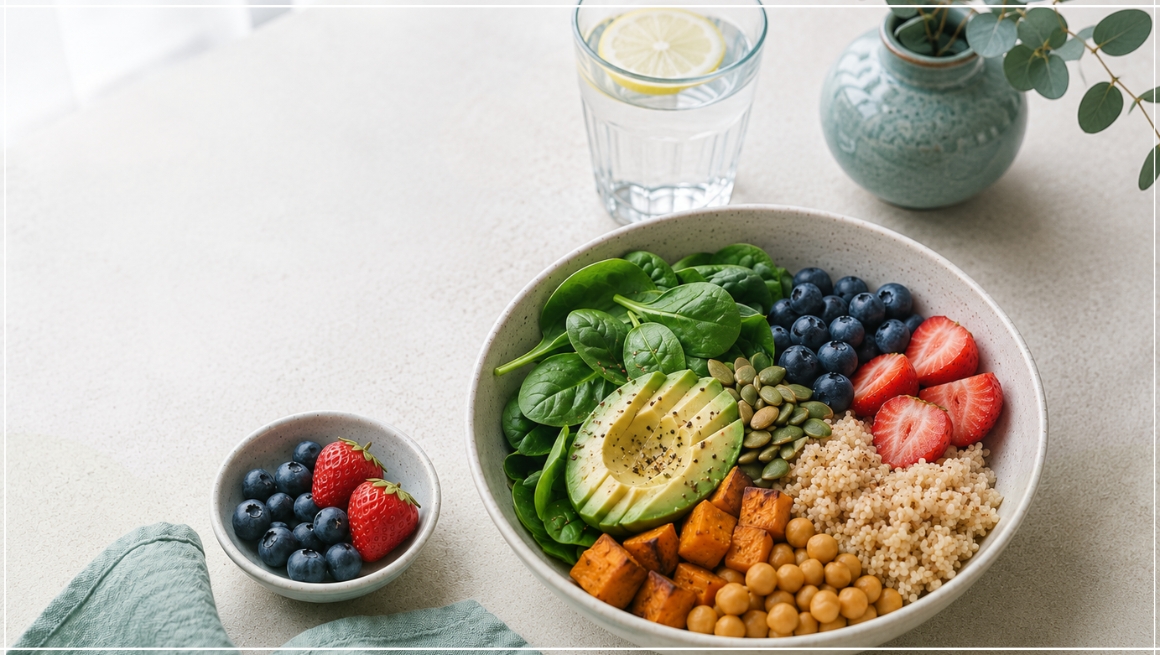
I notice a difference in how I feel based on what I eat – and it’s not subtle. When I’m eating well, I feel lighter, more energised, and generally better in myself. When I’m not – too much bread, too many stodgy meals, too much junk – I feel sluggish, bloated, heavy, and that physical feeling bleeds directly into my mood. It affects how I feel about myself. It’s hard to feel good mentally when you feel rubbish physically.
I’ve been eating a plant-based vegan diet for years now, and I genuinely believe it’s one of the biggest contributors to how well I feel overall. Not perfectly – life doesn’t work like that – but consistently. Here’s what that actually looks like day to day, and the foods that make the biggest difference to how I feel.
Why food affects how you feel
Your brain uses nutrients from food to produce the chemicals that regulate mood, focus and energy. When you feed it well, those systems work better. When you don’t, they don’t.
The gut-brain connection is a big part of this. Around 90% of the body’s serotonin – often called the feel-good hormone – is produced in the gut, not the brain. What you eat directly influences your gut microbiome, which in turn influences your mood, stress response and mental clarity. It’s not just about calories or weight. It’s about what your food is actually doing inside your body.
Eat as many plants as possible
The foundation of eating well for mood and energy is simple: eat more plants. Fruits, vegetables, legumes, wholegrains, nuts and seeds. As many different colours and varieties as you can.
Leafy greens like spinach, kale and broccoli are rich in folate, which supports serotonin production. Berries are packed with antioxidants that protect the brain from oxidative stress. Legumes and beans provide steady energy without the blood sugar crash that comes from refined carbohydrates. Wholegrains – brown rice, wholemeal bread and pasta – do the same.
In our house we mainly eat wholemeal versions of everything rather than white. White bread and pasta make me feel tired and heavy in a way that wholemeal versions don’t. That blood sugar spike and crash is real, and once you notice it you can’t unfeel it.
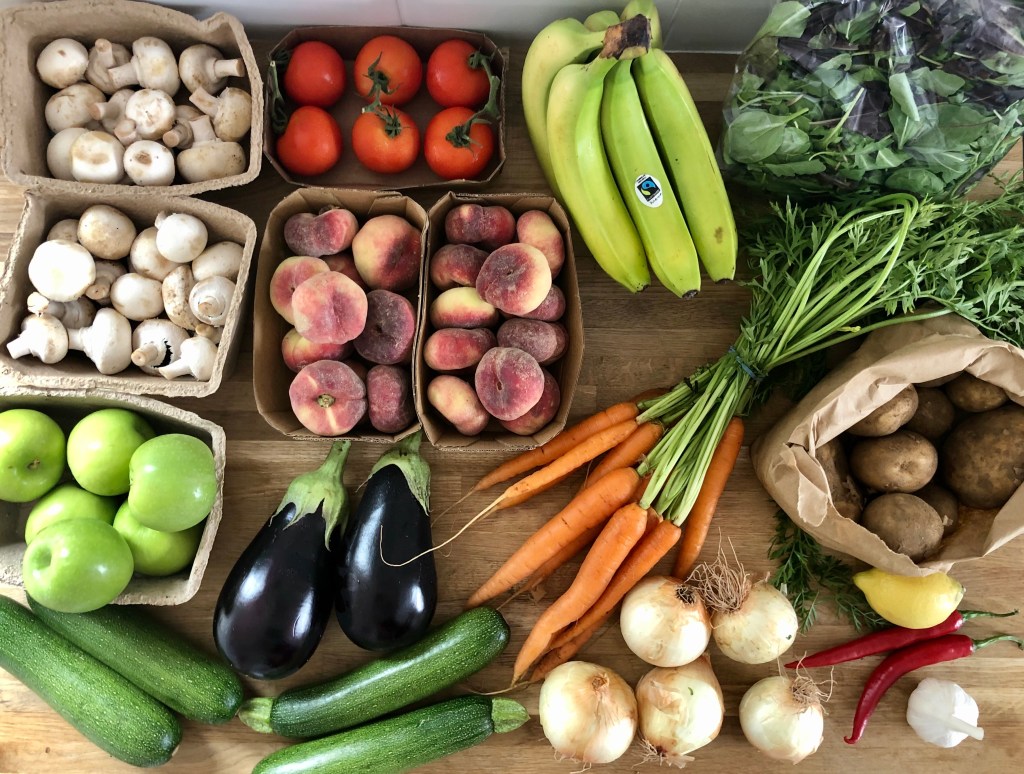
We eat organically where possible too – fresh organic fruit to snack on, organic vegetables as the base of home cooked meals. The quality of what you eat matters, not just the quantity.
We try to order at least one or two organic Riverford boxes a month too, to help support real local organic farmers and better farming practices, as well as our health. Check out my Riverford review and discount article for a referral offer of £15 off.
Make smoothies a regular habit
One of the easiest ways to pack a huge amount of nutrition into one meal is a homemade smoothie. I make them regularly – blending fresh fruits and vegetables with plant-based milk and adding superfood powders on top.
A banana and raw cacao smoothie is a particular favourite. Raw cacao is completely different from the sugary cocoa in most hot chocolate – it’s genuinely rich in magnesium and flavonoids that support brain function and mood. We also use it in coffee as a more nutritious version of a mocha, and add it to chilli for depth. It’s one of the most versatile and genuinely mood-supporting foods I regularly eat.
Smoothies are also a good way to get in foods you wouldn’t otherwise eat much of – hemp seeds blended in add omega-3 and protein without affecting the taste much at all.
We have a Ninja smoothie and blender machine which is amazing and makes smoothies so quickly, makign them super smooth! We’ve used these for over a decade and highly recommend. Check out their latest models here.
Add superfoods where you can
I take supplements and add superfoods to my meals daily, and I notice the difference when I stop. Here’s what I actually use:
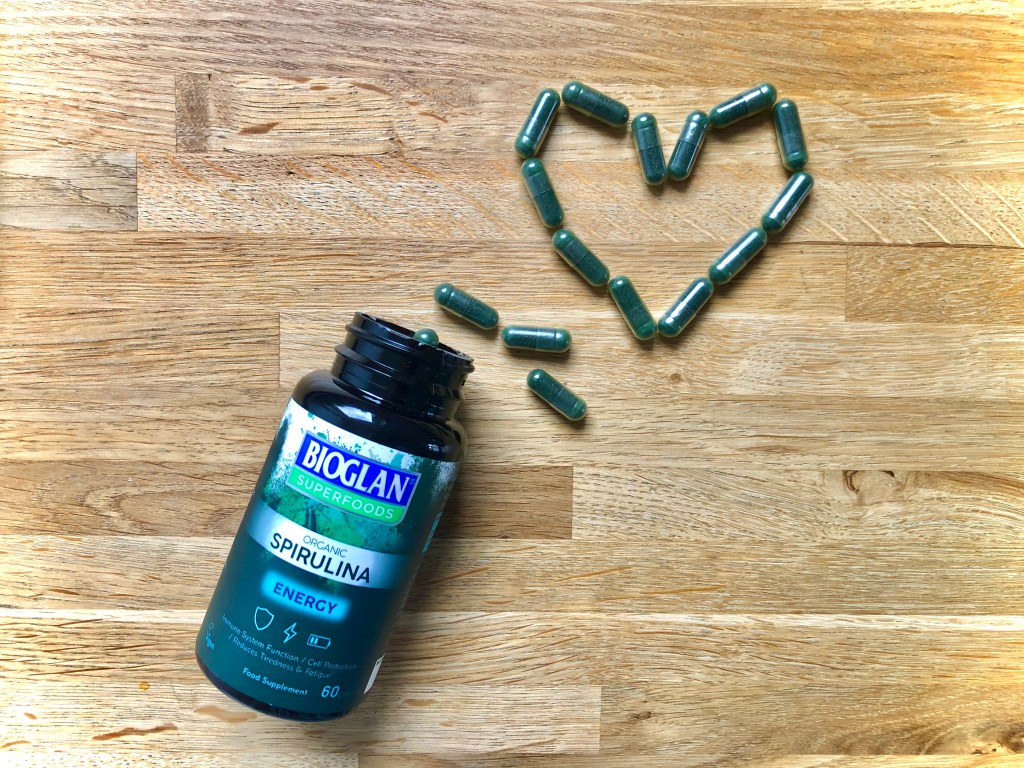
Spirulina – I used to add the powder to cooking and smoothies, but it turns everything green and has a strong algae taste that not everyone (including me, over time) gets on with. I switched to spirulina tablets instead, which are much easier to take consistently. Spirulina is one of the most nutrient-dense foods on the planet – rich in protein, B vitamins, iron and antioxidants.
Turmeric – I take turmeric capsules daily, but also add the powder generously to cooking. One of our favourite things is turmeric rice – just adding turmeric powder to the water when cooking rice turns it a beautiful golden colour and adds anti-inflammatory properties to what would otherwise be a plain side dish. We have it alongside curries regularly.
Hemp seeds – sprinkled on salads, mixed into homemade muesli, added to energy balls. They’re a brilliant source of plant-based omega-3 and protein and have virtually no flavour, which makes them easy to add to almost anything.
Chia seeds – added to smoothies, overnight oats, or soaked in plant milk as a pudding. Good source of omega-3, fibre and protein.
Raw cacao – as mentioned above. One of the genuinely mood-boosting foods I reach for regularly.

Foods known to support mood and energy
Here are some of the most well-regarded mood-supporting foods worth adding to your diet regularly, and why eating them makes you feel better:
Bananas – a good source of vitamin B6 and tryptophan, which the body uses to produce serotonin. A quick, natural energy boost without the crash.
Walnuts – one of the best plant-based sources of omega-3 fatty acids, which play a direct role in brain function and emotional regulation. A small handful as a snack is enough.
Dark leafy greens – spinach, kale and broccoli are rich in folate, which supports serotonin and dopamine production. Easy to add to smoothies, stir fries and soups.
Berries – blueberries in particular are rich in antioxidants that protect the brain from oxidative stress and may help improve mood and memory over time.
Oats – slow-release carbohydrates that stabilise blood sugar and provide steady energy throughout the morning. A much better start to the day than refined cereals.
Avocado – rich in healthy fats, B vitamins and folate. Supports brain health and helps keep energy levels stable.
Raw cacao – genuinely one of the most mood-supportive foods available. Cacao is rich in magnesium, flavonoids and compounds that support serotonin production. Far better for you than processed chocolate. Learn more about cacao here.
Legumes and beans – lentils, chickpeas, kidney beans and black beans provide slow-release energy, fibre and B vitamins. A staple of a plant-based diet for good reason.
Pumpkin seeds – high in zinc and magnesium, both of which are linked to mood regulation. Easy to sprinkle on salads, porridge or soups.
Fermented foods – kimchi, miso, kombucha and sauerkraut support gut health, which in turn supports mood through the gut-brain connection. Worth including regularly if you can. My favourites, which we consume regularly, are sauerkraut and kombucha.
Turmeric – the active compound curcumin has anti-inflammatory properties and some evidence behind it for supporting mood. Add to cooking or take as a supplement.
Wholegrains – brown rice, wholemeal bread and pasta provide sustained energy without the blood sugar spikes and crashes that come from refined versions.
Take your supplements seriously
Alongside food, I take daily supplements that I believe make a real difference to how I feel – especially through winter when diet alone isn’t enough.
Vegan omega-3 from algae is one I feel strongly about. Most omega-3 supplements come from fish, but fish get their omega-3 from algae in the first place – so going straight to the algae source makes more sense and is completely vegan. Omega-3 plays a direct role in brain function and emotional regulation.
We get ours from Nothing Fishy. You can get £10 off your first subscription using my Nothing Fishy referral link here or enter promo code VIC9J3TTI at checkout.
Vitamin D is essential, especially in the UK where we simply don’t get enough sunlight for most of the year. Low vitamin D is strongly linked to low mood and SAD – something I experience myself in winter.
A good quality vitamin D supplement is one of the most impactful things you can take for how you feel through the darker months.
At the moment we get the children’s chewable elderberry vitamin D gummies from Holland and Barrett which are delicious.
We do also regularly use the BetterYou daily vegan spray which contains iron, vitamin D, iodine and B12. A vegan multivitamin rounds things off and covers any gaps – particularly B12, which is difficult to get reliably from a plant-based diet alone.
Watch what makes you feel bad
Knowing which foods drag you down is just as useful as knowing which ones lift you up.
For me, too much bread or pasta – especially white versions – makes me feel tired and heavy within hours. Too many stodgy meals in a row leave me feeling bloated and sluggish, and that physical feeling directly impacts my mood and how I feel about myself. Lots of processed food or junk has a similar effect – not just physically but mentally, that guilt of knowing you’ve not looked after yourself.
Coffee is something I drink every day – I genuinely can’t start the morning without it and I’d be the first to admit it’s an addiction. I’m fussy about it though – I choose a fairtrade organic coffee, have it with coconut milk and sweeten it with xylitol rather than sugar. Adding raw cacao makes it a much more nutritious version of a mocha, which is one of my favourite ways to have it. Around three cups a day is my usual, and that first cup when I get up is non-negotiable as a busy mum also running my own business and working up to 12 hours a day. I need to stay on and productive from the moment I rise until bedtime!
Alcohol is something I’ve had a more interesting relationship with. I didn’t drink for 11 years at one point, then in recent years started enjoying the occasional drink again. Last year it crept into a weekly habit – especially through spring and summer – but this year I’ve had fewer than 10 drinks so far, and I’m not feeling the pull to drink much anymore. Partly better health, partly because a few drinks in one go leaves me feeling rubbish the next day and also makes me feel guilty knowing how it is bad for my body.
Going forward, I’d rather just enjoy the odd drink on holiday or for a special occasion rather than making it a regular habit. I think that shift alone will make a difference to how I feel generally.
How I actually eat day to day
I don’t eat breakfast – just two meals a day, which works well for me. Lunch is often quick and easy – working from home means I can grab a bowl of muesli, oatabix or weetabix with some fresh fruit alongside it – a banana, apple and orange – and that’s enough to keep me going. When I have more time, a big colourful salad with organic produce, hemp seeds, avocado, lots of vegetables and a plant-based protein is a favourite.
Dinner is almost always home-cooked as a family. We eat a huge variety – curries with turmeric rice, lentil soups, stir fries packed with vegetables, pasta dishes with vegetables mixed through, chilli, vegan lasagna, and roast dinners.
One of our favourite weekend “breakfasts-for-dinner” is a vegan cooked breakfast – scrambled tofu, beans, grilled tomatoes or plum tomatoes, mushrooms and spinach, with some Beyond sausages and toast. Genuinely nutritious, and genuinely delicious!
On busier evenings when time is short, beans on toast is a perfectly good meal – quick, filling, and still nutritious. A jacket potato with beans, vegan cheese and salad is another easy favourite, or topped with leftover chilli when we have some.
Or wholemeal wraps with salad and vegan chicken burgers cut up inside for a “make-your-own wrap” dinner that the kids love. Not every dinner has to be complicated to be good for you.
We cook from scratch almost every night as a family. That’s not always quick or convenient, but it means we know exactly what’s in our food and can make sure every meal is genuinely nutritious. It also means family dinner time – sitting together, eating well, talking about the day – which has its own mood-boosting effect beyond the food itself.
Distilled water is our main drink – pure, clean hydration with nothing added. Even mild dehydration can affect focus, mood and energy, so staying properly hydrated throughout the day matters more than most people realise.
If you’re not already drinking enough water, it’s one of the simplest changes you can make to how you feel. For more on why we drink distilled water, that post goes into the full story.
The honest truth about eating for mood
Food isn’t a cure for anxiety or depression, and I want to be clear about that. But it is a foundation. When I eat well consistently, I feel better – more energised, more resilient, more like myself. When I don’t, I notice it.
A plant-based diet rich in vegetables, wholegrains, legumes, healthy fats and carefully chosen superfoods has been one of the best things I’ve done for my overall wellbeing. Not because of any single food, but because of the cumulative effect of consistently giving your body what it needs.
For more on how lifestyle choices support mood and energy, my post on how to naturally boost your mood covers the wider picture beyond food, and my post on natural remedies for anxiety goes into more depth on managing anxiety naturally day to day.
Discover more from Healthy Vix
Subscribe to get the latest posts sent to your email.