
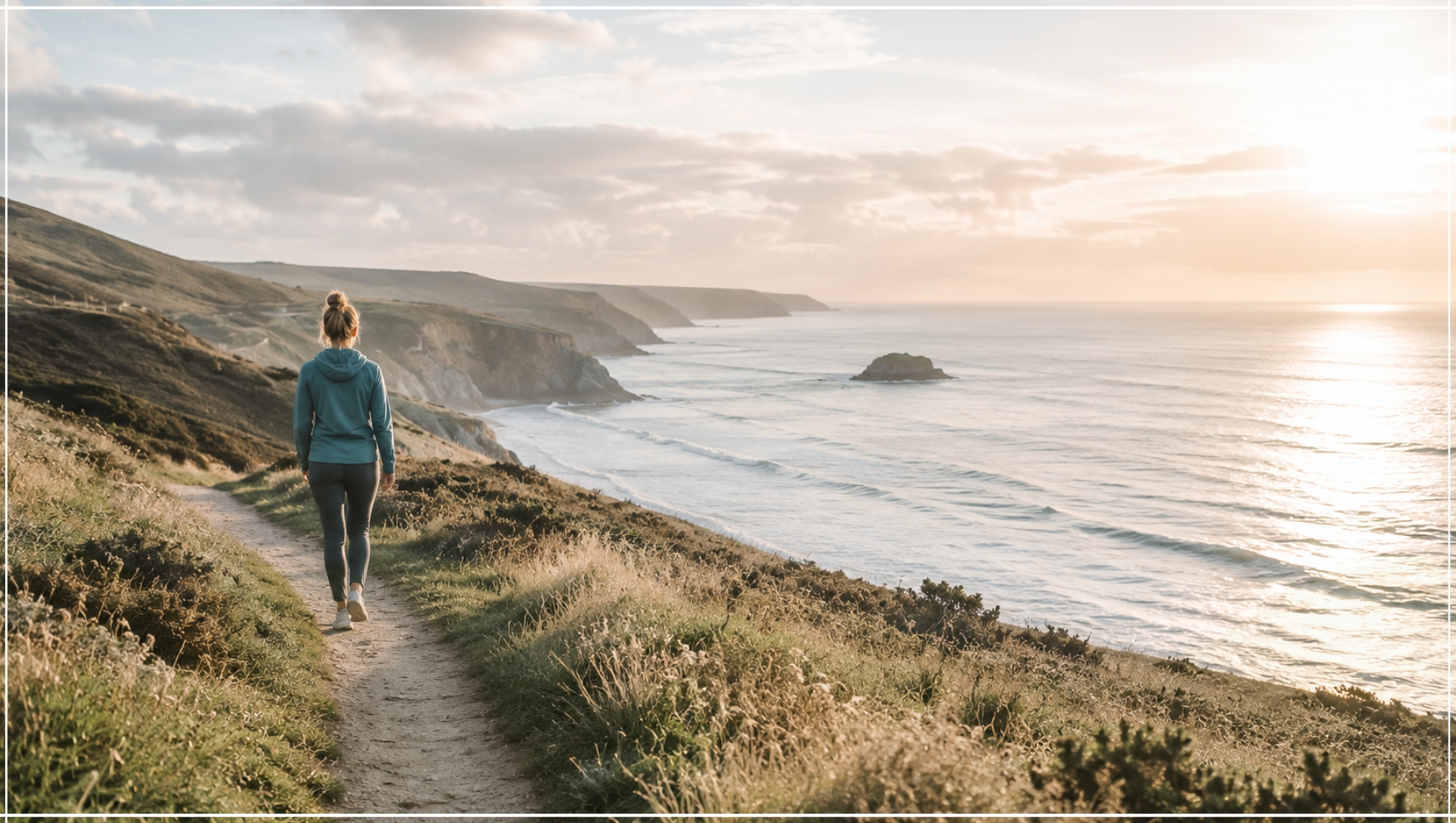
I get outside every single day. Not because I force myself to, but because I’ve noticed what happens when I don’t.
If I don’t leave the house for even one or two days, I feel it. My mood shifts noticeably. I start to feel enclosed, trapped – almost imprisoned by four walls. It’s not dramatic, it’s just real. Being outside and moving in nature isn’t a nice extra for me. It’s a necessity.
And, I honestly really enjoy it anyway. Walking, nature and natural landscapes are some of my favourite things.
Ben, my husband, describes me as a 70/30 person – I want to spend 70% of my time outdoors and only 30% indoors. Maybe I’m even an 80/20 person!
Ben says he’s 60/40. He can cope with much more time inside than I can. I crave the outdoors in a way that feels almost physical. If I had more spare time, I’d spend more of it outside and less in front of my laptop without a second thought.
It’s part of why winter is so hard for me. The darker mornings and evenings, the cold, the shorter days – they all reduce how much time I can realistically spend outside, and I feel that loss keenly. Ben thinks it’s a big part of why I struggle with SAD. I think he’s right.
Living in Cornwall, I’m incredibly lucky. Beaches, coastal paths, countryside, woodland, rivers, estuaries – proper nature is never more than a few minutes away. But even before we moved here, getting outside was always the thing that worked best for clearing my head and lifting my mood.
Nature is one of the most consistently effective tools I have for managing stress and anxiety. It genuinely clears my head, reduces my anxiety noticeably, improves my mood, gives me energy, and helps me think more clearly. Some of my best business ideas have come to me on a walk.
There’s something about being outside, moving, breathing fresh air, that unlocks a kind of thinking that sitting at a desk simply can’t.
Why nature works for stress and anxiety
The research backs up what most of us already know instinctively. Spending time in natural environments has been shown to lower cortisol levels – the stress hormone – reduce blood pressure, and improve mood. Studies suggest that just 120 minutes a week in nature is enough to make a measurable difference to health and wellbeing.
The theory is that natural environments engage our attention in a gentle, effortless way – unlike screens or work, which demand focus and deplete mental energy. Nature restores that capacity. It gives your mind somewhere to go that doesn’t cost anything.
For anxiety specifically, the effect is even more direct. Being outside interrupts the thought spirals that anxiety feeds on. You can’t ruminate as easily when you’re watching waves or listening to birds. If you’re working on managing anxiety generally, my post on natural remedies for anxiety covers everything I’ve found helpful alongside nature.

Coastal walks and the sea
Living near the coast in Cornwall, the sea is my go-to. There’s something about being near water – the sound, the movement, the scale of it – that puts everything in perspective almost immediately.
A coastal walk, especially on a windier day, is the fastest way I know to clear my head. The physical effort of walking combined with the sensory experience of being near the sea works on multiple levels at once. By the time I get back, whatever was weighing on me feels more manageable – not because anything has changed, but because I’ve shifted out of the mental loop I was in.
Even just sitting near the water and watching it helps. You don’t have to be moving. Sometimes just being somewhere that big and old and indifferent to your problems is exactly what you need.
Walking in the countryside, woodland and along rivers
Away from the coast, the countryside around Newquay offers woodland, fields, river walks and estuary paths that are restorative in a different way to the sea. Quieter, more enclosed, more textured.
Woodland walks in particular seem to slow my brain down. There’s less visual space, more detail, more to notice. It’s harder to think about work when you’re watching light come through trees or listening to water moving over rocks.
The Japanese practice of shinrin-yoku – forest bathing – is essentially just this: spending unhurried time among trees with no agenda. No fitness goal, no podcast, no phone. Just being present in the space. The evidence for its effect on stress and anxiety is surprisingly strong.
How walking keeps you healthy and active goes into more depth on the physical and mental benefits of making it a daily habit.
The garden as a daily nature fix
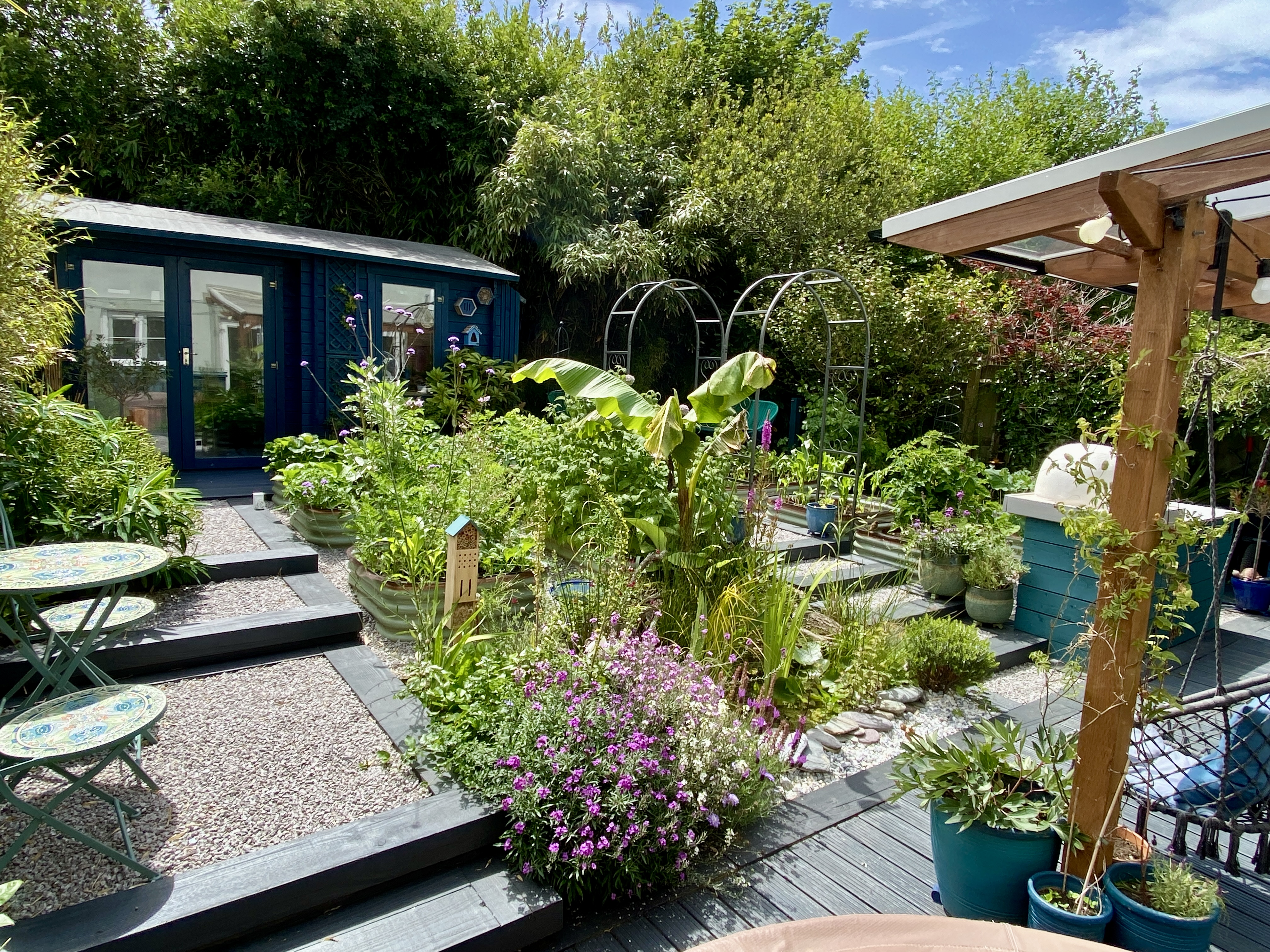
We’ve spent years building our garden into something that genuinely supports wellbeing – and it’s become one of my favourite places to be.
We have 10 vegetable patches, fruit trees, fruit vines, and this year alone we’re growing 29 different edible things. Tropical plants and evergreen shrubs mean it stays green all year round. We’ve created a small pond that attracts frogs, dragonflies and damselflies. We put out bird seed regularly and have butterfly boxes, bird boxes and bee boxes dotted around – so there’s always wildlife to watch if you sit quietly enough.
For sitting outside in all weathers, we have an L-shaped sofa area under a roofed veranda with clear roofing, a heater for colder days, and shelter for rainy ones. A decking area at the back has benches and a hammock. There’s a firepit, an outdoor sink, a pizza oven, and lighting for evenings. We genuinely use the garden in every season.
On days when I can’t get out for a proper walk, even 20 minutes in the garden – sitting with a coffee watching the birds, doing some weeding, picking something for dinner – shifts something. It’s the combination of being outside, being surrounded by living things, doing something with your hands, and being away from a screen.
You can read more about how we created a garden that’s good for mental health and find ideas in my post on wellbeing garden ideas if you want to make your outdoor space work harder for your wellbeing.
Using nature to solve problems and generate ideas
This is something I don’t see talked about enough, but it’s one of the most practical reasons I get outside every day.
Some of my best thinking happens on walks. Business ideas, solutions to problems I’ve been stuck on, decisions I’ve been avoiding – they often come to me when I’m outside moving, not when I’m sitting at my desk trying to force them. There’s something about the combination of light physical movement, fresh air, and reduced mental noise that frees up a different kind of thinking.
If you’re self-employed or work creatively, this is worth taking seriously. Getting outside isn’t time away from work – it can be one of the most productive things you do.
How to make nature a daily habit
The barrier for most people isn’t enjoyment – it’s time and habit. Here’s what works for me.
Most mornings I go for an early run – even just 20 to 30 minutes – before the school run to start the day well. Then after dropping the kids off, I try to fit in a walk before settling into work. In the evenings, a walk after dinner is another regular ritual when work allows.
During the working day I use errands as an excuse to get away from my laptop. Dropping off library books, posting eBay parcels, picking something up from the supermarket – I choose routes that take me past the river, along coastal paths, or through fields and public footpaths where possible. The errand gets done and so does the walk.
A coffee break in the garden also counts. I try to sit outside mid-morning or eat lunch in the garden rather than at my desk – just to soak up the fresh air, the wildlife, and a few minutes away from a screen. Even that small shift makes a difference to how the afternoon feels.
At weekends we spend much more time in the garden, usually tending to it – weeding, planting, harvesting, maintaining. That kind of purposeful outdoor activity is grounding in a different way to walking.
We also use weekends for longer, more leisurely time in nature when we’re less rushed. The boating lake, the local rose garden, walking along the river and estuary, parks with the kids – time that isn’t squeezed around work and school runs.
And longer coastal walks when we can – either along the shore getting some proper wave therapy, or up on the coastal cliff paths taking in the views. There’s something about the scale of the Cornish coastline that puts everything in perspective. The weekend version of nature time is more restorative somehow – there’s nowhere else to be.
Making outdoor movement part of the fabric of your day – rather than something you have to carve out special time for – is what makes it sustainable. Even choosing a route with a park over a main road, or getting off public transport a stop early, adds up.
Leave your phone in your pocket when you can. If you’re listening to a podcast or scrolling, you’re not really in nature – you’re just outside. The benefit comes from actually being present in the space.
Nature and anxiety – what it can and can’t do
Nature consistently reduces my anxiety and improves my mood. But I want to be honest that it doesn’t cure anxiety or address its root causes – for that, other approaches are needed.
As a daily tool for keeping anxiety manageable, as a way to interrupt a spiral before it takes hold, and as a way to restore mental energy that stress depletes – it’s one of the most reliable things I’ve found. And unlike a lot of remedies, it’s free, accessible, and has no side effects.
For anxiety that feels harder to manage, my post on natural ways to reduce anxiety at night is a useful companion to this one – covering what helps when the day is done and the thoughts start.
Before you go…
If you’re working on managing stress and anxiety more broadly, these posts cover complementary ground – how to naturally boost your mood, the benefits of gardening for health and wellbeing, and tips for a healthier happier winter for when the outdoors feels harder to access.
Discover more from Healthy Vix
Subscribe to get the latest posts sent to your email.