
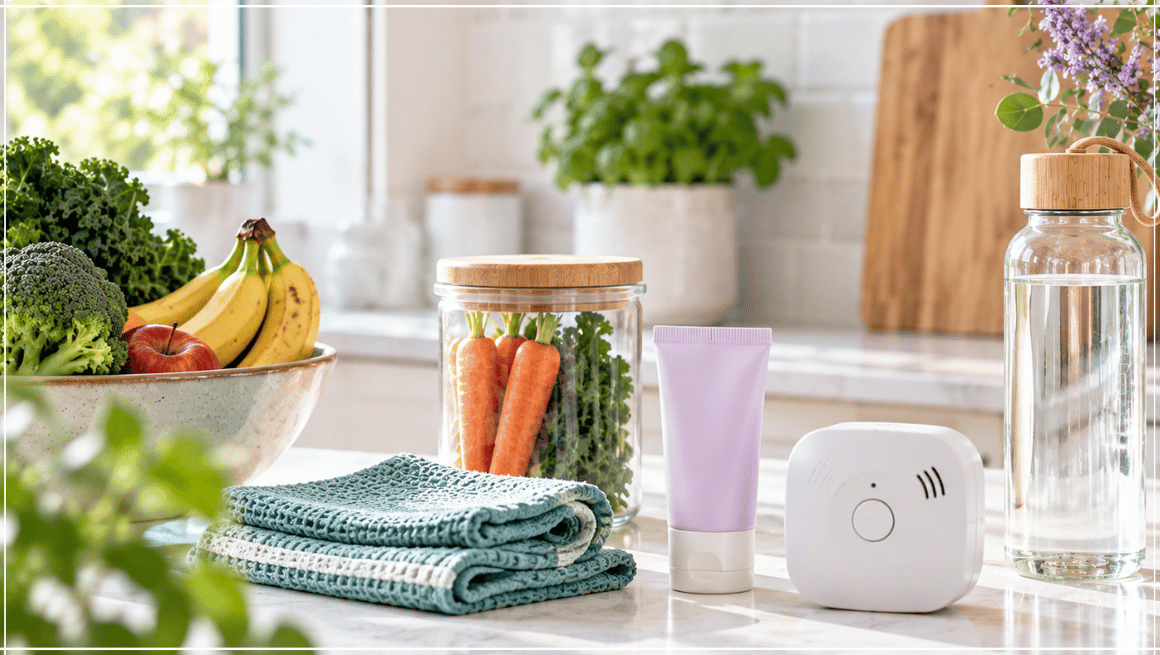
Most of us are used to checking expiry dates on food, toiletries and medicines. But what about all the other things around the home that need checking, cleaning or replacing?
From carbon monoxide alarms and water filters to kitchen sponges and sunscreen, there are plenty of everyday household items that can easily be overlooked.
Some have an actual expiry date, while others simply become less effective, unhygienic or unsafe with age and regular use.
The good news is that keeping on top of these things doesn’t have to be expensive, complicated or wasteful. A few simple routines and calendar reminders can help you maintain a healthier, safer home without constantly buying replacements.
Here’s what to look out for, why it matters and how to make household checks part of everyday life.
Why household expiry dates matter
Not everything comes with an obvious use-by date.
While food packaging usually tells us when something should be eaten, other household products rely on manufacturer instructions, recommended maintenance schedules or signs of wear and tear.
For example, a water filter may need changing after a certain number of litres, while a carbon monoxide alarm has a limited working lifespan. A kitchen sponge, on the other hand, doesn’t necessarily have a fixed expiry date but needs regular cleaning and replacing when it becomes worn or unhygienic.
It’s also worth remembering that not everything needs replacing just because it’s old.
Some items can be cleaned, repaired or maintained, helping to reduce unnecessary household waste.
The aim isn’t to throw things away more frequently. It’s to understand which items need attention and when.
If you find it difficult to remember replacement dates, adding reminders to your calendar can help.
1. Check food freshness and expiry dates regularly
Food is probably the most obvious place to start, but even with good intentions, it’s surprisingly easy to forget what’s hiding at the back of the fridge or underneath everything in the vegetable basket.
One habit I’ve developed is regularly checking our fresh food in the fridge, fruit bowl and potato and onion baskets to see what needs using first.
We often have a vegan family meal plan, but I don’t follow it so strictly that perfectly good food ends up going to waste.
If certain vegetables or fruits are starting to lose their freshness, I’ll adjust our planned meals to use them sooner.
For example, if we have some vegetables that need using, we might change dinner to a vegetable curry, soup, stir-fry or another simple plant-based meal.
It’s a practical way to save money, make the most of the food we’ve already bought and reduce unnecessary waste.
Understand use-by and best-before dates
It’s important to understand the difference between these two types of food dates.
Use-by dates relate to food safety. Food shouldn’t be eaten after its use-by date, even if it looks and smells fine. Follow the storage instructions and only freeze food before the use-by date where appropriate.
Best-before dates relate to quality. Food may still be perfectly good after this date if it has been stored correctly, although its flavour, texture or freshness might have changed.
Fresh fruit and vegetables don’t always have printed dates, so checking their condition and storing them properly is particularly useful.
Organising the fridge with labels and storage bins, can also make it easier to see what needs using. I find that simply checking what we already have and moving older produce to the front works well.
Freeze food before it goes to waste
Freezing is another useful way to preserve food that won’t be eaten in time.
If our bananas are becoming overripe, for example, I’ll freeze them to use in smoothies later.
I’ve shared more ideas in my article on what to do with overripe bananas.
And if we have more vegetables or fruit than we can realistically eat, we’ll often chop and freeze what we can.
It’s worth checking the best freezing method for individual foods, as some vegetables benefit from blanching first.
Compost what you can’t use
Of course, not every piece of food can be saved.
We have two compost bins at home, which means suitable fruit and vegetable scraps can still be put to good use rather than going straight into the household rubbish.
I love knowing that our food scraps can eventually help nourish the soil for future vegetables and fruits growing in our garden.
It means even when something can’t be eaten, it doesn’t feel completely wasted.
If you’re interested in growing your own food, I’ve also shared beginner’s tips for starting a vegetable garden.
For more ideas, see my simple ways to reduce waste in the kitchen.

2. Check smoke and carbon monoxide alarms
Some of the most important household checks have nothing to do with food.
Smoke and carbon monoxide alarms are essential safety devices, but they’re also easy to forget about once installed.
These alarms don’t last indefinitely. Their sensors have a limited lifespan, and batteries may need replacing depending on the model.
Carbon monoxide alarms
In our home, we have a useful routine for checking our carbon monoxide alarms.
Our living room alarm is checked annually when we have our chimney swept, as the chimney sweep checks that it’s working.
The carbon monoxide alarm in our kitchen is also checked during our annual boiler service.
These professional visits are useful reminders, but they don’t replace the need to test alarms regularly ourselves according to the manufacturer’s instructions.
I also have a reminder in my iCal for when our carbon monoxide alarms are due to be replaced.
Ours have a specified lifespan of ten years, but this varies between models, so it’s important to check the manufacturer’s replacement date rather than assuming every alarm lasts the same length of time.
Smoke alarms
Smoke alarms also need regular testing.
Some have replaceable batteries, while others contain sealed batteries designed to last for the alarm’s working life.
Our smoke alarms make a warning sound when their batteries are running low, which is a useful reminder that something needs attention.
However, it’s important not to rely on a low-battery warning alone.
Follow the manufacturer’s testing instructions, check the replacement date and replace any alarm that is faulty or has reached the end of its working life.
3. Check medicines and first aid supplies
Medicines and first aid products are another area where expiry dates can be easily overlooked.
It’s worth checking your medicine cabinet occasionally, particularly if you only use certain products when somebody is unwell.
Things to look at include:
- Over-the-counter medicines and pain relief
- Antiseptic creams and solutions
- Alcohol wipes and hand sanitiser
- Sterile dressings and bandages
- At-home health tests
- Other first aid supplies with printed expiry dates
Some products may become less effective over time, while sterile supplies can no longer be relied upon to remain sterile beyond their stated expiry dates.
Medicines should always be stored according to their instructions, as heat, moisture and sunlight can affect some products.
If something has expired, check how to dispose of it safely. For example, in the UK, unwanted medicines can generally be returned to a community pharmacy rather than thrown into household rubbish.
If you have children, it’s also worth periodically reviewing your family first aid kit to make sure the contents are suitable and ready when needed.
4. Check bathroom products and toiletries
Bathrooms are often warm and damp, making regular cleaning and ventilation particularly important.
It’s also worth checking the condition of items that are used repeatedly or stored for long periods.
Shower sponges and loofahs
Shower sponges and loofahs can retain moisture, skin cells and residue.
Research and hygiene advice have highlighted that loofahs can harbor Staphylococcus and Streptococcus bacteria, particularly when they’re not cleaned and dried properly.
Personally, after using a loofah in the shower, I always rinse the soap off thoroughly under hot running water before getting out. I then hang it up somewhere it can air dry properly.
I find this helps keep it cleaner and in better condition for longer.
However, even with good care, loofahs won’t last indefinitely. It’s important to replace them regularly, especially if they become discoloured, develop an unpleasant smell or start deteriorating.
A washable flannel is another practical option, as it can be laundered regularly and reused.
Makeup and skincare products
Something I think many people don’t realise is that makeup and toiletries often have expiry dates too.
If you look on the back of a moisturiser, foundation, mascara or other cosmetic product, you’ll often find a little symbol that looks like an open jar.
Inside or beside it, there might be a number such as 6M, 12M or 18M.
This means the product is intended to be used within six, twelve or eighteen months of opening, respectively.
It’s known as the period after opening symbol.
Some products have a printed expiry date instead, so it’s worth checking the packaging rather than assuming everything follows the same rule.
This is particularly important for products used around the eyes.
Changes in smell, colour, texture or consistency can also indicate that a product is no longer suitable to use, even if it hasn’t reached the recommended date.
For a vegan household, it’s also worth checking ingredients and cruelty-free credentials when buying replacements.
Toothbrushes and toothbrush heads
You’ve probably seen recommendations or adverts suggesting you replace your toothbrush or electric toothbrush head every three months.
But personally, I find mine needs changing much sooner!
I tend to replace my electric toothbrush head around once a month.
When you think about it, brushing at least twice a day means around 60 uses in a single month. By then, I find the bristles are often too frayed to carry on using for another two months.
Of course, this will vary depending on the brush, bristle quality and how you brush your teeth.
The general recommendation is to replace toothbrushes or brush heads every three to four months, or sooner if the bristles become worn or splayed.
For me, the condition of the bristles is a more useful guide than waiting for a particular date.
Toilet brushes and other bathroom accessories
Toilet brushes don’t have a universal expiry date either.
I tend to replace ours when they start looking a bit gross and are beyond cleaning properly.
There’s little point throwing away a perfectly usable brush simply because it’s a few months old, but equally, there’s no benefit in keeping something that’s become unhygienic.
There are various items to review that could expire or need replacing in the bathroom, including toilet brushes, bath mats, toothbrush holders and other regularly used accessories.
For most of these, regular cleaning and checking their condition is more useful than following an arbitrary replacement schedule.
If you’re trying to reduce unnecessary plastic waste, my article on reducing plastic in the bathroom has more ideas.
5. Check kitchen cleaning tools and food storage
Kitchen cleaning products and utensils are used so regularly that it’s easy to overlook their condition.
But cleaning with a dirty sponge or worn-out brush isn’t particularly effective.
Sponges, dishcloths and washing-up brushes
We mainly use reusable cloths in our kitchen rather than disposable cleaning products.
I tend to wash a batch of cloths and tea towels once or twice a week, depending on how much we’ve used them. Any particularly dirty cloths get washed sooner.
When we do use sponges, whether in the kitchen or for general cleaning, I make sure they’re thoroughly rinsed in hot water afterwards.
I then squeeze out as much water as possible and leave them somewhere they can air dry.
This helps prevent them sitting damp and dirty between uses.
Of course, washing and drying won’t make a sponge last forever, and anything that smells unpleasant, is deteriorating or can’t be cleaned properly should be replaced.
I much prefer having a supply of washable cloths that can be used repeatedly rather than constantly buying disposable alternatives.
Chopping boards
Chopping boards are another kitchen item worth checking regularly.
Plastic and wooden chopping boards can develop cuts, grooves and scratches over time, particularly with frequent use.
These areas can become more difficult to clean thoroughly.
Personally, I prefer non-scratch glass chopping boards because they’re easy to clean and don’t develop the same knife grooves or cuts that can harbour food residue and bacteria.
They’re also durable and don’t absorb moisture.
However, glass boards are harder on knife edges and can be slippery, so it’s important to use them carefully and ensure they’re stable.
Whatever material you prefer, clean chopping boards thoroughly and replace any that become damaged or difficult to maintain hygienically.
Reusable water bottles
Reusable water bottles are a great way to avoid unnecessary single-use plastic, but they still need regular cleaning.
I try to wash all our water bottles at least once a week, although bottles used daily, especially for anything other than water, should be washed more frequently.
It’s particularly important to clean the lids, drinking spouts, straws and seals, where moisture and residue can accumulate.
You might come across advice suggesting replacing reusable bottles every one to three years, but this isn’t a universal expiry rule.
A good-quality bottle can last considerably longer if it’s properly maintained.
I think it’s far more sensible to check for cracks, damage, deterioration or parts that can no longer be cleaned effectively than to replace a perfectly good bottle unnecessarily.
For more ideas on reducing waste and choosing reusable products, see my eco-friendly kitchen guide.

6. Check water filters and other appliances
Water filtration systems and household appliances often have maintenance schedules that are easy to forget.
And sometimes, the recommended replacement intervals are surprisingly long!
Water filters
We have a Berkey water filter at home, and the replacement interval for our particular filters is a rather random eleven years!
Because that’s such a long time to remember, I’ve added the replacement date to my iCal.
It’s a perfect example of why digital reminders can be so useful for household maintenance.
Of course, water filter lifespans vary considerably, and some depend on the volume of water filtered rather than the number of years they’ve been installed. It’s important to follow the instructions for your exact filter and replace it sooner if necessary.
I also drink distilled water, which we make at home using our water distiller.
The distiller has small carbon filters in the spout, which need changing periodically.
I don’t have an exact replacement interval that I follow for these, but I’ve noticed that the water starts to taste a little different when they’re ready for changing.
That’s usually my cue to replace the carbon filter.
Taste isn’t a reliable way to establish whether a filter is still working safely, though, so it’s always worth checking the manufacturer’s recommended schedule as well.
I’ve written more about why I drink distilled water and how to clean a countertop water distiller.
I’ve also explored different filtration options in my guide to countertop water filters.
Air purifiers and dehumidifiers
Air purifiers and dehumidifiers can also require regular maintenance.
Depending on the model, this might involve cleaning or replacing filters, emptying water tanks and checking for dust or mould.
Not every filter needs to be thrown away. Some are washable or reusable, while others must be replaced.
Always follow the appliance’s instructions.
Washing machines
Our washing machine gets a lot of use!
As a busy family household, we probably use it around ten times a week, sometimes even more.
Luckily, it has a dedicated tub-clean setting and tells me when it’s time to run it.
I also use some non-toxic washing machine cleaning tablets every now and then.
These simply go into the empty drum, and I run the machine on its hottest suitable cleaning cycle, following the tablet and appliance instructions.
I do this approximately once a month because our machine gets so much use.
It helps keep the inside clean and reduces the build-up of residue that can develop from regular washing.
It’s also worth checking the door seal, detergent drawer and filters, as these can collect moisture and grime.
Dishwashers
Dishwashers also need occasional attention.
Filters can collect food debris, while seals and spray arms may need cleaning to keep everything working properly.
Following the manufacturer’s maintenance recommendations can help prevent unpleasant smells and keep the appliance working efficiently.
7. Keep an eye on indoor moisture and ventilation
Although expiry dates are the main focus here, the environment in which household items are stored also matters.
Warm, damp conditions can encourage mould and microbial growth, particularly where ventilation is poor.
Bathrooms are one of the most obvious places where moisture can become a problem.
Bathroom extractor fans
We have extractor fans in all our bathrooms, which help remove moisture when showering or bathing.
However, after around five years of heavy use since we last installed new ones, all of our current fans are now in need of replacing.
We’re working through them room by room at the moment.
It’s a good reminder that even household fixtures we don’t think about very often can eventually wear out or become less effective.
That doesn’t mean every extractor fan needs replacing after five years. Many last much longer, and some simply need cleaning or repairing.
But it’s worth paying attention if a fan becomes noisy, stops working properly or no longer clears moisture effectively.
Open windows and tackle mould early
As well as using extractor fans, we also try to open the bathroom windows when showering or afterwards, where practical, to let as much steam escape as possible.
If we notice mould starting to form anywhere in the bathroom, we tackle it straight away rather than allowing it to spread.
I think it’s much easier to deal with a small patch when it first appears than wait until it becomes a bigger problem.
Of course, cleaning visible mould is only part of the solution. If it keeps returning, it’s important to identify and address the underlying moisture issue.
Simple habits such as ventilating rooms, wiping away condensation, fixing leaks and keeping surfaces dry can all help.
For more information, see my article on improving indoor air quality.
Humidifiers
Humidifiers need particular care because they hold water and can release moisture into the surrounding air.
Standing water can allow microorganisms to multiply, particularly if the equipment isn’t cleaned regularly.
The US Environmental Protection Agency recommends washing portable humidifiers every three days, alongside regular water changes and following the manufacturer’s maintenance instructions.
If you use one, check whether it has filters or other components that need replacing.

8. Check sunscreen and seasonal products
Some products spend months in a cupboard before they’re needed again.
Sunscreen is a good example.
Before using an old bottle, check the expiry date or period-after-opening information.
Exposure to heat and sunlight can affect product stability, so sunscreen should be stored according to its instructions.
If a product has expired, changed consistency or been stored incorrectly, it’s safer to replace it rather than rely on uncertain protection.
The same principle applies to other seasonal products, such as insect repellents and certain skincare treatments.
It’s worth checking these before the season begins, rather than discovering they’ve expired just when you need them.
Does warmer weather affect household products?
Temperature can affect how certain products should be stored, particularly medicines, cosmetics and some cleaning products.
Periods of very hot weather may make it more difficult to keep them within their recommended storage conditions.
For example, a 2026 report discussed 80 million people in the U.S. being affected by heat warnings.
But extreme weather isn’t the only reason to think about storage conditions. Everyday heat, humidity, direct sunlight and poor ventilation can also affect products and encourage mould growth.
The important thing is to follow product storage instructions and keep an eye on conditions in your home throughout the year.
9. Use reminders to keep track of important dates
With so many household items to think about, remembering everything can feel like another chore.
But it doesn’t have to be.
One of the simplest solutions is to use a digital calendar or reminder app for important checks.
I use iCal for things that are easy to forget, especially when the replacement date is years away.
Our carbon monoxide alarms and Berkey water filters are good examples.
It’s unlikely I’d remember an eleven-year filter replacement date without having it written down somewhere!
Other useful reminders might include:
- Testing smoke and carbon monoxide alarms regularly
- Replacing alarms at the end of their specified lifespan
- Annual boiler servicing and chimney sweeping
- Checking medicines and first aid supplies
- Replacing water filters according to their instructions
- Checking seasonal products such as sunscreen
- Cleaning or maintaining appliances
- Checking extractor fans and ventilation
- Reviewing household products with expiry dates
Some tasks need doing much more frequently than others, so it’s worth setting reminders based on the manufacturer’s recommendations and how heavily you use something.
Personally, I find it useful to link certain checks to things that already happen every year, such as our boiler service and chimney sweep.
That way, they become part of our normal household routine rather than something else to remember from scratch.
10. Avoid replacing things unnecessarily
An important part of maintaining a healthy home is knowing when something genuinely needs replacing.
Not every old household item is unsafe, and not every product needs throwing away after a particular number of months.
Some products have strict expiry dates for good reasons, particularly medicines, sterile supplies and safety equipment.
Others can continue being used safely if they’re cleaned, maintained and still in good condition.
It’s worth asking yourself:
- Does this item have a genuine expiry or replacement date?
- Is there a manufacturer’s maintenance schedule?
- Can it be cleaned or repaired?
- Is it damaged or no longer working properly?
- Can I choose a longer-lasting, reusable alternative when it eventually needs replacing?
Taking this approach helps balance household hygiene and safety with a more sustainable way of living.
It’s also a reminder that looking after the things we already own can be just as important as buying new ones.
For more ideas, see my article on eco-friendly ways to save money in the kitchen.

Final thoughts
It’s easy to focus on food expiry dates while forgetting about the many other household items that need checking.
From carbon monoxide alarms and medicines to water filters, bathroom products and cleaning equipment, a little regular maintenance can help keep your home safer, cleaner and healthier.
But there’s no need to become obsessive about replacing everything.
For me, the most practical approach is to build small checks into everyday life, use reminders for important dates and avoid unnecessary waste wherever possible.
Whether that’s adjusting our vegan family meals to use fresh produce before it spoils, freezing extra fruit and vegetables, composting scraps, cleaning reusable household items or keeping track of our alarms and filters, these little habits all contribute to a home that’s better cared for.
And often, the simplest routines are the ones that make the biggest difference.
Discover more from Healthy Vix
Subscribe to get the latest posts sent to your email.