
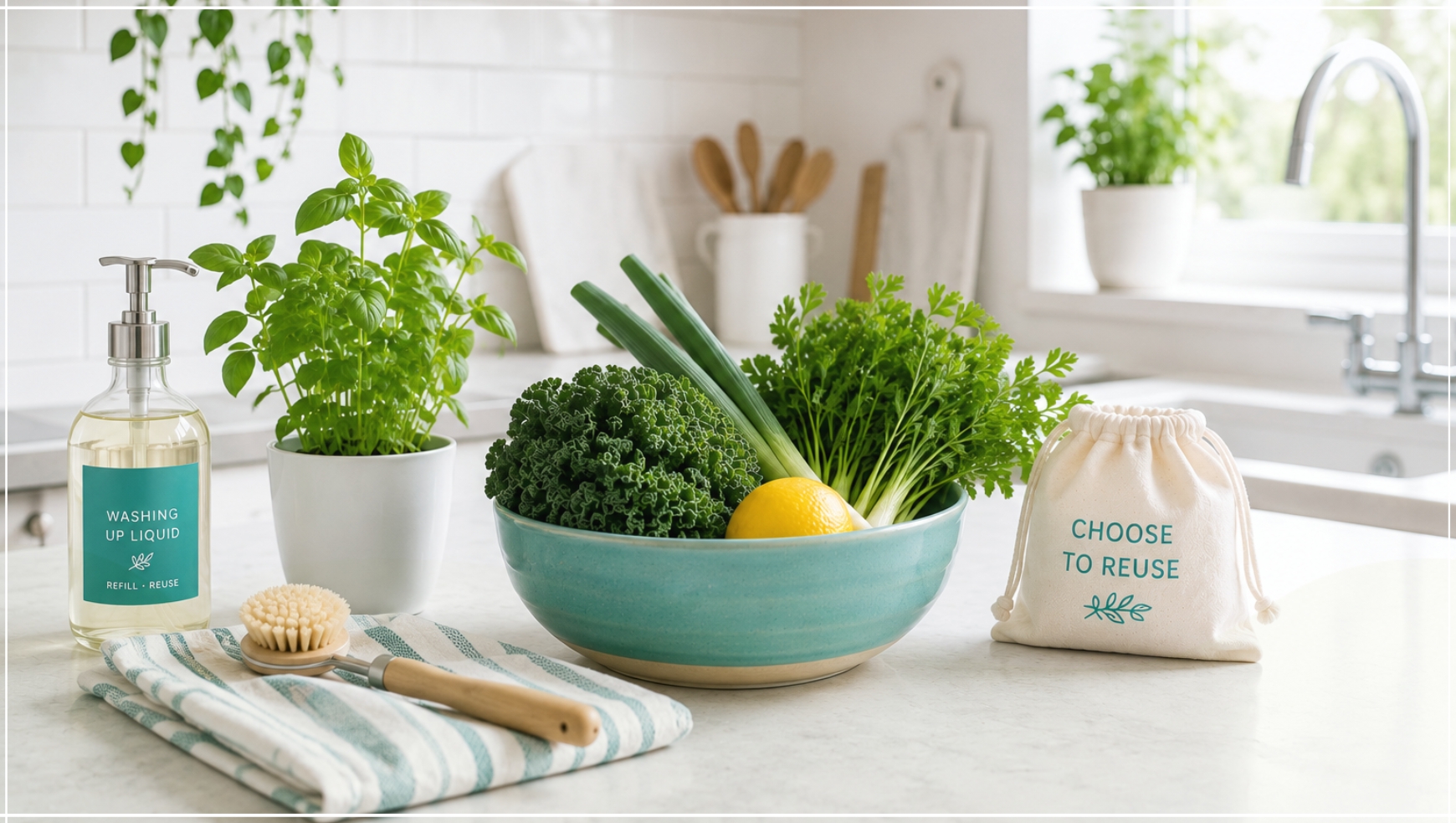
The kitchen is the hub of our home. It’s where we spend most of our time as a family – cooking, eating, washing up, running appliances, generating waste. It’s also one of the most expensive rooms to run.
When energy bills rise, and food prices creep up, the kitchen is usually where you feel it first. But it’s also where small, consistent changes can make the biggest difference – both to your bills and to your environmental impact.
Here’s what we actually do as a family of four, and what’s made the most difference.
Reduce food waste first
Food waste costs UK households hundreds of pounds every year. When food goes in the bin, that’s money in the bin.
We generate very little actual food waste. Most of what we throw away is peels, cores, and things that genuinely can’t be used. For everything else, we try to have a system.
Browning bananas get peeled and frozen immediately to use in smoothies later. Potatoes that have started sprouting eyes go straight into the potato patch in the garden rather than the bin. We try to spot which fresh produce needs eating first and build meals around it rather than letting things get forgotten at the back of the fridge.
Leftovers become the next day’s lunch more often than not. And anything that does get wasted – food on plates, vegetable trimmings – goes into the compost, which then feeds back into our vegetable garden. So even what feels like waste isn’t really wasted.
A loose weekly meal plan helps more than anything. You don’t need to be rigid about it, but having a rough idea of what you’re cooking each day means you only buy what you actually need and don’t end up with forgotten fresh produce going off. Our post on our vegan family meal planner shows how we approach this as a plant-based family.
Switch to eco-friendly cleaning products
This is one of the easiest swaps and one that saves money over time.
We buy washing up liquid in 5 litre quantities and refill the same dispenser rather than buying a new bottle each time. Less plastic, lower cost per wash, no difference to how it cleans. We use a natural, non-toxic washing up liquid – better for our hands, better for what goes down the drain.
For kitchen cleaning spray, we use eco-friendly refill sachets – you add water and the sachet dissolves, refilling your existing bottle. It takes about 30 seconds and cuts down on plastic significantly. We also use natural, non-toxic dishwasher tablets when we use the dishwasher, and buy them in bulk.
The difference in cost between eco refill products and standard supermarket alternatives is smaller than most people expect, and the reduction in plastic is significant. We put our general waste bin out every four to six weeks rather than every two – and it’s never full, sometimes just a couple of small bags. Recycling soft plastics and everything else we can is part of why.

Use energy more carefully
You don’t need to replace all your appliances to reduce energy use in the kitchen. Small habit changes make a meaningful difference.
Only boil as much water as you actually need in the kettle. It sounds tiny but done every day it adds up.
We leave the oven door slightly ajar after cooking to let the residual heat warm the kitchen rather than just dissipate – free heating from something that’s already been paid for.
And when we’re cooking and need ventilation, we open a window a crack or the back door rather than switching the extractor hood on – it does the same job for free, at least through spring, summer and autumn.
We wash dishes by hand most of the time and let them air dry. When we do use the dishwasher, we make sure it’s full before running it.
The washing machine always runs on eco setting rather than the faster saving-time setting – it uses significantly less energy and we just plan ahead to allow for the longer cycle. The tumble dryer is the same – eco setting every time.
Our water distiller uses a reasonable amount of electricity to run, so we time it to run during the day when our solar panels are generating – making the most of free energy rather than drawing from the grid. We also fill it from the hot tap rather than cold, which reduces how long it needs to run to reach distilling temperature.
Small tweaks that add up over daily use. If you’re curious about why we distil our water, my post on why I drink distilled water explains the full story.
Energy-efficient appliances matter for the bigger picture. When replacing appliances, always check the energy rating – the difference in running costs between an A-rated and a lower-rated appliance over several years is significant.
We have a gas cooker that came with the house when it was a new build – it’s now over 20 years old and still going. When we renovated the kitchen we considered replacing it, but decided the most eco-friendly and cost-effective decision was to keep it running until it genuinely needs replacing. We’ve already replaced the heating element twice rather than buying a new oven, which has saved money and kept a functioning appliance out of landfill.
When it does eventually give up, we’d like to switch to an electric oven so we can run it from our solar panels rather than gas – but until then, repair over replace is the right call.
That principle applies to most kitchen appliances. Repairing something that still works is almost always cheaper and more sustainable than replacing it.
Consider solar panels if you can
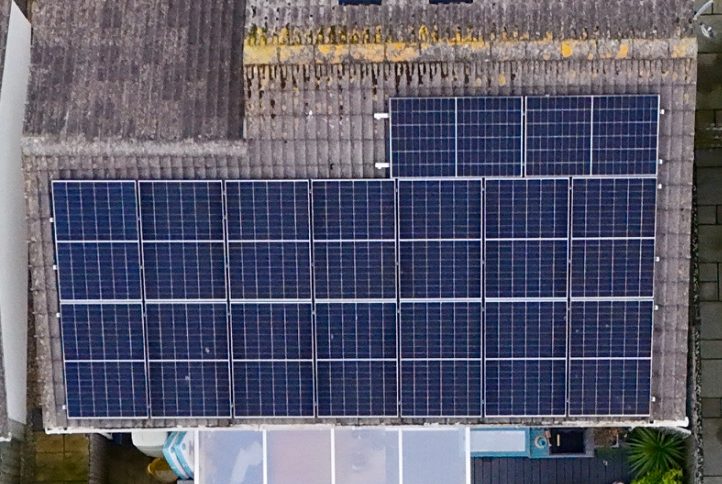
We had solar panels installed, and they’ve made a significant difference to our energy bills – wiping them out in the spring and summer months altogether!
It’s a bigger upfront investment, but if you own your home and are planning to stay long-term, solar panels are worth looking into seriously. The payback period has shortened considerably as energy prices have risen, and the environmental benefit is real.
We run our tumble dryer without guilt, knowing it’s powered by solar energy on sunny days. We’d rather have the aesthetics of our garden intact – it’s our wellbeing space and having washing hung out every day wouldn’t suit that – so the dryer gets used regularly as a family of four. The solar panels make that choice feel less costly both financially and environmentally.
Our post on saving money with renewable energy covers more on this if you’re considering making the switch.
Or if you just want a renewable energy tariff to be more eco-friendly, check out my post for a new customer offer for Octopus Energy – you could get £50 credit on your account to get you started!
Think about your hot water use
Heating water is one of the biggest energy costs in most homes, and a lot of it happens in the kitchen.
We had a combi boiler installed which heats water on demand rather than storing it in a tank – and it’s positioned right next to the kitchen sink, so hot water reaches the tap quickly without much heat lost in transit. That’s not always something you can control, but it’s worth knowing that boiler placement and type can make a difference to how efficiently hot water reaches you.
Filling the sink to wash up rather than running water continuously, fixing dripping taps promptly, and using the eco setting on the dishwasher all help reduce how much hot water you’re heating.
Small consistent habits rather than dramatic changes.
Grow some of your own food
This one takes more effort upfront, but pays back in multiple ways.
We grow 29 different edible things in our garden this year across 10 vegetable patches, plus fruit trees and vines. Fresh organic produce that costs us almost nothing once the garden is established, zero food miles, and the mental health benefit of growing something yourself is a genuine bonus.
You don’t need a large garden or a lot of experience. Even a few pots of herbs on a windowsill will reduce what you buy. A small vegetable patch can produce more than you’d expect with the right plants for your space and climate.
Our post on how to start a vegetable garden is a good starting point if you’re new to it. And if you have kids, getting kids excited about growing food makes it a family activity too.
Buy in bulk and store smartly
One of the best things we did was convert our under-stairs cupboard into a pantry. It sounds simple but it’s genuinely changed how we shop.
Having dedicated storage space means we can take advantage of multi-buy offers on tinned goods and cupboard staples – pulses, beans, oats, rice, pasta, tinned tomatoes – without worrying about where to put it all.
We always have a well-stocked pantry which doubles as an emergency food supply and saves money because we’re buying at a lower cost per unit rather than picking up single items as we run out.
Buying in bulk reduces packaging too. One large bag of oats creates far less waste than several small ones bought over the same period.
Batch cook and freeze
Batch cooking is one of the most effective ways to reduce both energy use and food waste at the same time.
Rather than cooking fresh every single night, we regularly make double or triple quantities of things that freeze or store well – soups, chilli, vegan bolognese, curries, anything liquid-based. We’ll even make two trays of lasagna at once, eating one and freezing the other.
One cooking session, two or three meals. Less energy used, less washing up, and a ready meal in the freezer that’s genuinely good for you.
It also reduces the temptation to order a takeaway on a tired weeknight when there’s nothing in – which saves money and reduces packaging waste.
Switch to reusable alternatives
Reducing single-use items in the kitchen makes a quiet but consistent difference over time.
We use reusable cleaning cloths made from cotton and bamboo rather than kitchen roll – we wash and reuse them many times before they need replacing. They clean just as well, and the reduction in disposable waste adds up quickly.
For freezing food, we use reusable freezer pots rather than throwaway freezer bags. Better for the environment and better value over time – the pots last for years.
Looking for other reusable swaps that work in a kitchen? My post on 5 simple ways to reduce waste in the kitchen has more ideas worth trying.
Get an organic veg box delivery
If you’re not already getting an organic veg box, it’s worth considering – both for your health and for reducing packaging waste.
We get a Riverford delivery regularly – not always every week, but as often as we can. The produce is seasonal, organic, and arrives with minimal packaging. Any packaging it does come with can either be returned for reuse or composted. It’s one of the most low-waste ways to buy fresh vegetables, and the quality is noticeably better than supermarket alternatives.
I have a Riverford discount code if you want to try your first box – you can find it on my Riverford voucher code page.
The bigger picture
None of these changes require a kitchen renovation or a significant upfront spend. Most of them cost nothing at all – they’re just habits.
The cumulative effect of reducing food waste, switching to eco cleaning products, using energy more carefully, and growing some of your own food is a genuinely lower household bill and a lower environmental impact. Both feel good.
For more on living more sustainably at home, my post on 15 eco-friendly things I do regularly covers plenty more ideas beyond the kitchen specifically.
Discover more from Healthy Vix
Subscribe to get the latest posts sent to your email.