

I came to essential oils relatively late, but once I started using them properly, I wondered why I hadn’t started sooner. They’re versatile, natural, and genuinely effective (not just for making your home smell nice, but for mood, anxiety, energy, sleep, and skin too).
I’ve been using essential oils for over ten years now, across different parts of the house and for different purposes. Here’s what I actually do, and what works best.
What to look for when buying essential oils
Before getting into the uses, this matters: not all essential oils are equal.
Always look for 100% pure, natural essential oils and organic where possible. Many cheaper options are diluted with synthetic fragrance oils or carrier oils, which significantly reduces their therapeutic benefit.
The brands I use and trust include Neal’s Yard and Tisserand for certified organic options, and Nikura and Miaroma for 100% pure natural oils at more accessible prices. All are widely available online.
One thing to watch with Nikura as they sell both essential oils and fragrance oils. Make sure you’re buying from their essential oils range rather than fragrance oils, which are synthetic and don’t carry the same therapeutic benefits.
Organic, where possible, is always the better choice. You’re often inhaling these oils directly or applying them to your skin, so what’s in them matters.
Ready-made blends are also worth exploring. Most good brands offer blends designed for specific purposes like energy, calm, sleep or focus. They take the guesswork out of combining oils and are a good starting point if you’re new to essential oils.
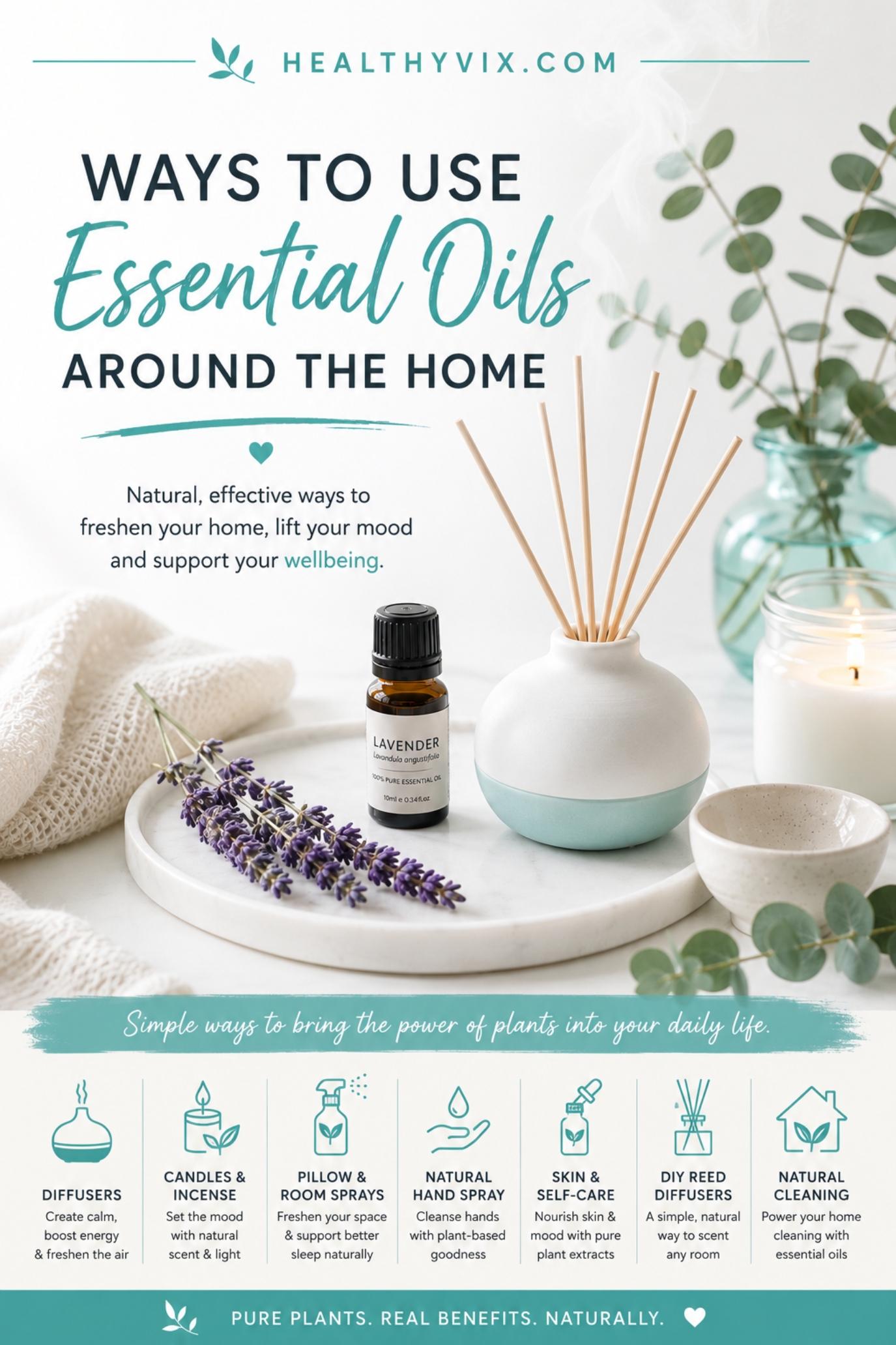
Diffusers and oil burners
This is my most-used method and the one that makes the most immediate difference to how a room feels.
An electric diffuser disperses essential oil into the air as a fine mist, scenting the room gently and consistently. We have two – one downstairs that scents the whole ground floor and doubles as a calming lamp in the evenings, and one in my upstairs office where I use uplifting and energising scents while I’m working.
If you work from home, a diffuser in your workspace is genuinely worth trying to support your productivity and wellbeing.
An oil burner works similarly but uses a tea light candle to warm the oil – a slightly more atmospheric option for evenings. We use oil burners too, and add some water and then a few drops of essential oil in the saucer.
For relaxation and winding down at night, lavender is the best oil. It has genuine evidence behind it for promoting calm and supporting sleep.
Frankincense is another favourite for evenings – grounding and quietening in a way that’s hard to describe but very noticeable.
If you struggle to switch off at night, my post on natural ways to reduce anxiety at night covers how I use diffusers as part of an evening routine.
For energy and focus during the working day, citrus oils work brilliantly. Sweet orange and lemon are both uplifting and mood-boosting. I’ll often put one of these on in the morning or when I need to shift mental gear mid-afternoon. Sweet orange is one of my favourite scents.
Peppermint is another good one for focus and mental clarity.
Bergamot is a personal favourite for mood – it has a beautiful, warm citrus scent and is known for its calming and emotionally balancing properties.
Incense sticks
I also use nag champa incense sticks regularly, and they deserve a mention here because authentic nag champa does contain essential oils, specifically sandalwood oil and oils from the champa flower, alongside natural resins and herbs. It’s a traditional Indian masala incense that has been hand-rolled for centuries.
The scent is distinctive – warm, earthy, sweet and slightly floral – and genuinely different from anything a diffuser produces. I find it particularly good for creating a calm, grounding atmosphere. It’s been used for centuries in meditation and spiritual practice for exactly that reason.
One thing to be aware of as a vegan: some nag champa varieties use honey as a binding agent.
It’s worth checking the ingredients or looking specifically for vegan-friendly versions. Also look for authentic hand-rolled natural incense rather than cheaper versions made with synthetic fragrance oils – the difference in quality and scent is significant, and synthetic versions don’t carry the same therapeutic benefit.
Soy candles
We use soy candles with natural essential oil fragrances as an alternative to the diffuser, particularly in the evenings. They create a warm, atmospheric light alongside the scent – which a diffuser can’t replicate.
It’s worth choosing soy candles specifically over paraffin wax candles, which release petrochemical toxins when burned. Soy is cleaner, burns longer, and when scented with natural essential oils rather than synthetic fragrance, is a much better choice for your home environment.
The atmosphere a candle creates ties into how lighting affects your wellness more broadly too.
Pillow and room sprays
A lavender pillow spray is one of the simplest sleep aids I’ve found. A couple of spritzes on your pillow before bed and the scent is there as you fall asleep.
For more on natural approaches to better sleep, my post on natural sleeping remedies covers a range of options worth trying alongside aromatherapy.
Room sprays work the same way for general freshening – a quick spray into the air or directly onto fabric. We use a natural essential oil based room spray throughout the house as an alternative to conventional air fresheners, which are typically loaded with synthetic chemicals and artificial fragrance.
A few spritzes freshens a room instantly and naturally, and you can use it on soft furnishings like cushions and sofas too.
A citrus or peppermint spray can lift the atmosphere in a room quickly without any of the chemical smell that comes with most commercial alternatives.
Natural hand sanitiser spray
We use a natural essential oil hand sanitiser spray rather than the synthetic alcohol-based gels.
We use the Neal’s Yard sprays, or Dr Bronner lavender spray for this – genuinely effective and they smell amazing!
Tea tree and lavender both have natural antibacterial properties, and a well-formulated natural spray does the job without the harsh chemical smell or the drying effect on skin.
It’s a small swap but one that sits comfortably with choosing natural products wherever possible.
Using essential oils on skin
Some essential oils can be applied directly to skin – but most need to be diluted with a carrier oil first. Applying concentrated essential oil directly to skin without diluting can cause irritation, so always do a patch test and dilute properly.
Lavender is one of the few oils that can be applied neat in small amounts. It can be used on irritated skin or insect bites – it has anti-inflammatory and soothing properties and works quickly.
For a more general skin or massage application, a few drops of your chosen oil mixed into a carrier oil like coconut, almond or jojoba works well. Always choose organic carrier oils to keep the whole application as natural as possible. My post on how to naturally get glowing healthy skin covers other natural approaches to skin health that complement essential oil use.
Roll-on essential oil blends are another option worth having – pre-diluted and ready to apply to pulse points on your wrists or temples for a quick calming or uplifting effect. I’ve used these for scent and also just to sniff when I need a moment of calm.
Sometimes simply opening a bottle of your favourite oil and inhaling it directly is enough. No equipment needed, just the oil.
And if you grow lavender or rosemary in your garden, you already have aromatherapy on tap. Rubbing a sprig between your hands releases the natural oils immediately – we do this regularly when we’re out in the garden and it’s one of those simple, free pleasures that genuinely works.
Both lavender and rosemary have well-documented calming and mood-lifting properties, and getting them straight from the plant feels wonderfully natural.
Making DIY reed diffusers
If you want to fragrance a room continuously without an electric diffuser or candle, a DIY reed diffuser is a simple and cheap option.
Mix around a quarter cup of a light carrier oil (such as almond or fractionated coconut oil) with 20-25 drops of your chosen essential oil or blend. Pour into a small glass jar or bottle, insert diffuser reeds, and the oil wicks up through the reeds and releases scent gradually into the room. You can experiment with different oils and combinations to find what works for each space.
Using essential oils in the bathroom
A few drops of eucalyptus or peppermint oil added to the toilet bowl before flushing freshens the bathroom naturally without synthetic air fresheners.
Tea tree oil has natural antibacterial properties and works well in cleaning applications too – a few drops added to your cleaning spray adds natural disinfecting power. It’s also a useful natural deterrent for certain insects.
Another trick worth trying: add a couple of drops of essential oil to the inside of a new toilet roll. As the roll is used, the oil is released gradually. A simple, low-effort way to keep the bathroom smelling fresh.
A note on quality and safety
A few things worth keeping in mind with essential oils:
- Essential oils are concentrated plant extracts and should be treated with care.
- Always dilute before applying to skin.
- Keep away from children and pets – many oils that are safe for adults aren’t safe for animals.
- If you’re pregnant, check before using.
- Buy from reputable brands.
- Look for pure, organic, 100% natural, essential oils on the label – the difference in quality and therapeutic benefits between a good essential oil and a cheap synthetic alternative is significant.
Before you go…
Essential oils work really well alongside other natural approaches to mood and wellbeing. My posts on natural remedies for anxiety, how to naturally boost your mood and ways to reduce stress and anxiety all touch on how scent and aromatherapy fit into a broader natural toolkit.
And for more on creating a calm and healthy home environment, my post on how to improve indoor air quality is worth a read too.
Discover more from Healthy Vix
Subscribe to get the latest posts sent to your email.