

We get lots of bees in our garden. Bumblebees, solitary bees, honeybees – buzzing around the flowers, the fruit trees, the vegetable patches. It’s one of those things that genuinely makes me happy every time I notice it.
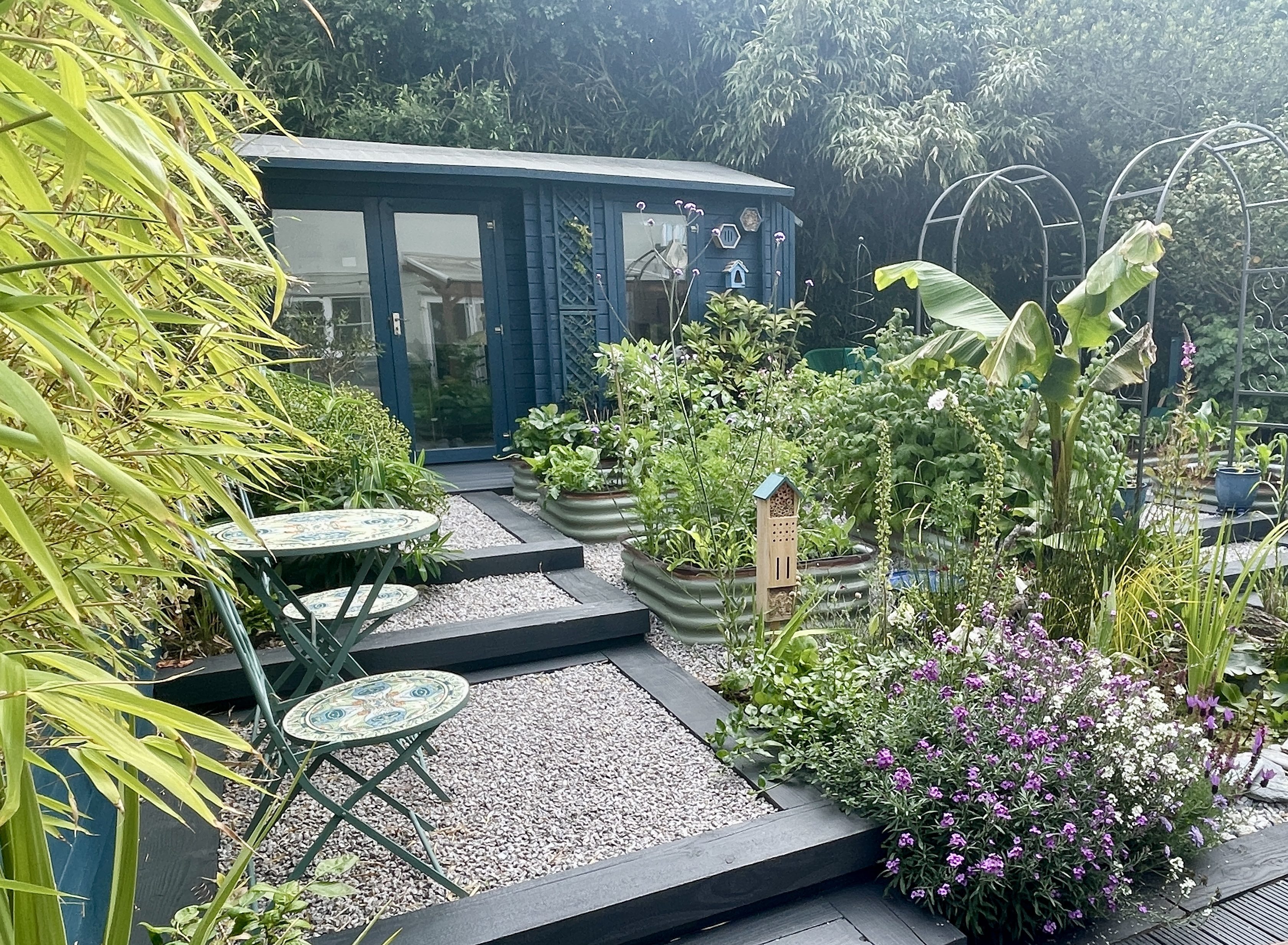
It didn’t happen by accident. Over the years we’ve made deliberate choices about how we garden that make our outdoor space welcoming to bees and other wildlife. We have bee boxes, butterfly boxes, bird boxes, a small pond, wild patches, fruit trees, flowering plants, and we are growing 29 different edible things this year alone across 10 vegetable patches. The result is a garden that feels genuinely alive.
If you’ve ever tried to grow courgettes and watched the flowers die and drop off without producing any fruit, you’ve experienced firsthand what a lack of bees does. That happened to me before we moved to Cornwall and started gardening more intentionally. No pollinators, no courgettes. The connection between bees and our food is that direct.
Why bees matter
Bees are responsible for pollinating around 70 of the 100 crops humans eat most. Without them, most of the fruit and vegetables we rely on simply wouldn’t grow. They’re not just nice to have in a garden – they’re essential to the food system that keeps us all fed.
Bee populations have declined dramatically over recent decades due to habitat loss, pesticide use, disease, wet summers, and the reduction of wildflower meadows and natural spaces. This decline is happening globally, and the consequences for food production are serious.
The good news is that individual gardens collectively make a real difference. If every garden in the UK was made more bee-friendly, the impact on pollinator populations would be significant. It doesn’t take much – and the rewards, both for the bees and for your own garden, are immediate.
Plant bee-friendly flowers
This is the single most impactful thing you can do. Bees need nectar and pollen throughout the growing season, so the goal is to have something flowering from early spring right through to autumn.
Some of the best plants for bees include lavender, borage, foxglove, alliums, echinacea, catmint, sunflowers, and single-flowered roses.
We grow lavender and rosemary in our garden – both are brilliant for bees and have the bonus of being useful herbs too. I often rub a sprig between my hands when I’m in the garden and the bees are all over them. We also grow echiums which are amazing for bees, they have so many flowers on!
For bees specifically, avoid double-flowered varieties of plants – they look fuller and more decorative but the extra petals make it harder for bees to access the nectar. Single flowers are always better for pollinators.
Try to choose a mix of flower shapes and colours too – different bee species have different tongue lengths and prefer different flower types, so variety serves a wider range of bees.
Grow fruit trees and flowering vegetables
Fruit trees are brilliant for bees in early spring when not much else is flowering yet. Apple, pear, cherry and plum blossom are all excellent nectar sources and come at a time when bees are hungry after winter.
We have fruit trees and fruit vines in our garden and the blossom period brings more bee activity than almost any other time of year. The bees pollinate the blossom, the blossom becomes fruit, and we get a harvest later in the season. It’s a genuinely satisfying cycle.
Many vegetable plants flower too if you let them – courgettes, beans, peas, leeks, herbs going to seed. Leaving some to flower rather than harvesting everything encourages bees and adds to the biodiversity of the garden.
Create wild patches
Not every part of your garden needs to be manicured. Leaving areas of longer grass, wildflowers, and natural vegetation provides habitat for solitary bees and other pollinators that nest in the ground or in plant stems.
We have wild patches in our garden deliberately – areas we don’t cut or tidy too aggressively. Dandelions, clover and other “weeds” that people often remove are actually excellent bee plants. Clover in particular is one of the most valuable nectar sources available.
Resisting the urge to tidy everything up is one of the easiest ways to make a garden more wildlife-friendly. A slightly wilder garden is a more alive garden.
Put up bee boxes and hotels
Solitary bees – which make up the majority of bee species – don’t live in hives. They nest in small holes in wood, hollow stems, or soft soil. A bee hotel or bee box provides ready-made nesting habitat that solitary bees will use if it’s well positioned.
We have multiple bee boxes in our garden and they do get used. Position them somewhere sunny, sheltered from rain, ideally south-facing, and at least a metre off the ground. Make sure the tubes or holes are the right diameter – different sized holes attract different species.
You can buy bee hotels or make your own from bamboo canes, drilled wood blocks, or bundles of hollow stems. Simple homemade versions work just as well as expensive shop-bought ones.
Add a pond or water source
Bees need water, particularly in hot weather, and a garden pond or even a shallow dish of water with some stones for them to land on makes a real difference.
Our small pond – which we created ourselves – has become one of the most wildlife-rich parts of the garden. We get frogs, dragonflies, damselflies, birds coming to drink, and bees landing on the stones at the edge to drink. It’s a small feature but the impact on garden biodiversity has been significant.
If you don’t have space for a pond, a shallow dish or tray filled with water and pebbles does the job. Change the water regularly to keep it fresh and prevent mosquito larvae.

Stop using pesticides
This is non-negotiable if you want bees in your garden. Pesticides – particularly neonicotinoids – are directly harmful to bees and other pollinators. Many products marketed as garden insecticides will kill or disorient bees as well as the insects you’re targeting.
We don’t use any pesticides or chemicals in our garden. We manage pests through companion planting, physical barriers, encouraging natural predators like birds, and simply accepting that some things get eaten. The garden is a living ecosystem and that means sharing it.
Buying organic food also helps reduce pesticide use more broadly – my post on why everyone should eat organic food covers the wider case for choosing organic.
What we’ve noticed in our garden
Since creating a genuinely bee-friendly garden, the difference has been remarkable. We get good harvests from our fruit trees and vegetable patches – pollination happens naturally and reliably because the bees are there.
There’s also something harder to quantify but very real about having a garden full of life. The sound of bees on a warm day, the sight of them working through the lavender, the feeling of being part of something natural and connected rather than fighting against it. It’s part of why our garden has become one of our favourite places to be.
Before you go…
If you want to read more about our garden and how we’ve designed it around wellbeing and wildlife, my posts on how we created a garden that’s good for mental health and wellbeing garden ideas cover the broader picture.

Discover more from Healthy Vix
Subscribe to get the latest posts sent to your email.