
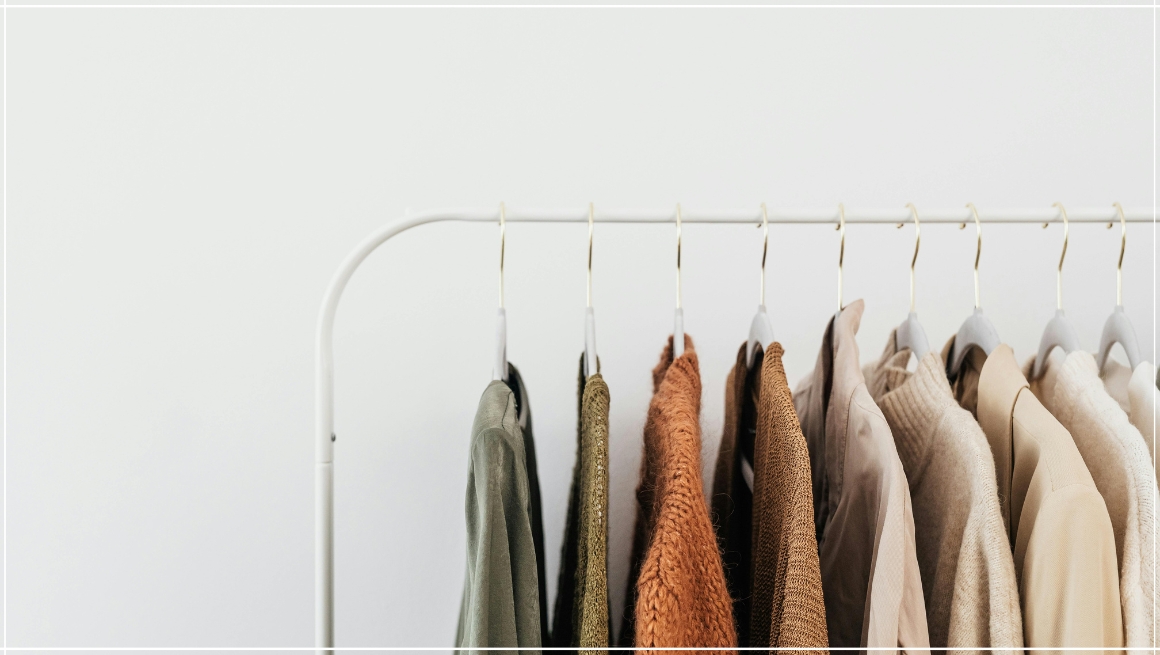
If you’re trying to live more consciously, clothing often becomes the next area that starts to feel uncomfortable.
You recycle.
You reduce waste at home.
You think more carefully about food and everyday purchases.
But clothes? They’re harder. They’re emotional, practical, and tied to identity. And the fashion industry does not make ethical choices easy to spot.
The good news is this: you don’t need to be perfect, and you don’t need to replace everything you own. Ethical and sustainable clothing choices are built slowly, through awareness, better questions, and fewer rushed purchases.
Here’s how to shop for clothes more ethically, in a way that actually works in real life.
Start with wearing what you already own
The most sustainable item of clothing is the one already in your wardrobe.
Before looking for better brands or alternative materials, it helps to pause shopping altogether for a while. Wearing existing clothes more often, repairing small issues, and rediscovering forgotten items immediately reduces demand for new production.
This mindset shift matters. When clothes stop being disposable and start being valued again, every future purchase becomes more intentional.
If something still fits, still feels good, and still does its job, it doesn’t need replacing.
Also, don’t be quick to recycle clothing or sell clothing you no longer wear. If it’s not ruined, pop it in a box under your bed, or in the attic. Come back to it in a year. You may realise you actually still love it and want to wear it again!
Another trick is to hang your freshly washed laundry at the back of your clothing rail. Work your way through your clothes from front to back. This is to see what really fits you and what you want to wear. You’ll discover clothes buried in the middle of the rail you’ve forgotten about.
Learn what ethical clothing really means
Ethical fashion is often used as a vague label, but it usually covers a few key areas:
- Fair treatment and pay for workers
- Safe working conditions
- Reasonable production volumes
- Honest supply chains
Organisations like the Fair Wear Foundation exist to improve labour conditions in garment manufacturing and to hold brands accountable over time.
When a brand openly shares information about who makes their clothes and under what conditions, that transparency is often more meaningful than polished marketing language.
If a website says very little about how garments are produced, that silence is often the answer.
Choose materials with longevity in mind
Fabric choice matters, but durability matters more.
Organic cotton is a popular option because it avoids intensive chemical farming and tends to be gentler on both skin and soil. In practice, organic cotton clothing often feels stronger and lasts longer when cared for properly.
Other lower-impact materials can include responsibly sourced plant fibres or recycled fabrics, but the key question is always the same.
Will this item last?
A well-made garment worn for years is far more sustainable than something labelled “eco” that loses shape after a few washes.
Make better choices at the stores you already shop at
The reality is, many people shop from cheap high street stores because they can’t afford expensive one-off garments handmade using ethical fibres or truly recycled items.
Still, in affordable stores, many are now using recycled and organic materials.
For a slightly higher investment, maybe a couple of pounds, you can opt for organic cotton for a t-shirt instead of normal cotton, and it will feel softer for longer, and support better farming methods with fewer chemicals.
Wearing such a t-shirt for many years is also planet-friendly. So if you can’t change where you shop, you can make better choices where you already shop.
Buy fewer clothes, but buy better ones
Fast fashion encourages volume. Ethical shopping encourages restraint.
Instead of adding multiple items each season, it helps to slow down and buy only when something genuinely fills a gap. Neutral colours, classic cuts, and adaptable pieces tend to stay relevant long after trends fade.
A useful habit is waiting before purchasing. If you still want the item after a couple of weeks and can picture wearing it regularly, it’s far more likely to earn a place in your wardrobe.
Shopping less often also makes higher-quality pieces feel more accessible financially.
Spending more than I usually would, on items like higher-quality swimsuits from Halocline, has made clothing like my swimsuits last for years, rather than only a season.
Second-hand shopping is already ethical fashion
Buying clothes second-hand is one of the easiest and most effective ways to shop sustainably.
Charity shops, online resale platforms, and local swaps keep clothing in use and reduce the need for new production entirely. Many items are barely worn, sometimes even unused.
Second-hand shopping also removes pressure. You are not feeding trend cycles or seasonal releases, and you can shop at your own pace.
There’s something grounding about choosing what already exists rather than chasing what’s just been released.
Build a wardrobe that works together
A capsule wardrobe does not need to be rigid or minimalistic to be effective.
The idea is simple. Own clothes that work together, suit your lifestyle, and get worn regularly.
When everything mixes easily, shopping becomes less tempting because you already have what you need. And when you do buy something new, it has a clear purpose.
This approach naturally reduces waste and encourages smarter choices without feeling restrictive.
Be cautious with “sustainable” marketing claims
Green labels and conscious collections are everywhere, but not all claims mean the same thing.
Some brands highlight a single recycled fabric while ignoring poor labour practices. Others use vague language without sharing real data or accountability.
Instead of focusing on buzzwords, look for substance. Clear policies, progress reports, and honest limitations are often signs of genuine effort.
Ethical fashion is about improvement, not perfection. Brands that acknowledge challenges openly tend to be more trustworthy than those claiming to have solved everything.
Normalise repeating outfits
One of the biggest cultural barriers to sustainable clothing is the idea that repeating outfits is a problem.
It isn’t.
Wearing clothes often means they were chosen well. Most people already rely on a small rotation of favourite items, even if their wardrobe is full.
Letting go of the pressure to constantly wear something new makes ethical choices easier and more natural. Clothes are meant to be lived in, not displayed once and forgotten.
You should easily be able to wear many of your clothes hundreds of times over the years.
Look after the clothes you already own
How you care for clothes matters as much as what you buy. A good piece lasts years when it’s washed properly and tatty within months when it isn’t.
Check the care label before you wash anything new. Washing at 30 degrees, using a gentler cycle and skipping the tumble dryer where you can all help clothes keep their shape and colour. It also saves energy, which is a bonus.
Small repairs are worth learning too. Sewing on a button, closing a loose seam or darning a small hole takes a few minutes, and it can save a favourite piece from the bin. If sewing isn’t your thing, a local tailor or repair shop can often do it cheaply.
How you store clothes makes a difference as well. Hang knitwear flat or fold it rather than hanging it, as hanging stretches the shoulders. Let clothes air out before putting them away so they stay fresh without needing a wash every time.
Natural fibres versus synthetics
Fabric choice affects both how long a garment lasts and its impact on the environment. Natural and organic fibres like organic cotton, linen and hemp are generally a better choice than polyester and other synthetics.
Synthetic fabrics shed tiny microplastics every time they’re washed, and these end up in our waterways. Natural fibres don’t do that, and they tend to feel more breathable too.
That doesn’t mean you need to throw out everything synthetic you own. Keep wearing it for as long as it lasts, and use the label as a guide next time you’re buying something new.
Think about the whole life of a garment
Sustainable fashion is about more than where you buy from. Every piece of clothing has a lifecycle, from how it’s designed and made, to how often it’s worn and cared for, to what happens when you’re finished with it.
Most of the impact happens before the clothes ever reach you, so the biggest thing you can control is how long you keep them. Wearing something for years, repairing it, passing it on or swapping it all keep it out of landfill for longer.

Ethical clothing as part of a healthier lifestyle
Sustainable fashion fits naturally within a wider healthy living mindset.
It encourages slower habits, less comparison, and more appreciation for what already exists. Shopping becomes calmer, wardrobes feel lighter, and decision fatigue reduces.
Making better clothing choices does not require a dramatic overhaul. It grows quietly, through consistency and intention.
Small changes, repeated over time, reshape the entire relationship with fashion.
If you’re wondering how to shop more ethically for clothing, this is the real answer.
Slow down. Ask better questions. Buy less. Wear more.
Discover more from Healthy Vix
Subscribe to get the latest posts sent to your email.