
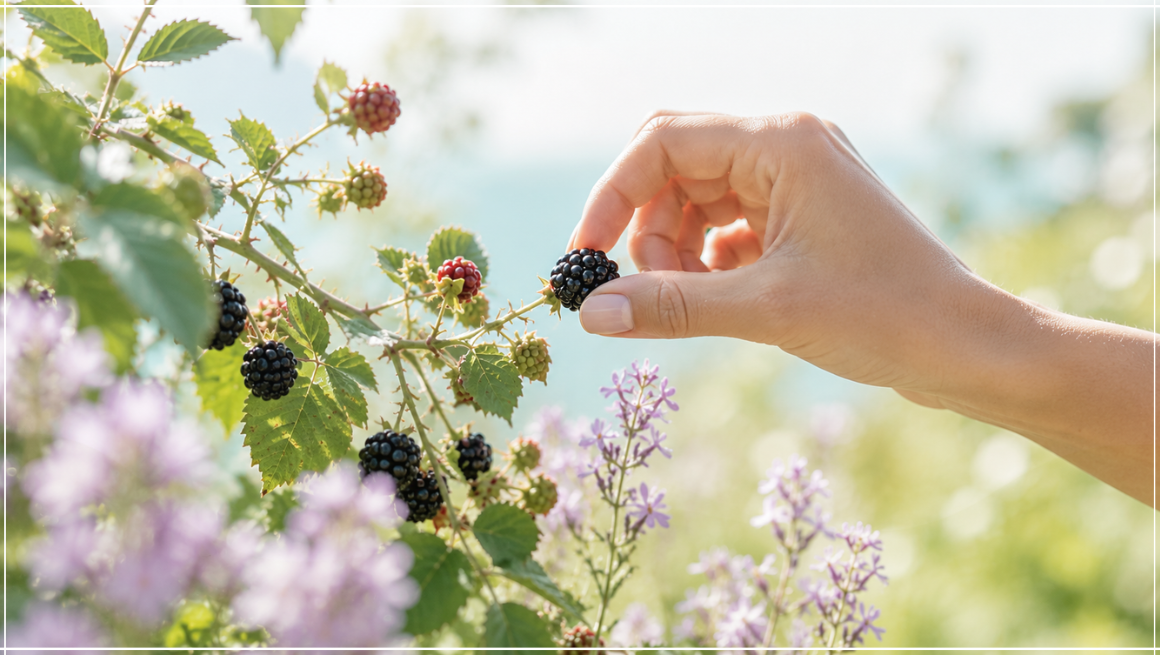
Every year from around July onwards, our walks through the alleyways and lanes of Newquay in Cornwall become a lot more exciting. The blackberries start appearing on the brambles that line almost every path near our home, and within weeks the kids are picking them straight off the bushes and into their mouths before we’ve even made it to the supermarket.
It’s one of those genuinely free, genuinely British pleasures that feels almost too good to be true. So are wild blackberries safe to eat? And what should you know before you start picking?
Can you eat wild blackberries?
Yes, absolutely. Wild blackberries (also called brambles) are completely safe to eat and are one of the most easily identifiable wild fruits in the UK. They’re the same fruit you buy in supermarkets, just free and often far tastier.
Unlike many wild berries which require expert identification, blackberries are distinctive enough that even children can recognise them reliably. That said, there are a few things worth knowing before you pick.
Are wild blackberries safe to eat? The key things to know
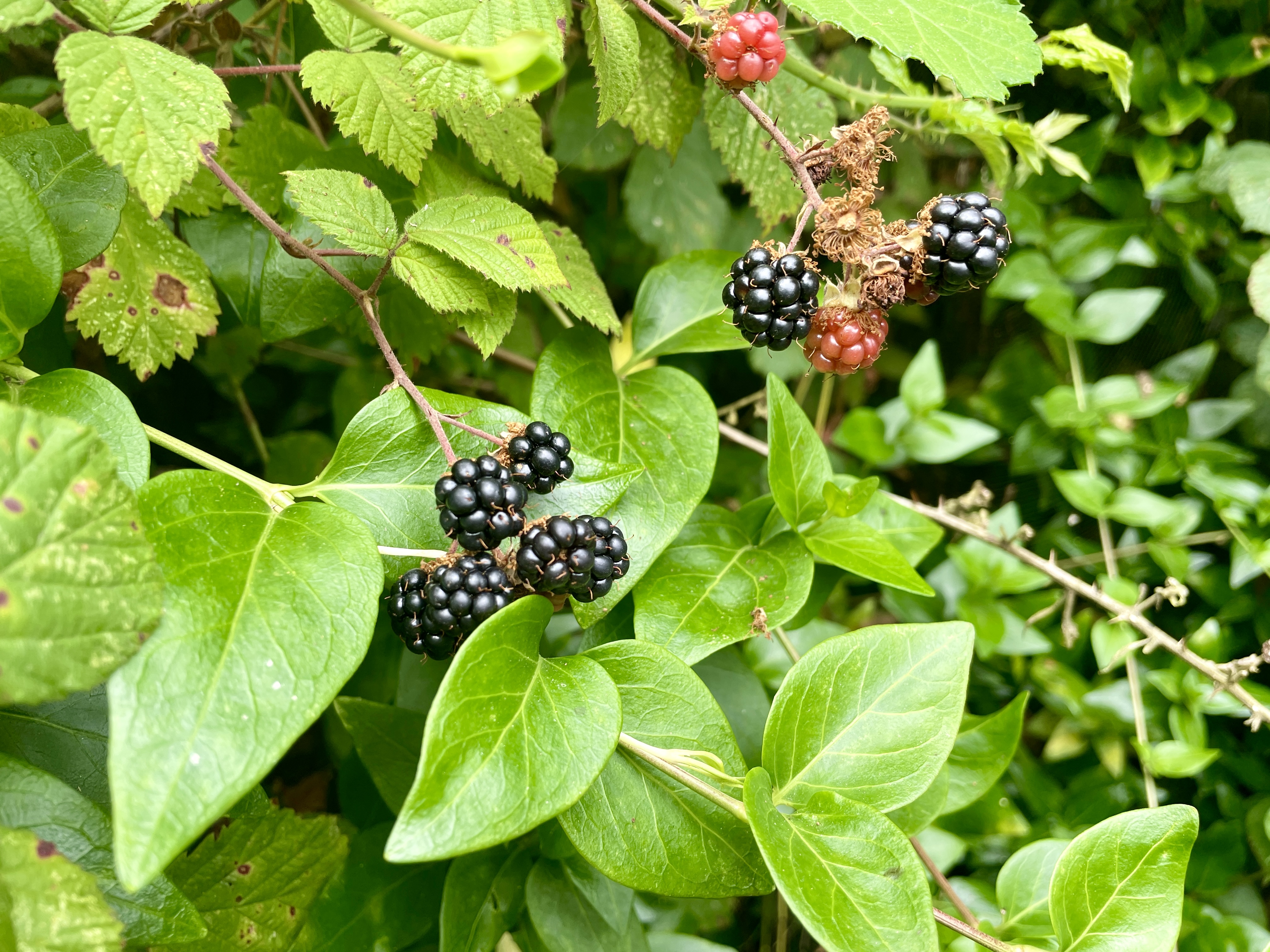
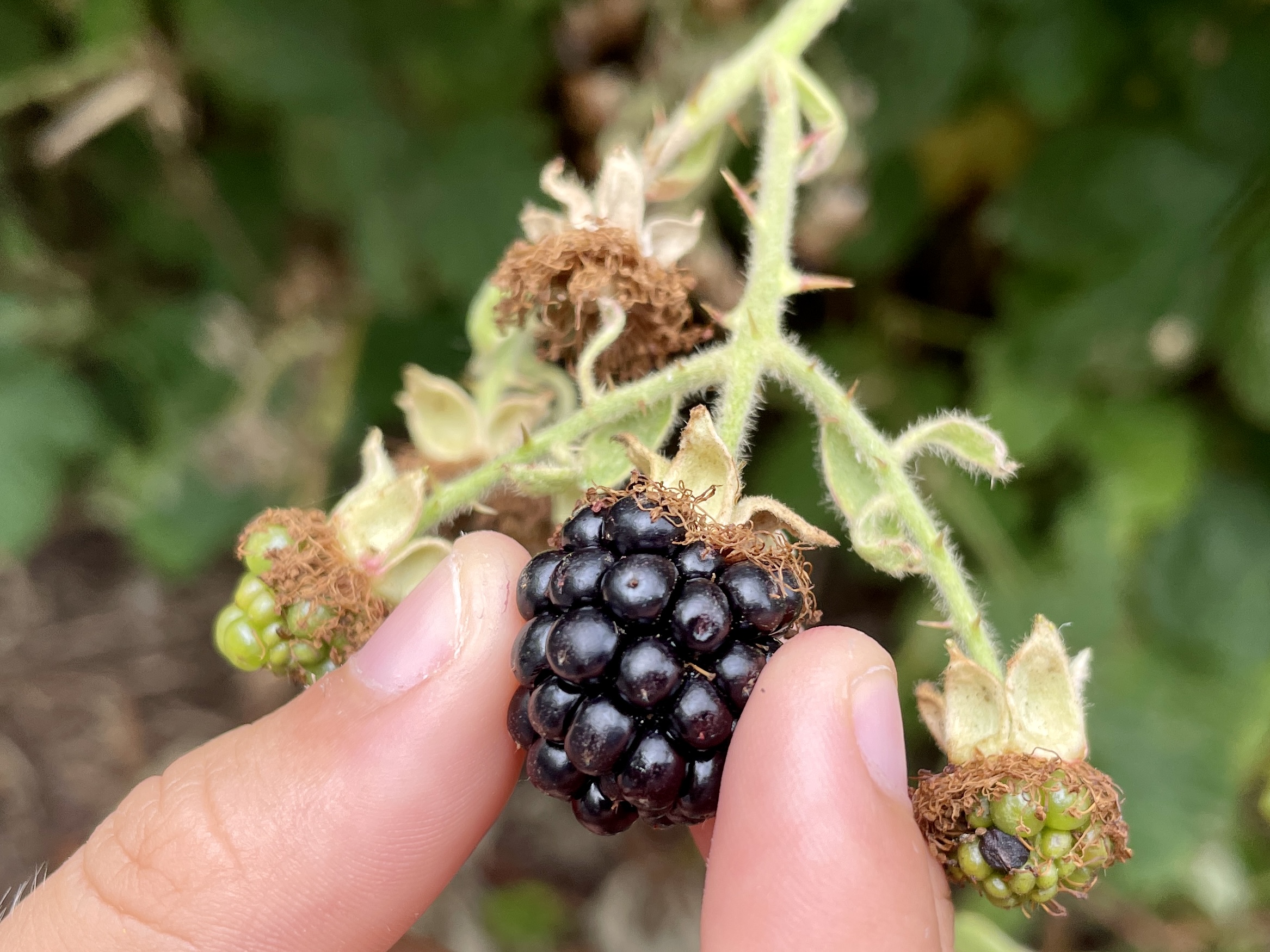
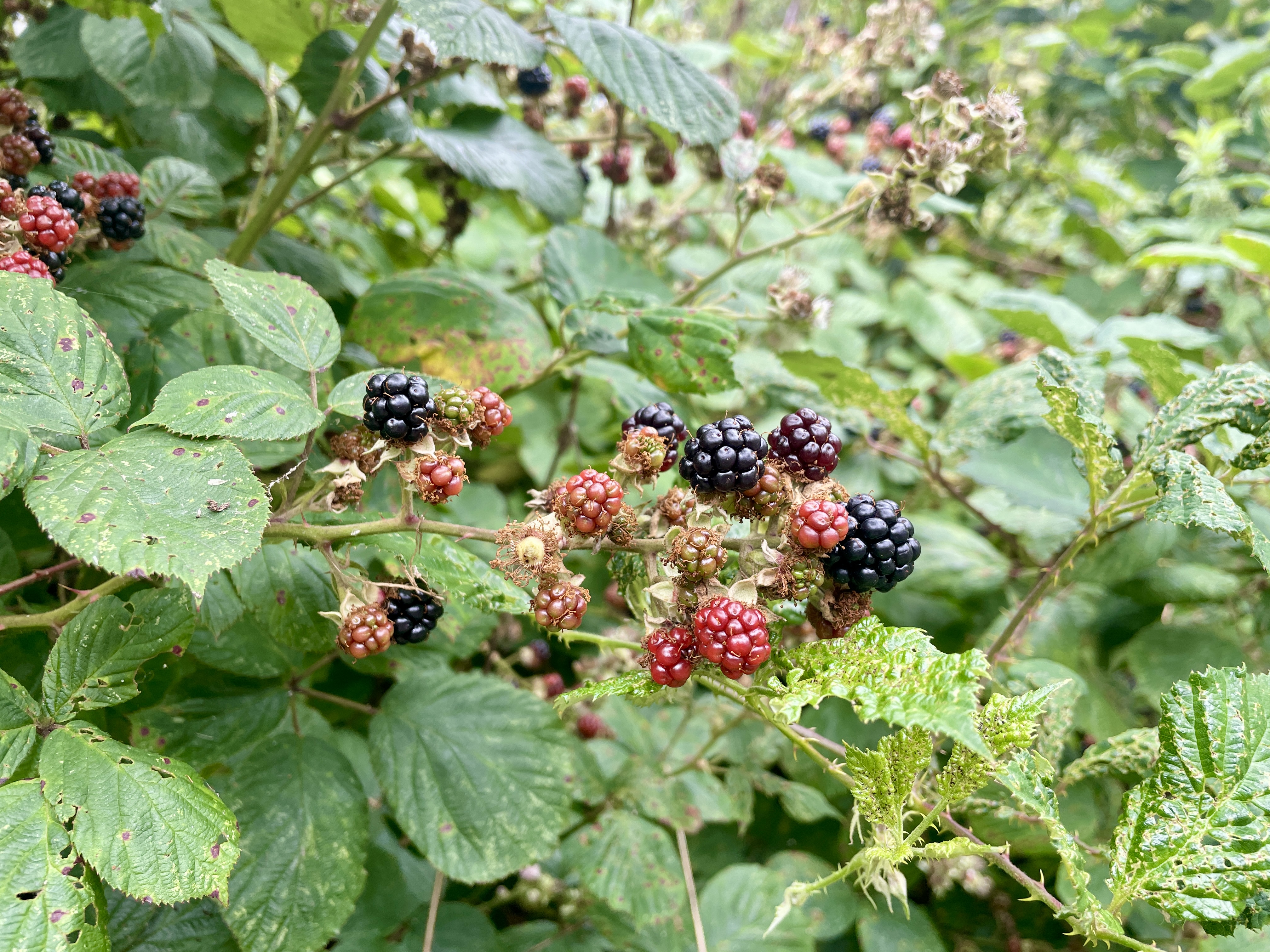
Make sure they really are blackberries. This sounds obvious, but it’s worth saying. Blackberries have a very distinctive appearance: clusters of small dark drupelets forming a round berry on thorny bramble stems. But, if you’re ever unsure what you’re picking, don’t eat it. There are berries growing wild in the UK that are poisonous and can be very dangerous. Blackberries are easy to identify, but if you’re new to foraging, go out with someone who knows what they’re looking at first.
Don’t pick from low down. This is the tip I always give my kids – don’t pick berries from the bottom of the bush. Dogs, cats, foxes, and other animals regularly pass by at that level, and as I always tell the children: something may well have peed on them! Always pick from waist height and above, ideally higher. The higher up the bush, the better.
Avoid picking near busy roads. Blackberries growing next to heavily trafficked roads can pick up pollutants and exhaust fumes. If you’re foraging near a road, stick to quieter lanes and alleyways rather than main roads.
Wash them before eating. My kids will pop a blackberry straight into their mouths from the bush, and my husband is just as happy to do the same. There’s a lovely natural joy in that, especially when you’re out walking and the berries are right there. When I was younger I’d have done the same without a second thought. These days I prefer to take them home and wash them first, but as a general rule it’s worth taking them home and giving them a good rinse before eating. It removes any dirt, debris, and anything else you’d rather not think about.
Freeze them if you prefer… Some people freeze theirs instead of eating them fresh. We tend to do this with some of them anyway after washing, so we can add them to homemade milkshakes and smoothies at a later date. Also, freezing is a handy way to kill off any little bugs that might be hiding in the fruit, if that’s something that puts you off eating them straight from the bush in the wild!
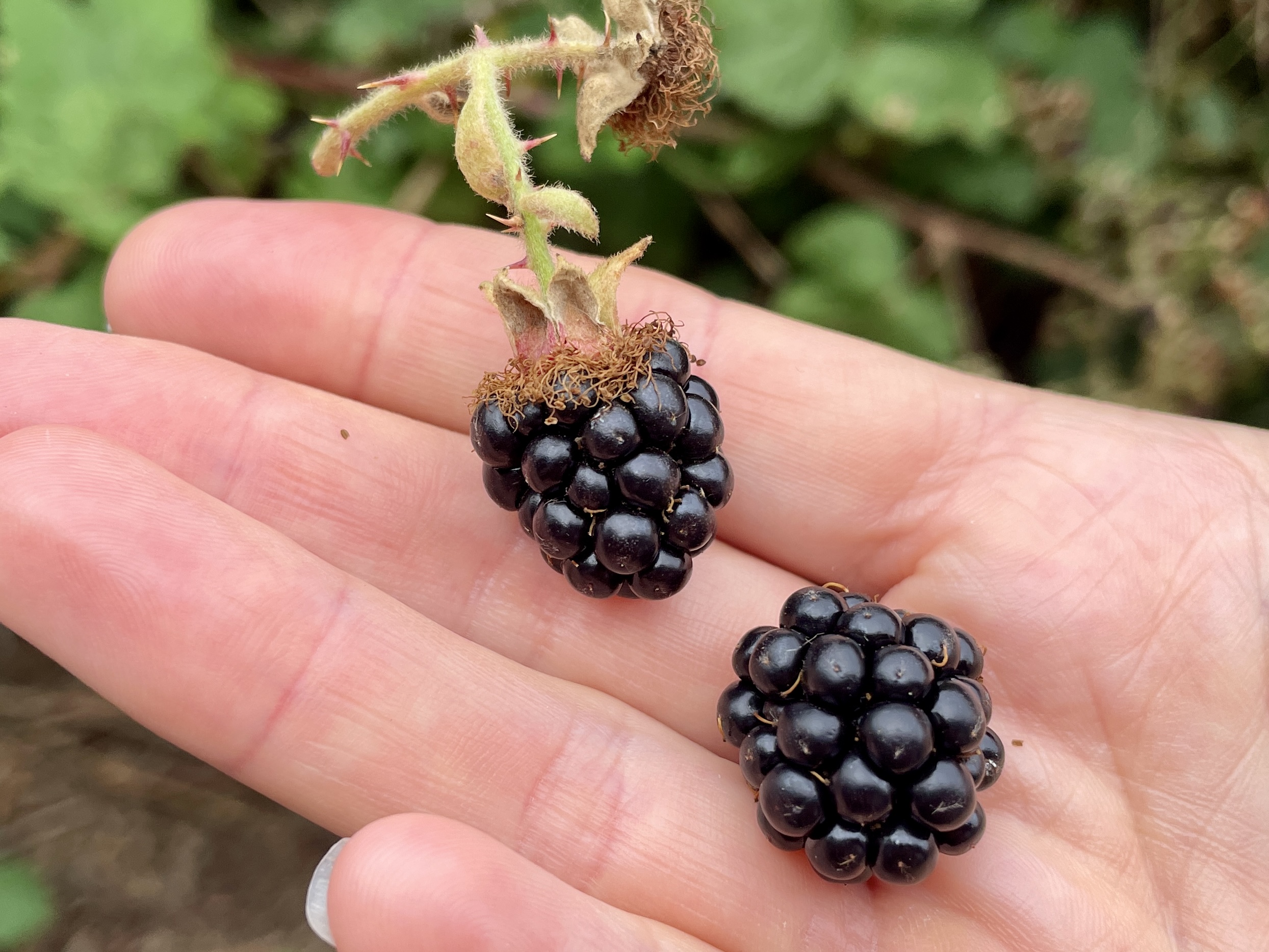
The bigger, the better. Pick the largest, darkest, plumpest berries you can find. They’re the ripest, the juiciest, and the least likely to be bitter or sour. If a berry is still red or purple with tiny drupelets (the individual balls that make up the blackberry) that haven’t fully formed yet, then it’s not ready. Leave it and come back in a few days. That said, overripe berries develop a kind of sickly sweet taste that’s a bit much, so it’s really about finding the “just right” ones. It’s not always easy to tell, but that’s part of the small joy of picking your own – will it be sweet, sour, or slightly past its best? The pleasure is in finding and eating the perfect ones, especially after getting it wrong a few times first!
When is blackberry season in the UK?
This is something I’ve been thinking about a lot lately, because my experience of blackberry season has changed completely depending on where I’ve lived.
Growing up in Cheltenham, blackberries were absolutely an autumn thing. We had brambles in our garden – not planted intentionally, they just appeared and spread as brambles do – and they’d ripen right around the time we went back to school in September. Blackberries and conkers: that was autumn. The conker trees opposite our house would start dropping at the same time the blackberries were ready to pick. It felt like the two went hand in hand.
Now, living in Cornwall with my own children, blackberries are a summer thing. This July 2026, the blackberries along the alleyways near our home in Newquay are already ripe and the kids are picking them on our daily walks. Cheltenham to Cornwall is only around three hours, but the climates are quite different. Cornwall is coastal and maritime, a peninsula with milder winters and often warmer, earlier summers. We’ve also had a noticeably warm summer so far in 2026, which may be ripening things earlier than usual.
Though interestingly, the vegetables in my garden are taking much longer than expected this year, so there’s clearly no consistency! Nature does what nature does.
In previous years here, the blackberries have started around August, but this year they’re well ahead of that. So the honest answer about blackberry season in the UK is: it depends where you are and what the weather has been doing. The general season runs from July through to October, with August and September typically being peak months nationally. But coastal and southern areas like Cornwall can see them ripen several weeks earlier than inland areas further north.
The lesson is simply to start looking earlier than you think you need to. Check your local hedgerows and alleyways from mid-July – you might be surprised.
Where to find wild blackberries
Blackberries grow almost everywhere in the UK. Hedgerows, alleyways, woodland edges, parks, fields, coastal paths – if there’s a bramble with space to grow, there’ll be blackberries on it come summer. You don’t need to go deep into the countryside to find them.
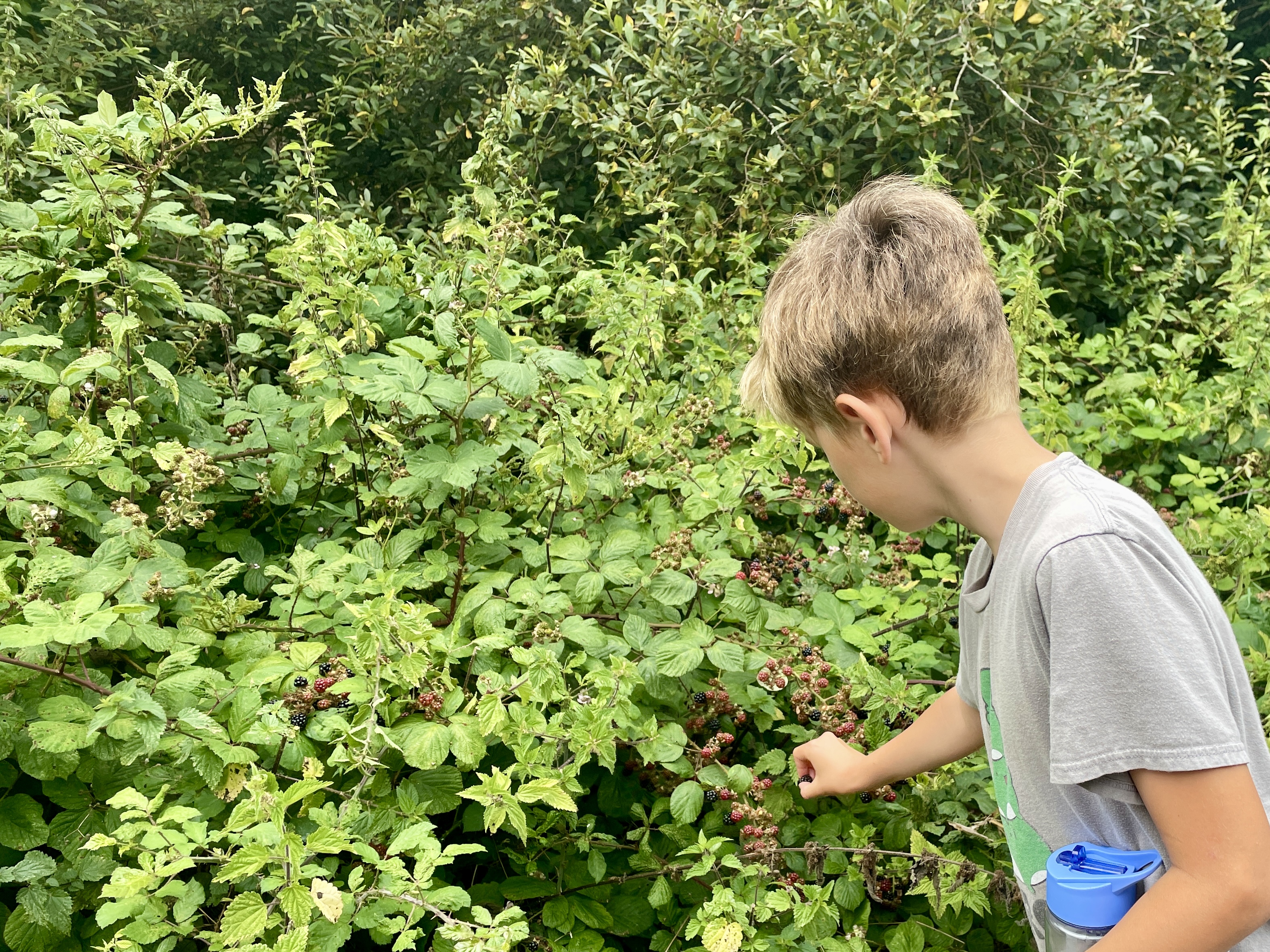
We pick ours along the alleyways of Newquay that connect our street to the town and supermarket. We’re keen walkers who use the car as little as possible. We regularly walk to the shops with a backpack, and the blackberry-lined paths we walk past become an exciting source of free fruit each year.
Our kids, aged 11 and 14, still get genuinely excited when the blackberries are ripe. There’s something about picking fruit straight from the wild that never loses its appeal, whatever your age.
Bramble vs blackberry – are they the same thing?
Yes. Bramble is simply another name for the blackberry plant and its fruit. In the UK you’ll often hear both terms used interchangeably. The plant itself – thorny, sprawling, incredibly resilient – will grow almost anywhere it’s given the chance, which is why it’s so abundant across the country.
Why is there no blackberry juice?
Something that’s always puzzled me: blackcurrant juice and squash is one of the most iconic drinks in the UK. brands such as Ribena have been around since my childhood and are a staple for most people. But blackberries grow abundantly across the entire country, are arguably just as distinctive a flavour, and yet I’ve never once seen blackberry juice on a supermarket shelf.
It seems such an obvious product given how prevalently they grow here. I can only assume there’s a commercial reason related to harvesting at scale, but it strikes me every single year when I’m picking them for free along the alleyway near our house.
What to do with wild blackberries
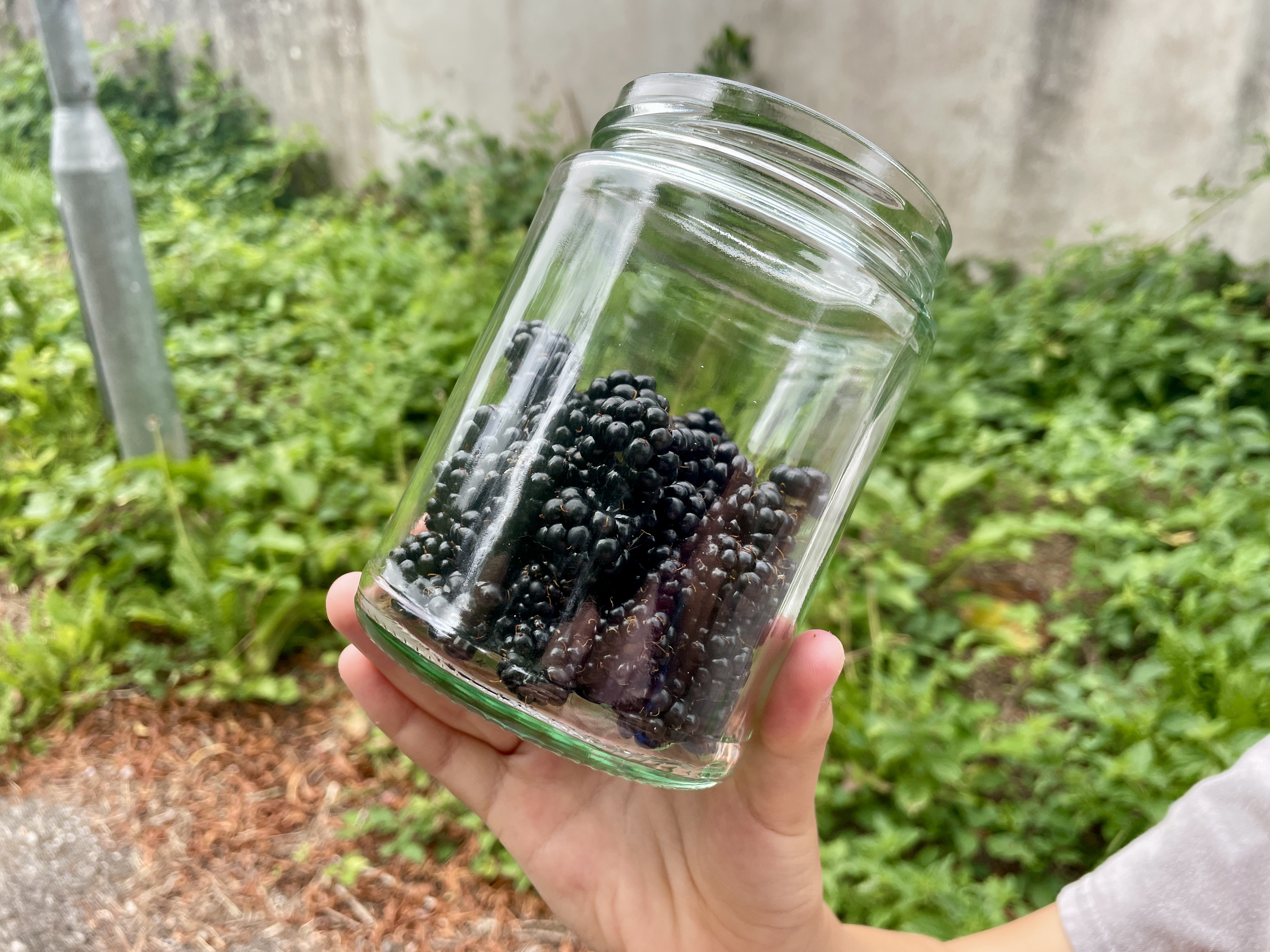
The simplest and most satisfying option is to eat them fresh. There’s genuinely nothing better than a perfectly ripe wild blackberry eaten within minutes of picking. Although if it’s me, I’ll take them home and wash first!
Beyond that, here are some of our favourite ways to use them:
Smoothies. This is our go-to. Blackberries work beautifully in smoothies and are a fun drink for the kids to help make. We often blend them with coconut milk and a frozen overripe banana for a simple, naturally sweet drink.
I like to use Rude Health organic coconut milk as it has just four ingredients – spring water, organic rice, organic coconut milk and sea salt – with no added oil, thickeners or anything artificial. It’s one of the most naturally nutritious smoothie combinations you can make, and the purple colour is spectacular!
For the best smoothies, I recommend the Nutri Ninja blenders which we’ve been using for years!
As a fruit topping. Scattered over homemade muesli or porridge, fresh blackberries add natural sweetness without any need for added sugar. They work brilliantly with homemade oat milk or coconut yoghurt.
Mixed into a fruit salad. Blackberries pair well with most other seasonal fruits – apple, pear, and blackberry is a classic combination and all can be grown in the UK!
Jam. A traditional blackberry jam is straightforward to make and a great way to preserve a big harvest. You can also make blackberry jelly, which is wonderful on toast or as a sauce.
Blackberry crumble. One of the great British autumn desserts. Blackberry and apple crumble is a classic worth making every year when both are in season at the same time.
In baking. Add them to muffins, cakes, or flapjacks. They hold their shape reasonably well when baked and add a natural fruitiness.
Should you grow blackberries in the garden?
My husband suggested we grow some in our garden as we already have an allotment-style setup. We have no less than 30 different things growing across 10 vegetable patches, pots and arches this year. Blackberries are certainly a productive garden plant and would thrive in most UK gardens.
But given how abundantly they grow in the alleyways near us, I can’t quite justify giving over garden space to something we can pick for free within a two-minute walk of our front door. If you don’t have easy access to wild blackberries nearby though, growing your own on a trellis or fence is absolutely worth it. The plants are vigorous and the yields can be enormous.
The health benefits of blackberries
Blackberries are genuinely nutritious and not just for their taste. They’re high in vitamin C, vitamin K, manganese, and fibre, and are packed with antioxidants. Fresh wild blackberries picked and eaten the same day are arguably even more nutritious than shop-bought ones, which have often been sitting in refrigerated transport for days before reaching the shelf.
They’re also a wonderful example of eating seasonally and locally without any effort or expense. Free food, growing wild, at its nutritional peak. It doesn’t get much better than that.
Blackberries are my daughter’s absolute favourite fruit, which makes it even better that we can get them for free for several months each year. The supermarket price of £2-3 for a small punnet makes free wild picking feel even more satisfying.
A note on foraging responsibly
While blackberries are abundant, it’s worth picking with a light touch. Birds, insects, and small mammals also rely on this fruit through late summer and autumn. Take what you’ll use, leave plenty for the wildlife, and never strip a bush completely.
And always be certain of what you’re picking. Blackberries are one of the safest and most identifiable wild fruits in the UK, but the golden rule of foraging applies to everything: if in doubt, leave it out.
Is it illegal to pick blackberries?
Generally, no. Under UK law, picking wild fruit like blackberries for your own use is legal as long as you’re not uprooting the plant itself or picking to sell. That covers most hedgerows, alleyways, and common land, exactly where we do most of our wild blackberry picking in Cornwall.
Where it can get you in trouble is picking on private land without the landowner’s permission, or in protected spots like nature reserves and Sites of Special Scientific Interest, which often have their own bylaws banning foraging altogether, with fines in the £100-£300 range if caught foraging here.
If you’re ever unsure whether an area’s protected, it’s worth a quick check before you fill your jars or belly!
The easiest way to check is Natural England’s free MAGIC Map, which lets you search any location or postcode and shows whether it falls within a protected area like a Site of Special Scientific Interest or nature reserve. Worth a quick look if you’re picking somewhere new to you, especially anywhere that feels more like a managed park or reserve than a random hedgerow.
Most everyday spots like alleyways, footpaths, and ordinary hedgerows won’t be affected at all, it’s really the more obviously protected or landscaped areas worth double-checking.
Discover more from Healthy Vix
Subscribe to get the latest posts sent to your email.
You know, I go blackberry picking every year, the amount of people who stop or shout out at me “you can’t eat those they’re poison” it gets ridiculous and I find it very annoying. I don’t get why or how people don’t know about them? But I guess not everyone went blackberry picking as a kid.