
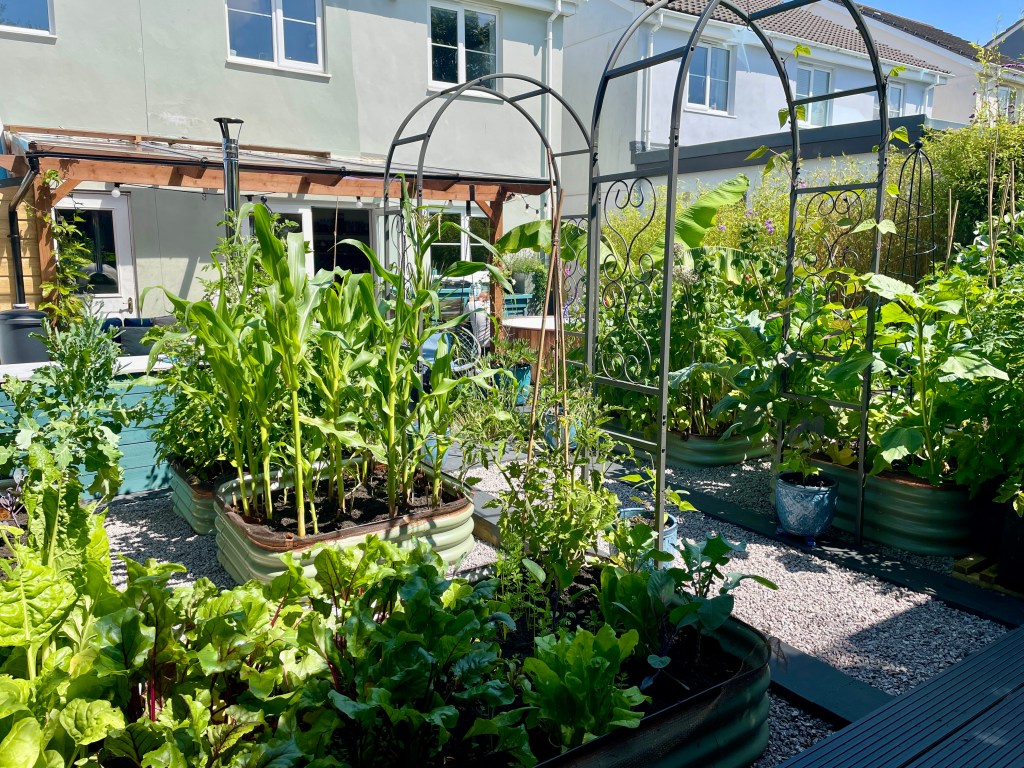
Our garden turns into a food jungle every summer. We have ten vegetable patches filled with all sorts from garlic and tomatoes to figs and sweetcorn, several pots filled with fruits such as strawberries and blueberries, and arches covered in climbing plants such as cucumbers, grapes and beans.
This year we’re growing more than 30 different fruits and vegetables, although that probably makes our gardening sound far more organised than it really is!
I’m definitely more of a low-maintenance, slightly wild gardener. If lazy gardening is an official gardening style, then that’s probably me. I don’t want lots of faffing around or complicated growing schedules – as much as I’d like to potter about in the garden, perfecting it all, I simply don’t have this time!
I simply fill our raised vegetable beds with compost each year and mulch them. Usually I do this in the winter, cover with cardboard and let the mulch break down before the growing season. We make lots of our own compost in two compost bins, although we normally have to buy some extra to top everything up. Then, once April and May arrive, I tend to plant seeds directly into the soil and hope for the best.
If nothing seems to have popped up by the end of May, I simply plant some more seeds.
Somehow this approach works remarkably well for us. By late July and throughout August, the garden is overflowing with food. Towards the end of summer it becomes particularly wild when the squash, courgettes and sweetcorn take over and everything starts looking absolutely ginormous!
This year’s purple French beans are a perfect example.
I wasn’t actually going to grow beans this year for one very specific reason: we never seem to pick them quickly enough.
Between work, family life and everything else, I can’t get into the garden as often as I’d like. Beans grow so quickly that it’s very easy to miss the best picking window.
But I had loads of seeds left from previous years and thought, why not?
Beans are incredibly easy and quick to grow, they’re usually one of the first things we can harvest, and climbing varieties look fantastic growing up our arches too.
Initially, I did quite well at keeping up with them. I picked a lovely harvest around three or four weeks ago while the purple pods were young and tender.
Then time disappeared.
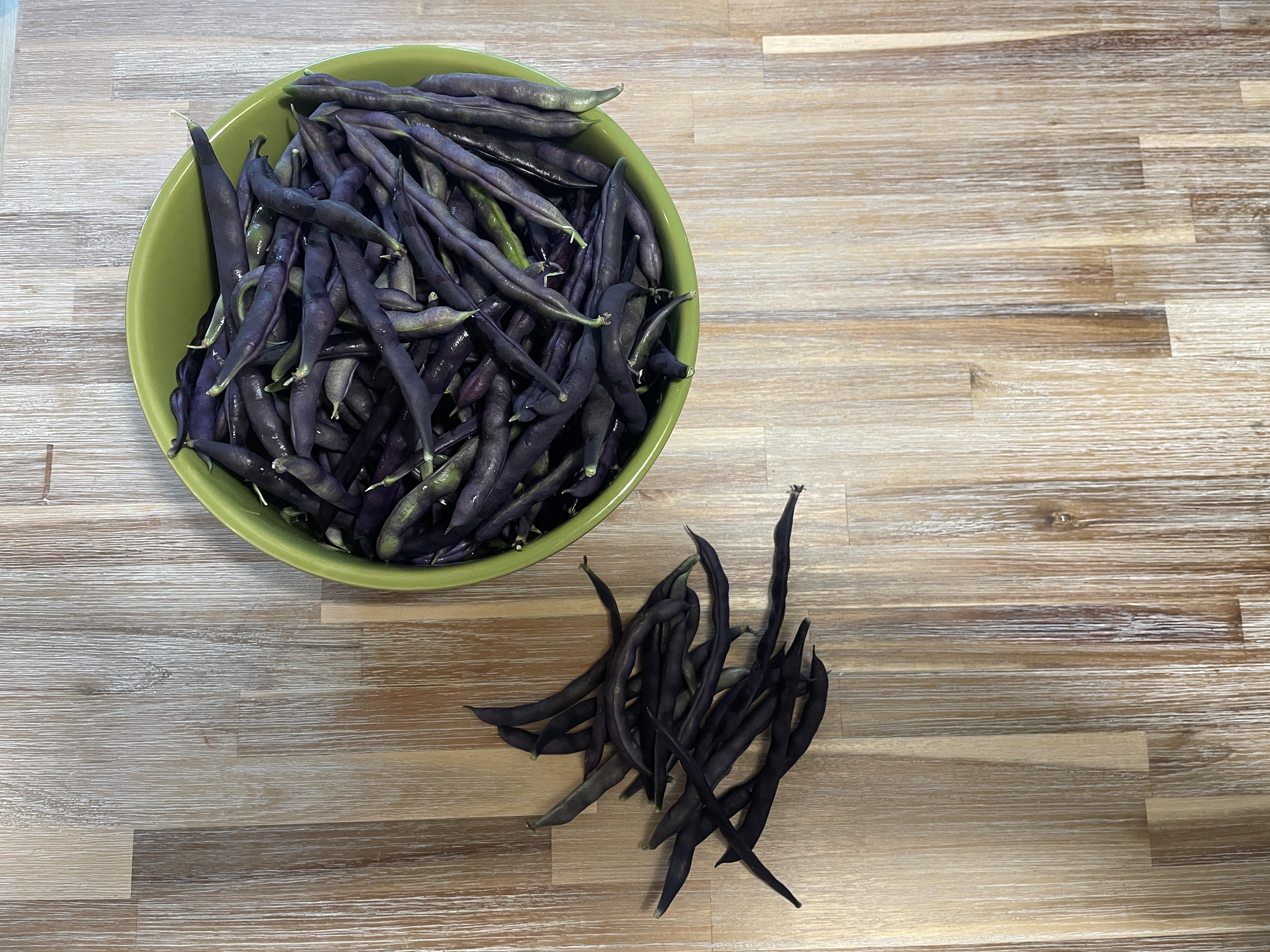
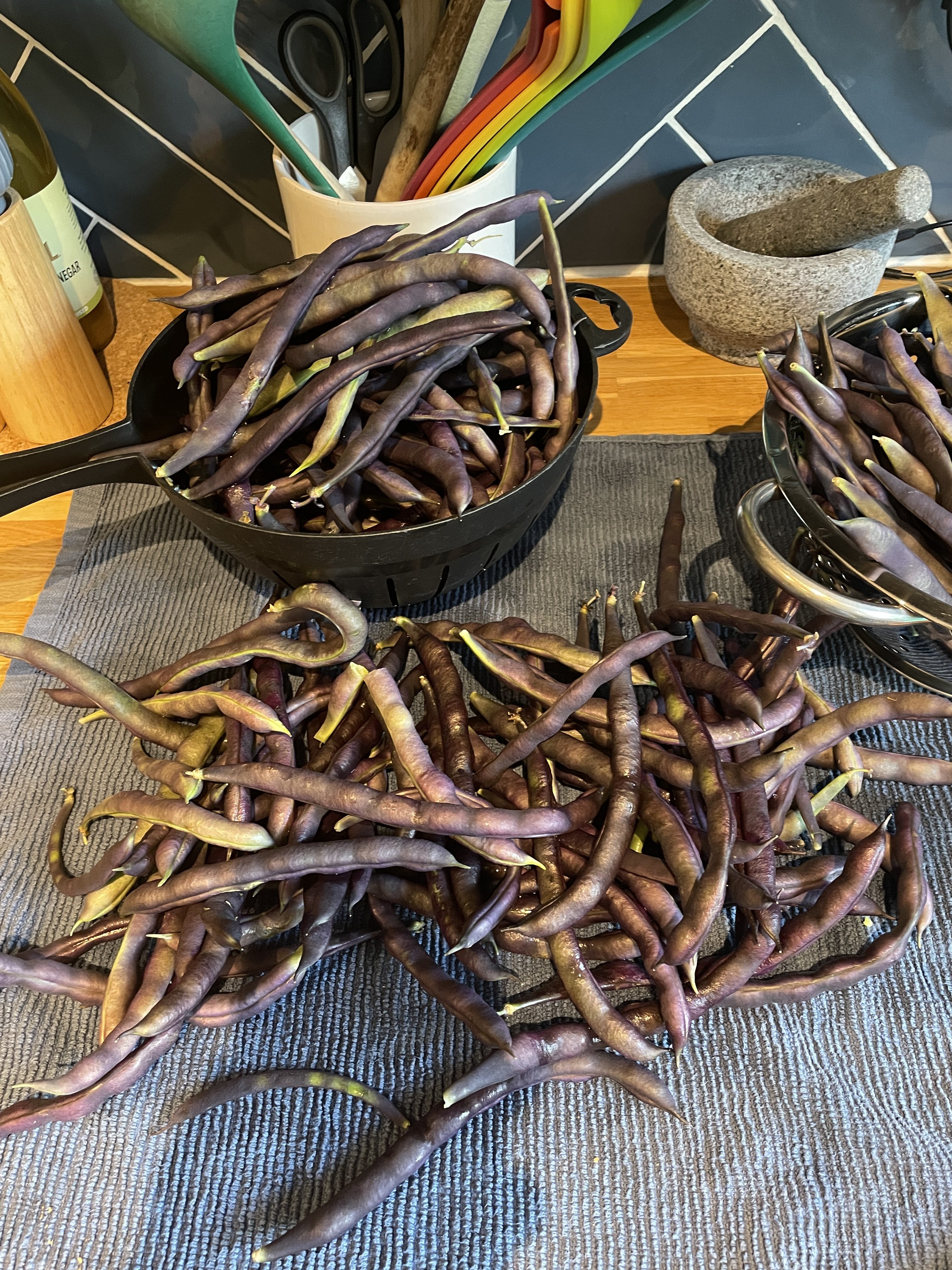
I didn’t get back outside quickly enough and I’ve now harvested an absolutely HUGE batch of purple French beans that are well beyond the ideal stage for eating the pods.
Thankfully, that doesn’t mean they’re wasted.
What are purple French beans?
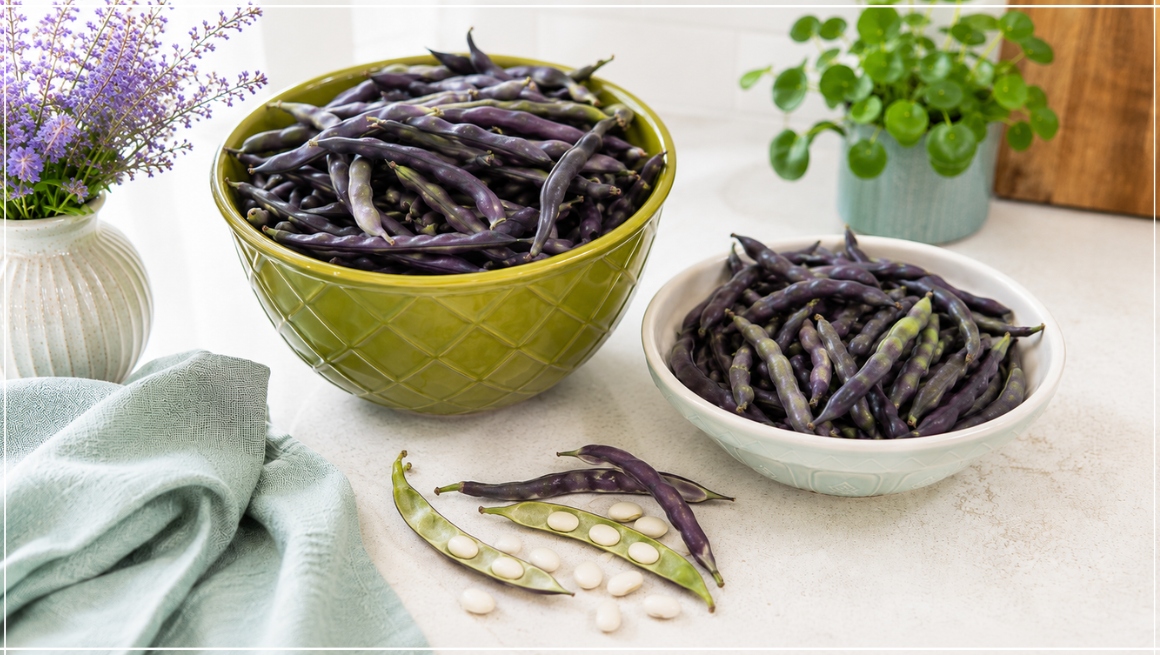
Purple French beans are varieties of French bean that produce striking purple pods instead of the more familiar green ones.
You may also see similar beans described as purple green beans or purple string beans, particularly outside the UK.
When picked young, you eat the entire pod along with the tiny immature beans developing inside, just as you would an ordinary green French bean.
They’re also incredibly easy to spot amongst all the green leaves, which is helpful in our jungle of a garden!
If you leave the pods on the plant, however, the beans inside continue developing. Eventually, those little seeds become large, plump beans and the outside pod becomes tougher and more fibrous.
That’s exactly what happened to ours.
When should you pick purple French beans?
If you want to eat the entire pod, pick French beans while they’re young, smooth and tender.
Ideally, the individual beans inside shouldn’t be particularly noticeable through the pod yet.
It’s recommended to harvest French beans while the pods still snap easily and before the individual beans become visible through them. Regular harvesting also encourages the plants to continue producing more beans.
The important word there is regularly.
That’s where I always go wrong!
Beans can seemingly go from perfect to enormous while you’re busy doing something else. If you have lots of plants, it’s worth checking them frequently during their main growing season.
Of course, knowing that and actually remembering to do it are two different things.
How we cook young purple French beans
With our first harvest, I didn’t do anything fancy.
I simply washed the beans, removed the ends, chopped the pods into pieces and used them as another vegetable in whatever we happened to be cooking.
We’ve added our homegrown purple French beans to pasta dishes and curries, and we’ve cooked them as a simple side vegetable for a roast dinner.
They’re also easy to use in:
- pesto pasta
- vegetable curries
- stir-fries
- soups and stews
- traybakes
- warm salads
- mixed vegetable dishes
- casseroles
- roast dinners
You don’t necessarily need a special purple beans recipe.
When they’re young and tender, I simply think of them as another homegrown vegetable. If I’m making a pasta dish or curry and there are French beans ready in the garden, in they go.
That’s generally how I prefer to use our homegrown food. Rather than finding complicated recipes requiring lots of extra ingredients, I see what’s ready to harvest and work it into meals we’d normally eat anyway.
Why do purple beans turn green when cooked?
One of the strange things about purple French beans is that they don’t necessarily stay purple!
Don’t be surprised if you put beautiful deep-purple beans into a pan and take green beans back out again.
Their purple colouring comes from natural plant pigments called anthocyanins. Cooking breaks these pigments down, revealing more of the green chlorophyll underneath.
So if your purple beans turn green when cooked, you haven’t grown the wrong beans or done anything wrong in the kitchen.
It’s simply what happens to many purple varieties when they’re heated.
What happens when French beans get too big?
This was the question I needed answering after harvesting our latest enormous batch.
The good news is that an overgrown French bean isn’t automatically destined for the compost bin.
What you do with it depends on how mature it has become.
Young and tender
Eat the whole pod.
This is the ideal stage and what we did with our first harvest.
Larger, but the pod is still tender
You can still eat the whole thing.
I’d check the texture first. If the pod still snaps and isn’t particularly stringy or fibrous, I’d chop it up and cook it.
Large with obvious beans bulging inside
At this point, open one and have a look.
As French beans mature, the pod becomes increasingly tough while the actual beans inside become larger.
If the pod has become unpleasantly fibrous, there’s little point forcing yourself to eat it simply to avoid waste.
Instead, shell it.
Huge, tough or wrinkled pods
This is where most of my latest harvest has ended up.
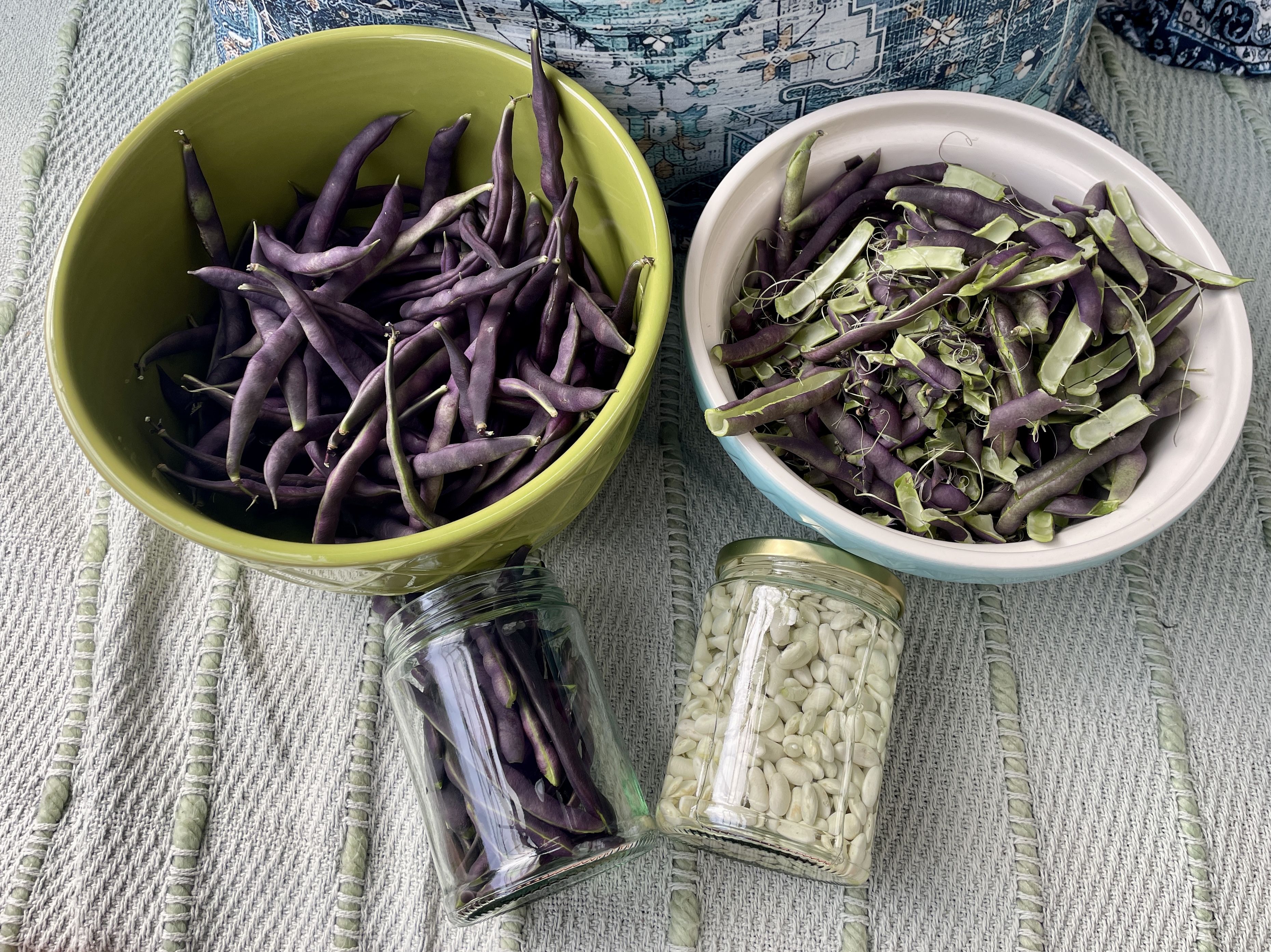
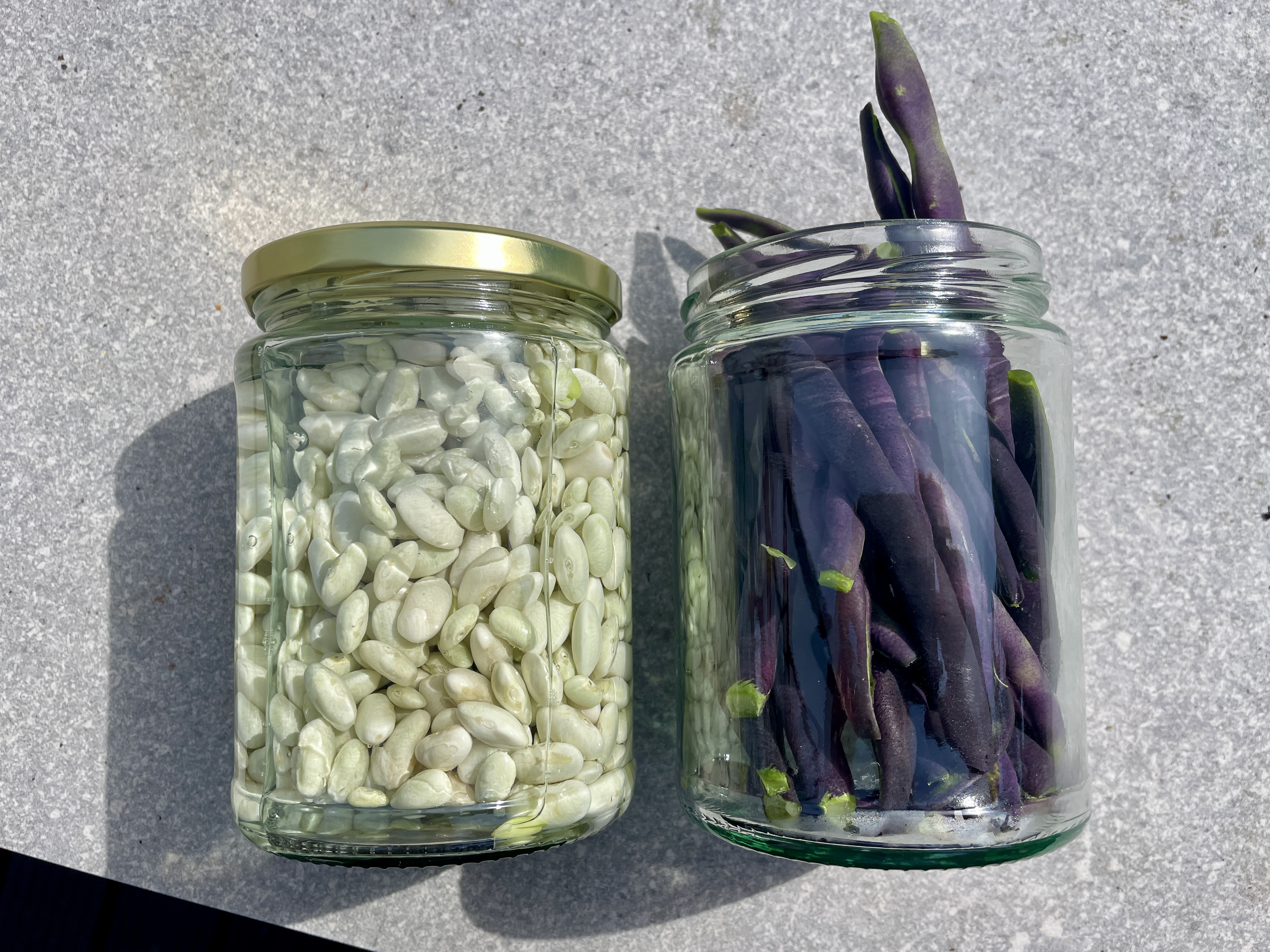
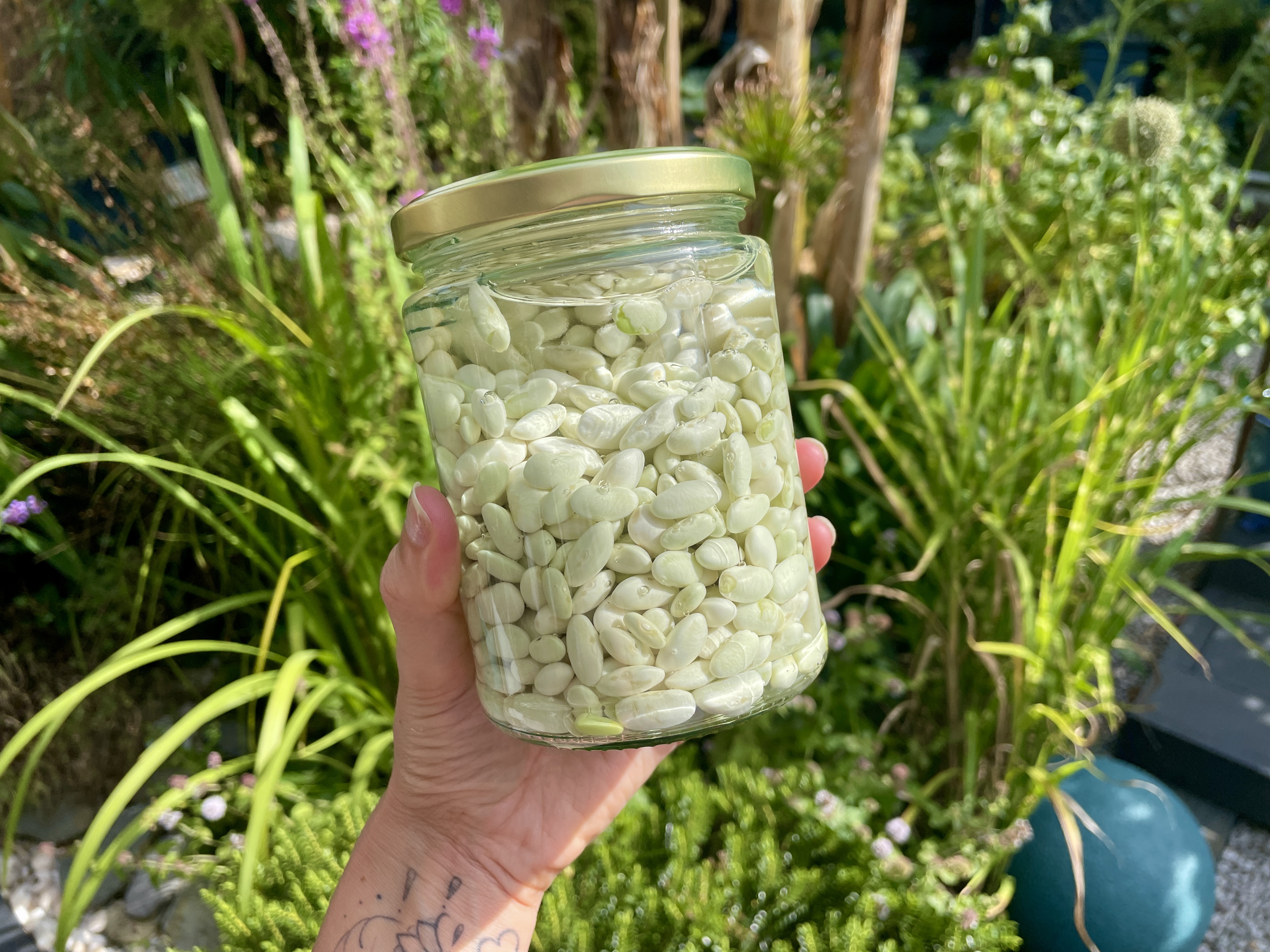
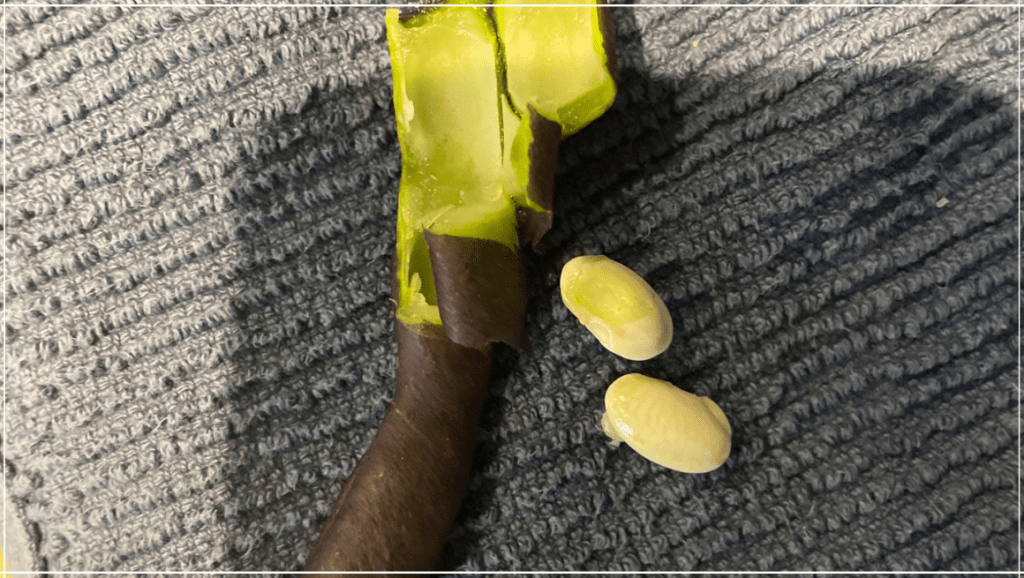
When I opened one of our huge purple pods, I found several large, pale, plump beans inside.
Rather than having a huge pile of ruined vegetables, I’d essentially allowed the plants to produce fresh shelling beans.
So that’s what I’m doing with this batch.
The pods will go into our compost and we’ll eat the beans inside.
Can you eat the beans inside French beans?
Yes, mature French bean seeds can be eaten when appropriately prepared and thoroughly cooked.
When French beans are young, we eat the immature seed and pod together. Once the pod matures, the seeds inside become much larger and can be shelled and eaten separately.
They’re different from the hard dried beans you’d buy in a packet because freshly shelled beans still contain plenty of moisture.
However, mature raw or undercooked beans shouldn’t be eaten.
Beans contain naturally occurring proteins called lectins, and some lectins found in raw pulses can cause gastrointestinal illness if the beans aren’t prepared and cooked adequately.
So don’t stand in the garden eating the fresh beans straight from the pod!
Yes, I may have eaten one or two before discovering this.
Thankfully, it was only a couple. I won’t be making a habit of it. And, besides, they don’t taste amazing raw, so better to cook them so they soften, and they taste way better in a warm dish.
How to prepare and cook mature French beans safely
This is one area where I wouldn’t use my usual “throw it in and hope for the best” gardening philosophy!
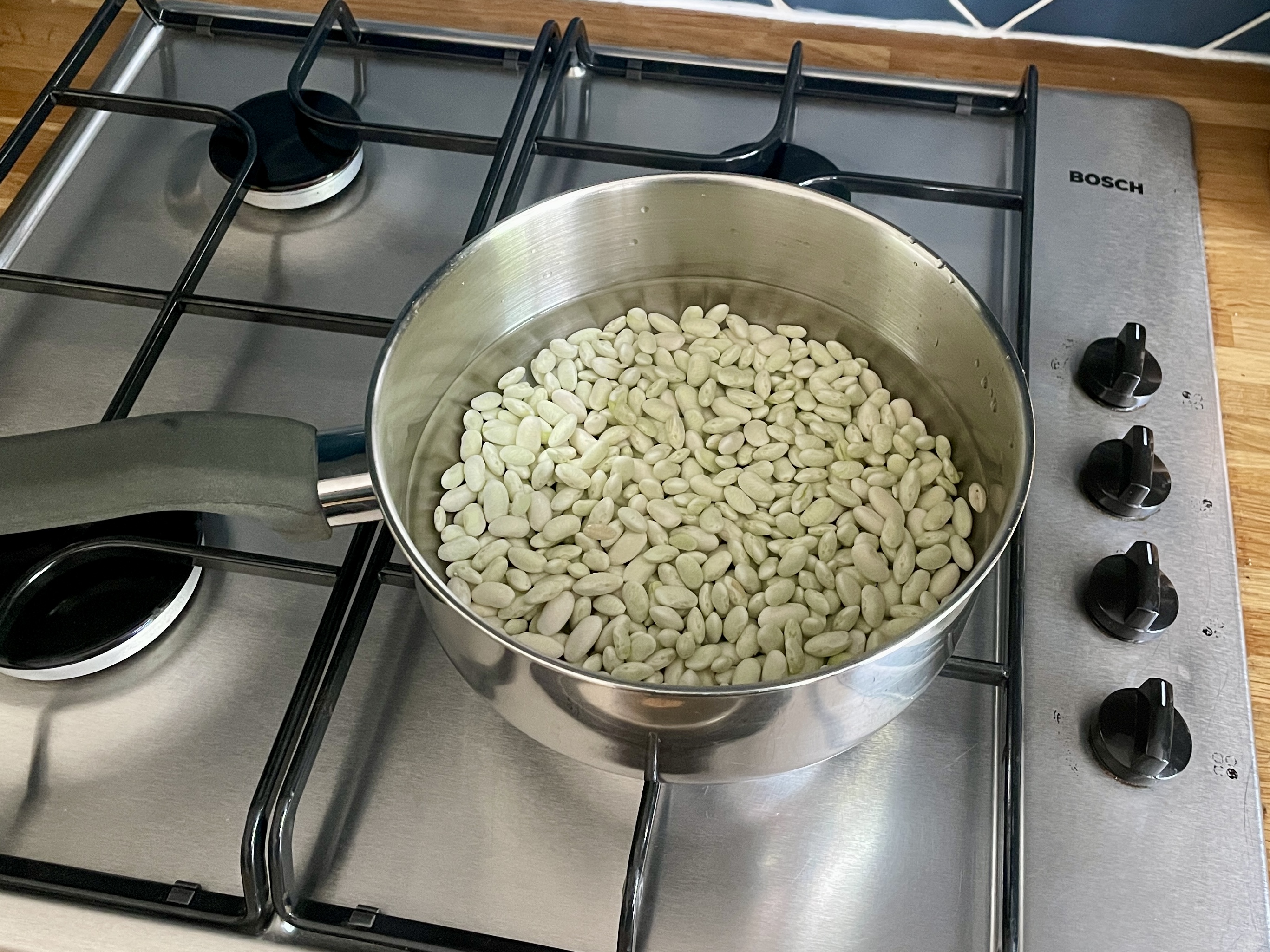
Current European Food Safety Authority advice recommends soaking pulses in water for 6–12 hours until softened, changing the water, and then boiling them in fresh water at 100°C for at least 30 minutes. Cooking should continue until the beans are completely soft.
Proper soaking and boiling substantially reduces the active lectins naturally present in beans.
Preparation times can vary depending on the bean variety, so I wouldn’t rely solely on a timer. Make sure they’re properly cooked and soft before eating them.
Once cooked, they can be drained and added to whatever meal you’re making.
This means my enormous batch will take slightly more preparation than our first harvest, but considering how much food is hiding inside those pods, it’s worth doing.

The quickest way to shell overgrown French beans
If you’ve accidentally grown a mountain of enormous French beans like me, shelling them can look like quite a job.
You don’t need to carefully top and tail every bean because you’re not eating the pod.
I’ve found the quickest method is to bend or gently twist the mature pod so it opens along the seam. Open the two sides, then run your thumb along the inside to push the beans directly into a bowl.
Keep another bowl or your compost caddy beside you and throw the empty pods straight into it.
Once you get into a rhythm, it becomes much quicker. And with a harvest the size of mine, getting into a rhythm is definitely necessary.
Do it while sitting in the garden enjoying fresh air and sunshine, or while inside watching your favourite series, to make it less boring if you have lots to shell!
What to make with fresh shelled French beans
The beans from our latest harvest will be making their way into our meals over the coming days.
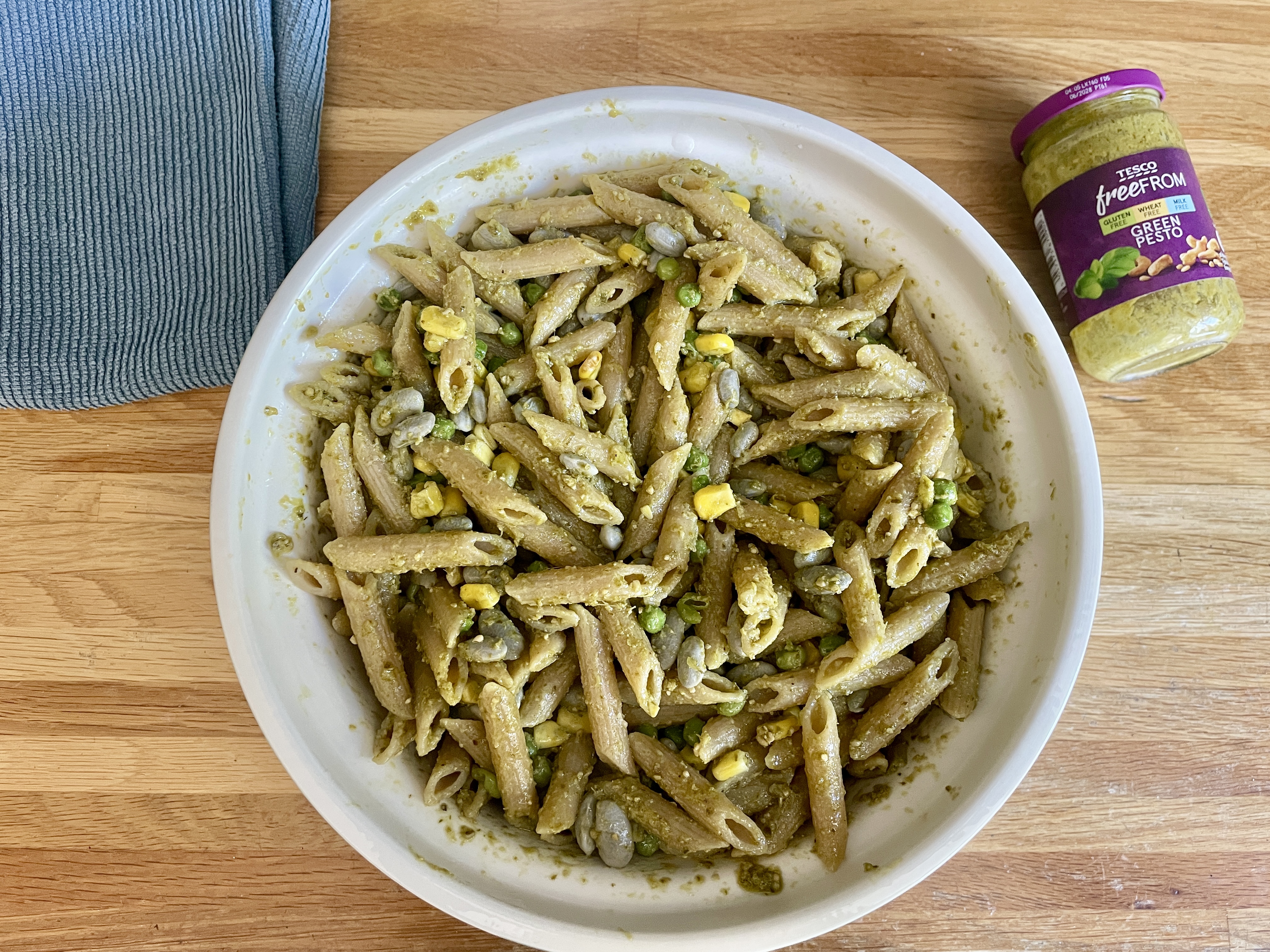
Pesto pasta is high on my list. Once the beans have been properly prepared and cooked, I’ll simply add them to pasta with vegan pesto and whatever other vegetables we have available.
There are plenty of other easy ways to use them too:
Pesto pasta with fresh beans
Cook the beans properly first, then add them to freshly cooked pasta with vegan pesto.
Throw in courgette, tomatoes, spinach or whatever else happens to be ready from the garden.
Given the state of our vegetable patches in August, finding additional vegetables isn’t usually a problem… the next things we’ll be overloaded with is usually tomatoes and courgettes!
Vegetable curry
Cook the beans properly before adding them to a tomato or coconut-based vegetable curry.
They’d work particularly well alongside potatoes, spinach, tomatoes, courgettes or squash.
Tomato and bean pasta
Combine cooked fresh beans with tomatoes, garlic, herbs and pasta for a simple meal.
A little chilli would work well too.
Soups and stews
Adding beans makes vegetable soups and stews more substantial and is an easy way to use several different homegrown vegetables at once.
Fresh bean salad
Once properly cooked and cooled, combine the beans with tomatoes, cucumber, red onion and herbs.
Add a simple dressing made with lemon juice and olive oil.
Garlic and lemon beans
For something really simple, serve the cooked beans warm with garlic, lemon juice, olive oil and black pepper.
Mixed garden vegetable casserole
This is particularly useful at the end of summer when everything seems to become ready simultaneously.
Cook the beans appropriately first, then combine them with whatever vegetables need using.
Courgettes, squash and tomatoes are particularly abundant in our garden at this time of year, so meals often become a case of “what needs eating today?”
What if you’ve left French beans even longer?
If you leave French bean pods on the plant, they’ll eventually begin to dry.
At this stage, you have another option: allow some beans to fully mature and dry for saving.
Depending on the variety, dried beans may be useful for saving as seed for next year’s garden. Every year, I save some seeds from our vegetable garden, but I already have loads of beans, so I’ll skip saving any this year.
If you want to save them, just leave them on the plant to mature and dry out, then store them safely until next year in a dry place so they don’t get damp.
Can you grow French beans from saved seeds?
We always buy organic seeds, and I initially assumed that was why we’ve had success growing plants from seeds we’ve saved ourselves.
It turns out there’s a little more to it than that.
Organic and suitable for seed saving aren’t the same thing.
Organic describes how the original seed was produced. When saving seeds, another important thing to check is whether you’re growing an F1 hybrid.
Seeds collected from F1 hybrid plants won’t reliably produce plants that are true to their parent. In other words, something will probably grow, but it may not give you exactly the same plant or crop.
French beans have an advantage here because their flowers are self-pollinating, so plants grown from saved French bean seed are likely to be true to type.
However, cross-pollination and the original variety can still affect the result.
If you’re planning to save your beans specifically for next year, check the original seed packet if you still have it. If it says F1, don’t assume the resulting plants will be identical.
For seed saving, leave suitable pods on healthy plants until they’re fully mature and dry rather than using the fresh plump beans like the ones I’m currently shelling for dinner!
How to store fresh shelled French beans
If you’re planning to eat fresh shelled beans within a few days, keep them dry in a clean container in the fridge.
As I’m going to use mine over the coming days, I’m just going to shell a batch each day as I plan to use them, rather than shelling them all in one go.
For a much larger glut, freezing is another option after appropriate preparation (soaking and cooking).
Young whole French beans can also be frozen, which is worth remembering if you manage to catch your next harvest before it turns into an enormous pile of mature pods!
Are purple beans good for you?
Purple French beans are a nutritious homegrown vegetable, providing fibre along with vitamins, minerals and naturally occurring plant compounds.
The purple colour itself comes from anthocyanins, the same broad group of plant pigments responsible for many of the red, blue and purple colours found in fruits and vegetables.
Once the seeds mature and become substantial beans, you’re also getting a more filling food that provides plant protein, fibre and carbohydrates.
That’s another reason I’m happy to shell our overgrown crop rather than waste it.
The outside pods might have gone beyond the stage where we want to eat them, but there’s still plenty of food inside.
My biggest lesson: keep picking your beans!
I already knew this.
In fact, it’s exactly why I wasn’t going to grow beans this year.
We’re busy with work and family life, and I know from experience that I’m not always going to get outside every couple of days to check what’s ready. Sometimes I’m so busy with work a week or two goes by before I get a few hours to tend to the garden!
But then I looked at all the bean seeds I had and thought, why not?
They’re so easy to grow. I can sow them directly into our vegetable beds, they grow incredibly quickly, they’re one of our earlier garden harvests and they look fantastic climbing over the arches.
So, I planted them.
Our first harvest a few weeks ago was exactly what I’d hoped for. We had beautiful tender purple pods that we chopped into pasta dishes and curries and served as a side vegetable with roast dinners.
Then I took my eye off them.
Suddenly, instead of tender little purple beans, I had a huge batch of mature pods with enormous beans inside.
But I’ve realised that’s not really a disaster.
The younger pods gave us one type of food. The mature pods have given us something different.
I’ll shell this huge batch, compost the pods and use the fresh beans inside in pesto pasta and plenty of other meals over the next few days.
And that’s probably a pretty accurate reflection of how I garden generally.
I’m not interested in having perfectly organised vegetable beds that require constant attention. I want to grow lots of organic food for our family without gardening becoming another full-time job.
We add compost, mulch the beds, sow loads of seeds directly into the ground in April and May and see what happens. If something doesn’t appear, I plant some more.
By the end of July, things are usually starting to get a little wild.
By August, the garden is overflowing, a full-blown food jungle!
There will always be something I’ve forgotten to pick at exactly the right moment.
This week, it’s purple French beans.
Thankfully, even the ones I left too long aren’t going to waste. Even the pods will be added to the compost and feed our homegrown garden veggies next year.

Discover more from Healthy Vix
Subscribe to get the latest posts sent to your email.
I didn’t even know purple french beans existed. Who knew? They look good though
I’ve had them when out before but never really used them myself I will have to give it a try now – I’m really so stuck in my ways with food.