
It’s easy to eat well when you have time to plan, shop, and cook from scratch every day. The reality for most of us, especially parents juggling work, school runs, and everything else life throws at you, is that healthy eating often ends up on the wish list. Something to focus on when things calm down, or to start properly next Monday.
The problem is there’s never going to be more time. What there can be though, is a better approach to working healthy eating into the life you already have. These are the strategies that genuinely work for our family – and we’re a busy household of four following a plant-based diet, so we’ve had plenty of practice figuring out what actually sticks.
Meal planning
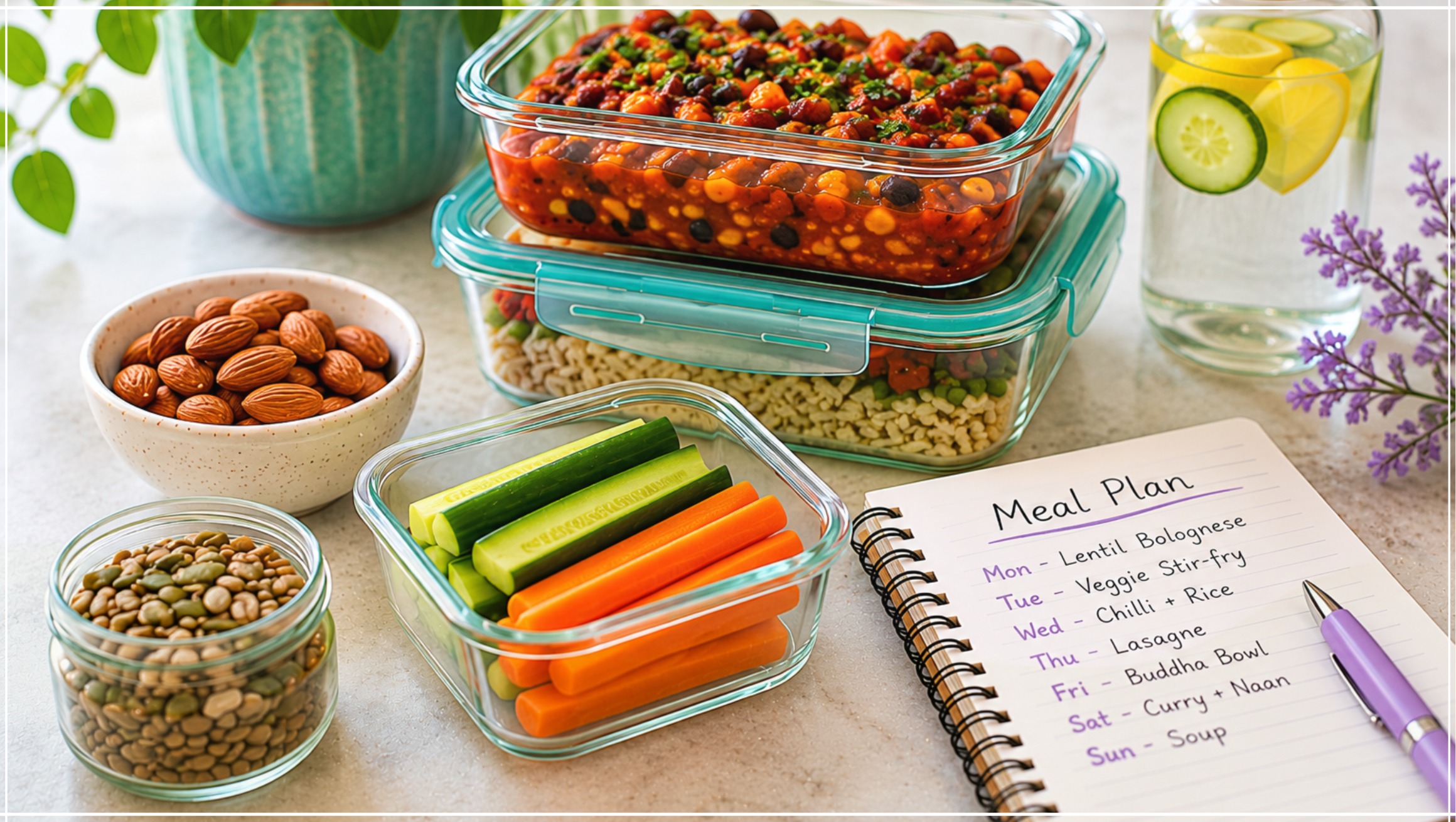
Meal planning sounds more effort than it is. You don’t need a complicated system – just a rough idea of what you’re going to eat across the week so you can do one decent shop instead of expensive top-up trips.
I do ours once a week, usually at the weekend for the next week ahead. I write down a meal plan to use up what we have left from the current week and make a list of what we need to make the meals for that weekend’s weekly shop.
I try to stay flexible about which day we eat what – it’s less about sticking to a rigid schedule and more about making sure the ingredients are in so nothing gets wasted, and we’re not standing in front of the fridge at 5 pm every evening with no idea what to make.
Also, things may change as we may have certain fresh foods that need eating.
Planning ahead also makes eating plant-based on a budget much easier because you can build meals around what’s in season and what’s on offer.
We get a regular Riverford organic veg box delivered which removes a lot of the decision-making – you cook around what arrives, which naturally keeps things varied and seasonal. New customers can get £15 off their first box by following this referral link.
Abel & Cole is another brilliant option for organic seasonal produce.
It’s also worth downloading Shopmium for supermarket shops – it’s a free app that offers cashback and freebies on everyday products including healthy foods. Use my referral code 46e3t to get a free food welcome gift when you sign up.
Batch cooking
This is the single most effective thing we do to eat well consistently. Rather than starting from scratch every evening after a full day, we cook one or two larger meals a week that stretch across two or three dinners.
This week we made a big batch of vegan chilli and it lasted three meals for all four of us. Next week we’re making two large lasagnas at once – one to eat straight away and one to refrigerate or freeze for later in the week. It sounds like more work upfront but it genuinely saves so much time across the week and means we always have something proper to eat rather than reaching for something quick and processed.
The meals that work best for this are ones with a good sauce base that can be repurposed. A large pot of lentil or soy mince bolognese can become pasta one night, a baked potato topping the next, and the base for a quick pasta bake the night after that. Soups and curries work brilliantly too – make a big pot and it’ll see you through several lunches and dinners without any extra cooking.
Batch cooking also means you have healthy plant-based meals ready to go on the evenings when you’re most tired and most likely to order a takeaway. Having something already made in the fridge is the single best defence against a bad food decision at the end of a long day.

Frozen and pre-prepared vegetables
Fresh vegetables are always our preference, but frozen veg is genuinely a brilliant option and far better nutritionally than many people realise. Vegetables frozen shortly after picking often retain more nutrients than fresh ones that have been sitting in transit and on supermarket shelves for several days.
We mainly use fresh produce but we always keep a good selection of frozen veg in the freezer for busy evenings – frozen peas, spinach, sweetcorn, and mixed vegetables are all regulars. They’re faster to prepare, reduce food waste, and are often cheaper than fresh equivalents.
Frozen chopped onions and peppers are also worth keeping in – they’re a genuine time-saver when you’re cooking a sauce-based meal mid-week. And freezing ripe bananas and other fruit means you can make a delicious smoothie in seconds without needing fresh fruit to hand.
Healthy snacks
Snacking is where healthy eating habits tend to fall apart when you’re busy, mainly because the easiest options – crisps, biscuits, chocolate bars – are everywhere and require no thought. The fix is simply to make the healthy option the easy one by having it ready and visible.
We keep a bowl of fresh fruit on the counter, a stock of nuts and seeds in the cupboard, and usually have hummus in the fridge with carrot sticks or cucumber ready to go. Other good options include:
- Fresh fruit – apples, bananas, berries, grapes, or oranges are all easy to grab and take out
- Veggies and dip – carrot sticks, cucumber, cherry tomatoes, and celery with hummus or nut butter
- Nuts and seeds – almonds, walnuts, cashews, and sunflower seeds are satisfying and full of healthy fats and plant-based protein
- Vegan yoghurt – coconut or soy yoghurt with fresh fruit and a sprinkle of seeds
- Oatcakes with nut butter or hummus – quick, filling, and genuinely satisfying
- Wholegrain crackers with vegan cheese
You can also make your own snacks in advance as part of your batch cooking sessions – energy balls, homemade granola, or simple trail mix all keep well and are easy to grab throughout the week.

Healthy drinks
What you drink is just as important as what you eat, and it’s easy to rack up a lot of sugar through drinks without really noticing. Swapping out sugary drinks for healthier alternatives is one of the quickest wins you can make.
Water is always the best option for hydration. If you find plain water dull, try adding slices of lemon, cucumber, or fresh mint – it makes a surprising difference. I personally drink distilled water at home which I’d always recommend if you’re looking to improve the quality of what you drink day to day.
Green smoothies are one of the most efficient ways to get a large amount of fruit and veg into your day quickly. A blender full of banana, spinach, cucumber, kiwi, apple, and a scoop of superfood powder takes minutes to make and can pack in three to five portions before you’ve even sat down for breakfast. Freezing fruit in advance means you can make one even when fresh supplies are running low. (My favourite blender is the Ninja brand – highly recommended!)
Unsweetened tea is another good option – herbal teas, matcha, and loose green teas all have genuine benefits and are a far better choice than reaching for a sugary drink mid-afternoon.
Healthier hot chocolate is easy to make at home using raw cacao powder with hot plant-based milk. It’s much less processed than mainstream hot chocolate brands and you can control exactly what goes in it.
Making it stick
The key to eating well when you’re busy isn’t willpower – it’s reducing the number of decisions you have to make when you’re tired and hungry. Meal planning, batch cooking, and keeping healthy snacks visible and accessible all take the pressure off in the moments when it matters most.
You don’t need to overhaul everything at once either. Start with one batch cook a week, add a meal plan, and build from there. The more of these habits you have in place, the easier maintaining a healthy diet long-term becomes – even on the most chaotic weeks.
Discover more from Healthy Vix
Subscribe to get the latest posts sent to your email.