

Dental health is one of those things that’s easy to overlook until something goes wrong – and by then, it’s often more complicated and more expensive to fix. In our family, we take our teeth seriously, and the results speak for themselves.
Our kids, now 11 and 14, have never had a filling or a tooth removed. We don’t use fluoride. And we all get positive feedback at every single dentist and hygienist appointment.
I also have my own more complicated dental history – I was born without lateral incisors, with multiple baby teeth that were never replaced by adult ones, so I had two adult canines and two baby canines, a random peg tooth, and a baby tooth molar. Those baby teeth eventually became wobbly in my 30s, which led to three years of braces, teeth extractions, and cosmetic dentistry to give me the smile I have now.
It wasn’t caused by poor care – I was simply born that way – but it gave me a very clear picture of the difference between NHS and private dental care, and a deep appreciation for looking after what you have.
Here’s what we actually do to keep our teeth and gums healthy.

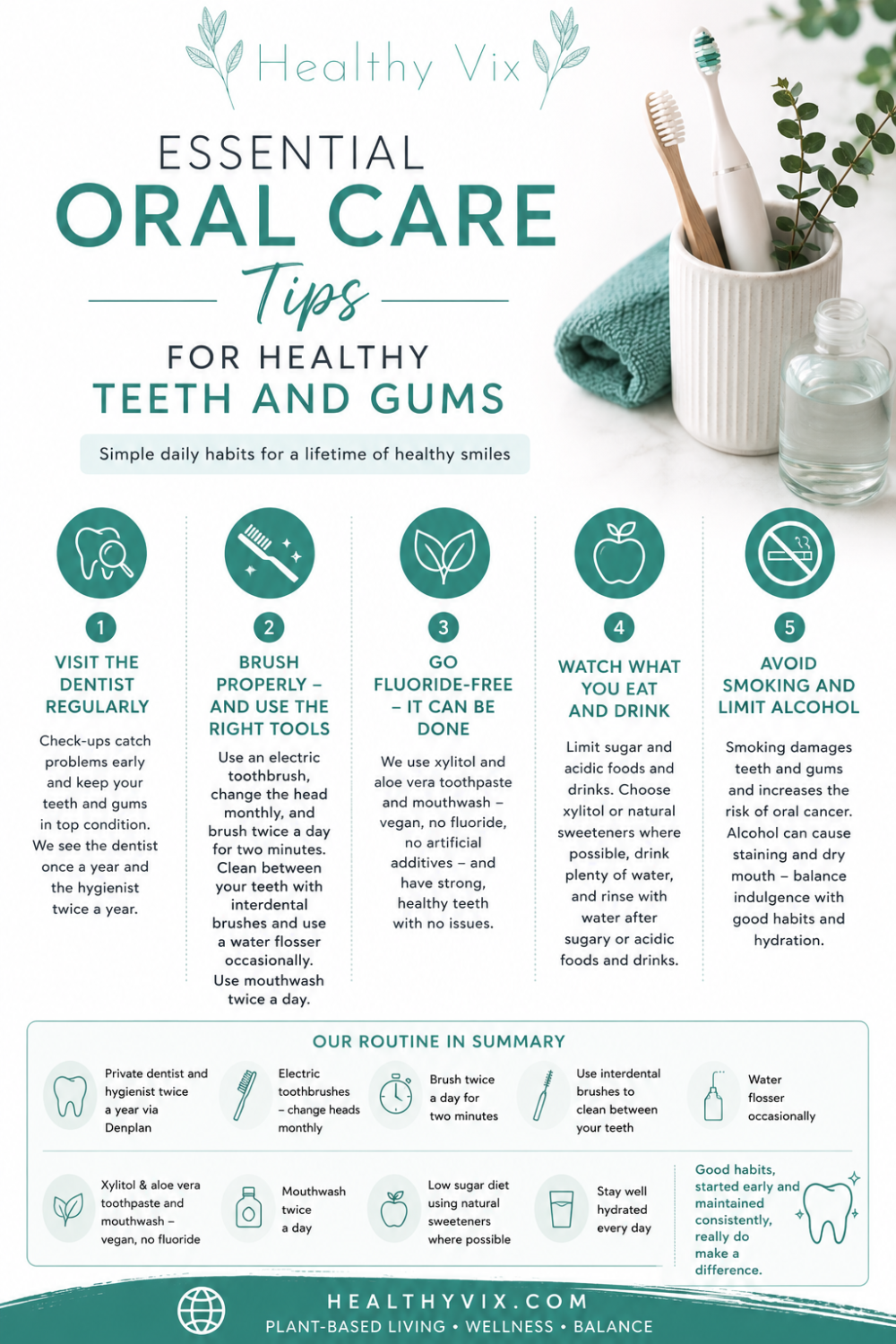
1. Visit the dentist regularly
Regular dental check-ups are one of the most important things you can do for your oral health. A standard examination can detect cavities, plaque and tartar buildup, gum disease, and even oral cancer in its early stages – when treatment is far simpler than it would be later on.
Most dental associations recommend a check-up every six months, though your dentist may suggest more or less frequent visits depending on your individual needs. We go once a year for a dental check-up, and my husband and I also see the hygienist twice a year. The kids have one dentist and one hygienist appointment a year at this stage. It’s non-negotiable for us.
When I was going through my braces and cosmetic dentistry journey, I experienced both NHS and private dental care firsthand. I wasn’t happy with the plan I was offered on the NHS and went private instead – the experience, the time taken, and the outcomes were noticeably better.
Since moving to Cornwall, the whole family has been private simply because NHS dentists in our area have extremely long waiting lists (years). It’s a cost we justify because healthy teeth matter, and the peace of mind is worth it.
We spread the cost using Denplan, which is a monthly dental payment plan that covers our regular check-ups and hygienist appointments and provides benefits such as discount off treatments, a free x-ray each year and access to an emergency appointment if needed. For anyone put off by the upfront cost of private dental care, a plan like this makes it much more manageable.
If private isn’t an option, registering with an NHS dentist and attending regularly is still far better than not going at all. A dentist can also discuss options like braces or cosmetic work for an improved smile and better confidence if that’s something you’re considering.
2. Brush properly – and use the right tools
Brushing twice a day is the foundation of good oral hygiene. We all use electric toothbrushes, which research consistently shows are more effective than manual brushing at removing plaque and reducing gum disease. We change the brush heads at least once a month – more often than most people do, but worn brush heads are significantly less effective, and it’s an easy habit to keep on top of.
Technique matters too. Angle the brush towards the gumline, use gentle circular or back-and-forth motions, and spend at least two minutes – most people rush this without realising. Our toothbrushes have timers, so it’s easy to know how long we are spending brushing.
In addition to brushing, we use interdental brushes to clean between the teeth where a toothbrush can’t reach. These are more effective than floss for people with wider gaps, and we find them easier to use consistently. I also sometimes use a water flosser, which is brilliant for getting into areas that are hard to reach and feels noticeably thorough. Using mouthwash twice a day rounds off the routine.
3. Go fluoride-free – it can be done
This one might surprise people, but our whole family has been fluoride-free for around 15 years – and the kids have never used fluoride at all. We still have strong, healthy teeth with no issues, and our dentist and hygienist confirm this at every visit.
We use toothpaste and mouthwash containing xylitol and aloe vera instead. Xylitol is a natural sweetener that has been shown to inhibit the bacteria that cause tooth decay, and aloe vera has natural antibacterial properties that can support gum health. Everything we use is vegan and free from artificial additives.
I’m not saying fluoride is the wrong choice for everyone – that’s a personal decision and worth researching for yourself. But our family is proof that you can have excellent dental health without it.
4. Watch what you eat and drink
Diet has a significant impact on dental health. Sugary and acidic foods – fizzy drinks, sweets, pastries, fruit juices – erode enamel over time and create an environment where harmful bacteria thrive. Limiting these, or at least rinsing with water after consuming them, makes a real difference.
Xylitol is worth mentioning here too. Unlike regular sugar, xylitol doesn’t feed the bacteria that cause cavities – in fact, it may actively help prevent them. Many of our sweet treats use xylitol or other natural plant-based sweeteners rather than regular cane sugar, and there’s plenty of inspiration out there for vegan keto desserts that use fruit or plant-based sweeteners instead.
Staying well hydrated is important for dental health too – water helps wash food particles off the teeth and prevents dry mouth, which can contribute to bad breath and bacterial buildup. Certain foods can also cause bad breath worth knowing about if that’s something you’re conscious of.
5. Avoid smoking and limit alcohol
Smoking is one of the worst things you can do for your teeth and gums. It causes staining, increases plaque and tartar buildup, contributes to gum disease, and significantly raises the risk of oral cancer. If you smoke, stopping is one of the single most impactful things you can do for your dental and overall health.
Alcohol can also cause teeth discolouration and dry mouth, which creates conditions where bacteria multiply more easily. This doesn’t mean never drinking if you like an alcoholic beverage every now and then, but it’s worth being aware of the effects and balancing them with good hydration and a solid brushing routine.
Our routine in summary
For anyone who wants a quick overview of what works for us:
- Private dentist and hygienist appointments twice a year via Denplan
- Electric toothbrushes with heads changed at least monthly
- Brushing twice a day for two minutes
- Interdental brushes for between the teeth
- Water flosser occasionally
- Xylitol and aloe vera toothpaste and mouthwash – vegan, no fluoride
- Mouthwash twice a day
- Low sugar diet using natural sweeteners where possible
- Staying well hydrated
Our kids have never had a filling or a tooth removed, and we consistently get positive feedback from dental professionals. Good habits, started early and maintained consistently, really do make a difference.
Discover more from Healthy Vix
Subscribe to get the latest posts sent to your email.
Such good points. Dental care really has to be a priority. And I think the more you stick with it, the easier it becomes.